
Every Indian investor eyeing Apple, Nvidia, or Tesla eventually hits the same wall: How do you buy US stocks?
For a decade, the answer was simple. Open a broker account, remit dollars under LRS, wait for settlement. In 2026, there’s a second answer: buy a tokenized stock, an on-chain token backed 1:1 by a real share sitting in custody, tradable 24/7 without a US brokerage account at all.
Both routes get you exposure to the same underlying company. They get you there through completely different rails, and the differences show up in your wallet, your tax filing, and how fast you can move.
READ MORE
How to buy Apple stocks in India?
How to buy Tesla stocks in India?
How to buy Tokenised US Stocks in India?
| TRADITIONAL U.S. STOCKS | TOKENISED U.S. STOCKS | |
| WHAT YOU OWN | Actual share via a broker/custodian | Onchain token backed 1:1 by a custodied share |
| ACCESS ROUTE | Broker account (Vested, INDmoney, Groww) or GIFT City IFSC | Crypto exchange or DeFi wallet |
| TRADING HOURS | US market hours only | 24/7, including weekends |
| TAX TREATMENT | Capital gains (STCG at slab, LTCG at 12.5%) | Taxed as a VDA — flat 30%, no loss offset, 1% TDS |
| TCS | 20% above ₹10 lakh remitted per year | Not remittance-based, but crypto TDS/reporting applies |
| REGULATORY CLARITY | Well-established under FEMA/LRS | Grey zone; no dedicated Indian framework yet |
| BEST FOR | Long-term, tax-efficient, compliant wealth building | Speed, weekend access, DeFi-native strategies |
Buying US stocks the conventional way means opening an account with a platform like Vested, INDmoney, or a global broker, then remitting funds under the RBI’s Liberalised Remittance Scheme (LRS). LRS lets resident Indians send up to $250,000 abroad per financial year for permitted purposes, including equity investment.
The two numbers every investor needs memorized:
There’s also a lesser-known third option: buying unsponsored depository receipts of 50 large-cap US stocks listed on NSE IFSC in GIFT City. This route settles in INR, avoids LRS remittance entirely for that trade, and can carry lower brokerage; Tickertape, for instance, charges around 0.15% via the IFSC route.
The catch is a much smaller stock universe compared to a full US brokerage account.
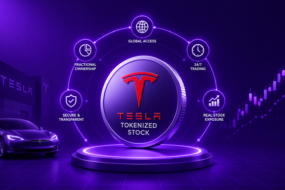
A tokenized stock is a blockchain token (like Kraken’s xStocks, or Ondo Global Markets) where every unit represents one real share of an equity such as AAPL or TSLA, held by a regulated custodian at a 1:1 ratio. You’re buying a claim on an actual share, in a token that moves on Solana, Ethereum, or similar chains.
The category has scaled fast. Tokenized equities crossed a market capitalization of roughly $2.3 billion by mid-2026, nearly doubling in a few months, with xStocks alone processing over $10 billion in volume within its first four months.
The pitch is straightforward: no brokerage account, no market-hours restriction, instant settlement, and composability with DeFi. You can post a tokenized stock as collateral or trade it on a decentralized exchange the same way you’d trade any crypto asset.
But the SpaceX IPO episode earlier this year is a useful reality check. When several exchanges tried to launch tokenized SpaceX shares, the shared intermediary couldn’t secure real allocations, and platforms had to cancel offerings and refund over $1 billion.

The token is only as good as the custodian and the underlying allocation: a lesson worth remembering before treating tokenized equity as a frictionless proxy for the real thing.
This is where the comparison stops being about convenience and starts being about actual returns.
Traditional US stocks are treated as unlisted foreign securities:
Tokenized stocks, because they’re issued and traded as crypto assets, fall under India’s Virtual Digital Asset (VDA) regime; the same bucket as Bitcoin or Ether:
Run the math on any meaningful gain and the traditional route wins on tax efficiency by a wide margin; a long-term holder pays 12.5% on a real US stock versus 30% on the tokenized equivalent, with the added sting of zero loss offset if the trade goes the other way.
For traditional access:
For tokenized access:
This matters more for tokenized stocks than for traditional ones. Traditional US stock investing sits on well-worn FEMA/LRS rails that banks and brokers have operated for years. Tokenized equities do not have an equivalent Indian framework yet.
The RBI has drawn a line between speculative private crypto and tokenized instruments it’s comfortable seeing develop on regulated rails (like sovereign debt), while a parliamentary panel has pushed for a phased SEBI/RBI regulatory model, and a separate Asset Tokenization Bill is under discussion in Parliament.
Until that rulebook lands, any tokenized-stock platform you use is operating in a regulatory grey zone from an Indian standpoint; always verify whether a platform is registered anywhere, and treat “tokenized” as a wrapper.
There’s no universally “better” answer; only a better answer for your time horizon, tax bracket, and appetite for regulatory uncertainty. For most first-time Indian investors, the traditional route is the best way to actually own a piece of corporate America. Tokenized stocks are the faster, 24/7 alternative: but “faster” and “cheaper after tax” are rarely the same thing.
For more beginner-friendly guides, check out our blogs on Mudrex Learn, or head over to the Mudrex YouTube Channel.
This article is for informational purposes only and does not constitute investment, tax, or legal advice. Tax rates, LRS/TCS thresholds, and the regulatory status of tokenized assets in India are subject to change.
Consult a SEBI-registered investment adviser and a qualified tax professional before making investment decisions.
It depends on your priority. Direct US stocks (via Vested, INDmoney, or GIFT City) win on tax; long-term gains are taxed at 12.5% versus a flat 30% for tokenized stocks under India’s VDA rules. Tokenized stocks win on access: 24/7 trading and no brokerage account needed. For most long-term investors, the tax gap makes traditional US stocks the more cost-efficient choice.
There’s no dedicated Indian legal framework for tokenized stocks yet. They aren’t explicitly banned, but they operate in a regulatory grey zone; RBI and SEBI are still working out how tokenized securities should be classified and supervised, and a separate Asset Tokenization Bill is under discussion in Parliament. Traditional US stock investing, by contrast, is well-established under FEMA and the RBI’s LRS framework.
If you hold US stocks for less than 24 months, gains are taxed as short-term Capital Gains at your income slab rate. Hold for 24 months or more, and you pay Long-Term Capital Gains at a flat 12.5%, with no indexation benefit. You’ll also need to disclose these holdings under Schedule FA in ITR-2 or ITR-3.
Tokenized stocks are treated as Virtual Digital Assets (VDAs); the same tax bucket as Bitcoin. That means a flat 30% tax on any gains regardless of how long you hold, no loss offset against other income, and 1% TDS on transactions above the prescribed threshold. There’s no long-term concession like there is for traditional stocks.
Under the RBI’s Liberalised Remittance Scheme (LRS), resident Indians can remit up to $250,000 per financial year for permitted purposes, including buying US stocks.
Yes. Tokenised US Stocks on Mudrex give you the option to trade big tech and other well-known US stocks