ADX (Average Directional Index): The Simple Way To Read Trend Strength
Trends make trading easier. Volatility makes it challenging. The ADX Indicator, also known as the Average Directional Indicator, helps you tell the difference.
In this guide, you will learn what ADX is, how to add it to your chart, how to read its values, and how to combine it with DI+ and DI- for clear, repeatable trade ideas.
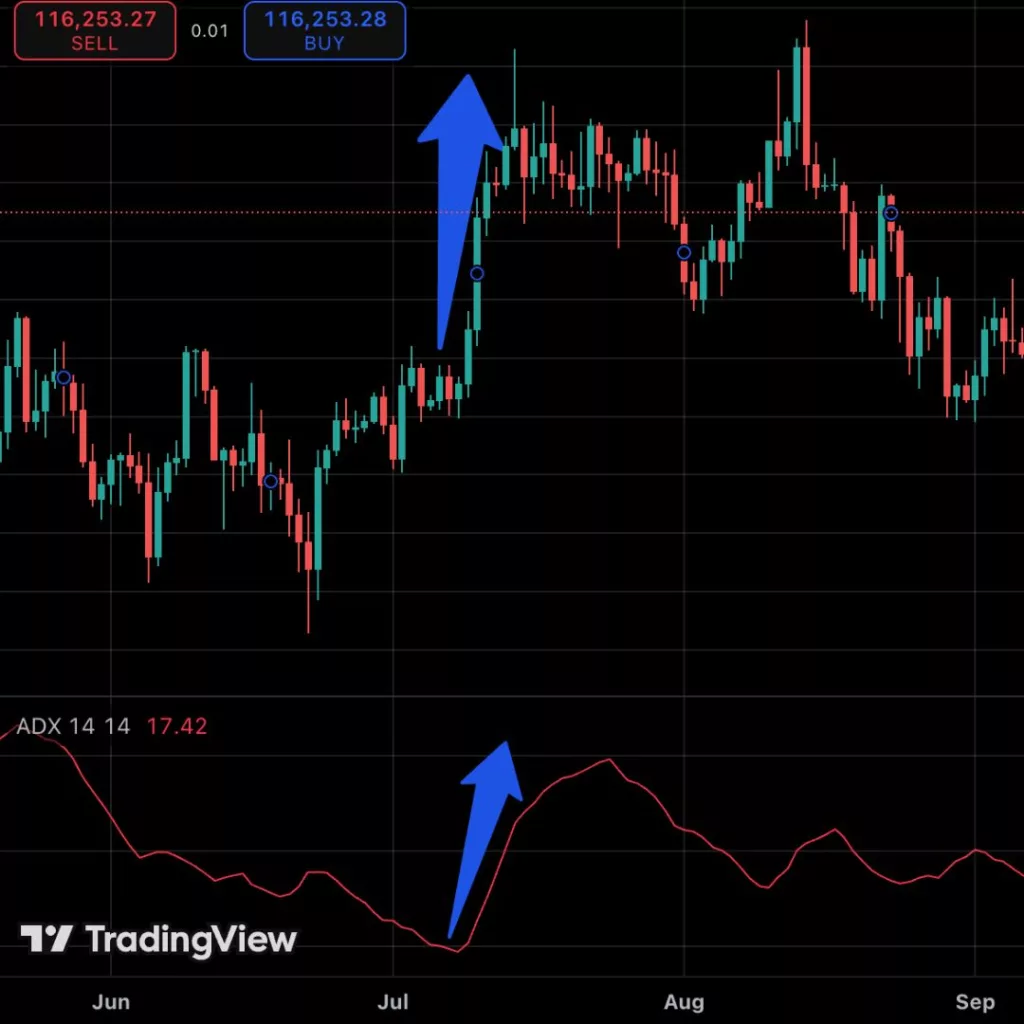
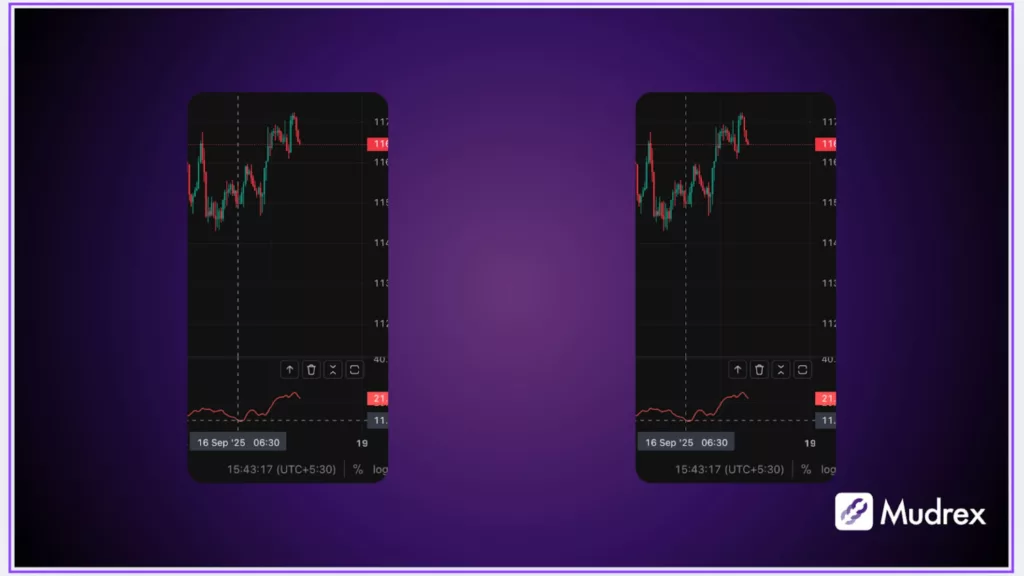
ADX climbs in strong trends and falls when markets move sideways.
ADX (Average Directional Index) tells you if the market is trending strongly or not.
It does not care if the price is going up or down. It simply measures how strong the move is.
ADX Values run from 0 to 100. Low values mean a weak or messy market.
Higher values mean a stronger, cleaner trend where pullback entries can work better.
The Crypto market is fast and can become noisy. Sudden price swings, heavy trading volumes, and constant news updates often make it difficult to separate meaningful signals from short-term noise. In such scenarios, trend-following tools fail more often.
ADX will give you a quick read on the market regime.
ADX (Average Directional Index) Explained: Read Trend Strength Fast
If ADX is low, you can shift to range plans or wait for better conditions. If ADX is rising and above a key threshold, you can start looking for trend entries with more confidence.
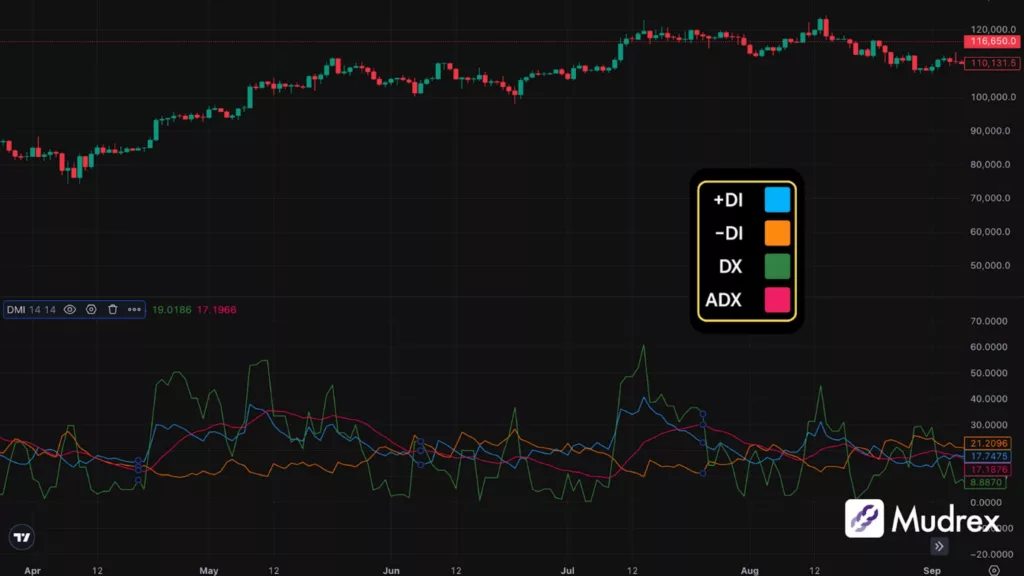
ADX is part of a family called DMI (Directional Movement Index). The DMI has two lines: DI+ and DI-.
DI+ rises when upward movement leads; the difference between today’s high price and yesterday’s high price.
DI- rises when downward movement leads. These two lines tell you who is winning right now, buyers or sellers;the difference between today’s low price and yesterday’s low price.
From DI+ and DI-, we get DX, which scores the difference between them.
ADX is a smoothed average of DX over a lookback period.
DI lines show direction; ADX smooths it into a strength score.
Most platforms use 14 by default for calculating ADX.
Think of the steps like this: price swings → DI lines show direction → DX measures the gap → ADX smooths that gap into a trend-strength number.
You need both sets of information: DI lines for direction and ADX for strength.
Open Mudrex and search for Average Directional Index or DMI. Add the indicator with Length 14 to start.
Most tools let you show the ADX line and both DI lines together. Keep the layout clean. Make the ADX line bold so you can see slope changes. Keep DI+ and DI- as lighter lines so direction is easy to read.
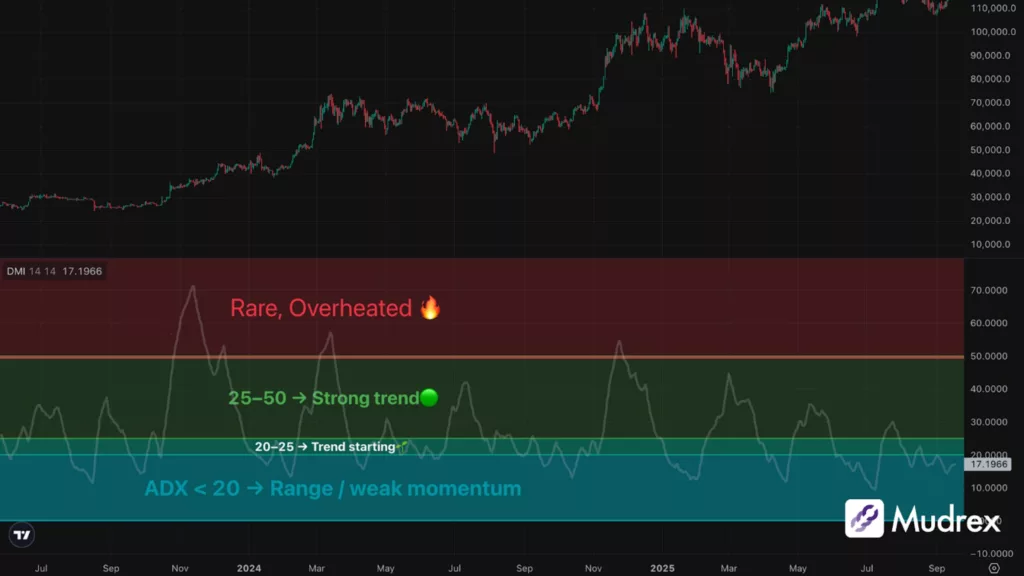
You may set alert levels such as 20, 25, and 50.
These are common zones for reading trend strength. If your platform allows, add a background color when ADX moves above 25. This gives a quick visual cue that the market may be trending.
ADX. When ADX < 20, the market is often range-bound or lacking power.
When ADX rises from 20 to 25, a new trend may be building.
Between 25 and 50, trends are usually strong.
Above 50, trends are very strong, but they can be late for new entries. Numbers above 75 are rare and often overheated.
Strong trends build once ADX climbs past 25.
Always read ADX with the DI lines. If DI+ is above DI-, the tilt is bullish. If DI- is above DI+, the tilt is bearish. Add simple price structure for context. If ADX is high, DI+ is on top, and price is making higher highs and higher lows, you likely have a strong uptrend worth trading with pullbacks.
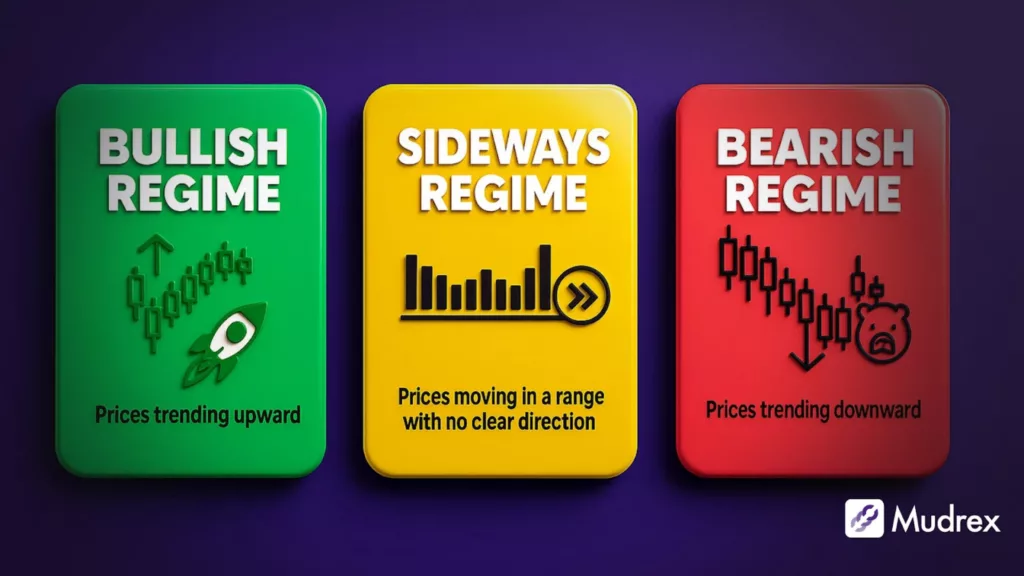
Market regime means the type of market you are in.
With low ADX, price often ranges. In ranges, tools such as oscillators and support/resistance fades work better. With high ADX, price trends. In trends, moving averages, breakouts, and pullback entries work better. ADX is your quick filter for picking the right tool at the right time.
How Does The ADX Indicator Work?
The Average Directional Index (ADX) is a technical indicator that uses the Minus Directional Indicator (-DI) and Plus Directional Indicator (+DI) to visually show a group of directional movement indicators that can be used as a trading system and… pic.twitter.com/yRi60psxyw
This filter also helps you avoid the urge to chase every move. If ADX is still below 20, a sudden big candle may be a trap. Wait for ADX to lift and hold above 25. Then look for clean pullbacks to moving averages, or breakouts that retest before running. Matching your method to the regime is a simple way to improve results.
When ADX is low, range tools win; when high, trend tools win
Five beginner-friendly ADX strategies
1) ADX trend filter + moving averages
Pick a 50 EMA for bias and a 20 EMA for timing. Only trade pullbacks in the trend direction when ADX ≥ 25. Enter on a bounce from the 20 EMA. Place a stop below the swing low. Take partial profits near the last high.
When DI+ crosses above DI- and ADX is rising, consider a long. Reverse for shorts. This adds direction and strength together. Avoid signals when ADX is flat or below 20.
3) ADX + RSI momentum check
Use RSI to time entries inside an ADX-confirmed trend. In an uptrend, wait for RSI to pull back and then reclaim 50. This often lines up with a clean price higher low.
4) ADX + breakout and retest
Mark a range. Take the breakout only if ADX is lifting from low levels toward 25+. Wait for a retest of the breakout level to reduce false moves.
Use ATR to set a logical stop in strong trends. When ADX is high, prices can move fast. ATR stops help avoid getting shaken out by normal volatility.
Entries, stops, and targets with ADX
Start with a clear trigger. This could be a DI crossover with ADX rising, a pullback to a moving average while ADX holds above 25, or a breakout close with ADX lifting from low levels. Keep rules simple so you can follow them in real time.
Use structure and ATR for stops. For longs, a stop below the swing low or 1× ATR below the entry is common. For shorts, mirror the rule. Targets can be the last swing high/low or a measured move. You can also scale out: take a partial at a 1:1 reward-to-risk, then trail the rest as long as ADX stays firm or until it rolls over.
Common mistakes and how to avoid them
Using ADX alone is a common error.
Always pair ADX with DI lines and basic price structure.
If price is making lower highs and lower lows while DI- is on top, a high ADX means a strong downtrend, not a buy. Another mistake is chasing late when ADX is already very high. Entering after a long run can leave little room before a pullback.
Traders also ignore timeframes. An ADX signal on a 5-minute chart may fail if the 4-hour is range-bound. Start with a higher timeframe for the regime, then step down for entries. Finally, do not over-tune the indicator length early. The default 14 works well. Only test changes later, and use a journal to see if they truly help.
Try timeframe stacking: Use the Daily ADX to judge the big picture, then use the 4H for entries. If daily ADX is rising above 25, focus on long setups in uptrends or short setups in downtrends. On the 4H, wait for pullbacks or DI crossovers that agree with the daily direction. This keeps you aligned with the larger flow.
Watch the slope of ADX, not just the number: A rising ADX often means conditions are improving for trend trades. A flat or falling ADX can warn that the trend is losing power. Some traders test ADXR, a smoothed version of ADX, for fewer whipsaws. Keep changes simple, test them on paper first, and add only what makes your decisions faster and clearer.
Even strong trends pull back. Protect your account with fixed fractional risk. Many traders risk 0.5–1% per trade.
Use ATR-based stops so normal volatility does not knock you out. When ADX is high, give trades room based on recent ranges. As price moves in your favor, scale out at logical points and trail the stop under higher lows (for longs) or above lower highs (for shorts).
When ADX turns down after a long run, it may signal that the trend is tiring. You can tighten stops, reduce size, or take more profits. Avoid revenge trading if a trend reverses. Close the trade, review your plan, and wait for the next clean setup. Good risk rules turn a decent edge into steady progress over time.
The ADX is a small tool with a big impact. It tells you when the market is strong enough to favor trend trades, and when to step back or switch to range methods.
Read ADX with DI lines and price structure. Use it as a filter, not a standalone signal. Start with one simple setup, add risk rules, and practice until it feels natural. Over time, ADX can help you skip noise, ride trends longer, and trade with calm.
A Clean trading Setup is a confident setup. Mudrex brings you the best trading tools to turn signal into disciplined execution: TradingView charts with best-in-class technical indicators, easy-to-use watchlists, and a clear spot & futures trading experience with built-in stop-loss/take-profit—so that you can cut noise, trade your plan, and protect downside.
Download Mudrex now, place your first trade, and start your trading journey with confidence.
FAQs
1) What ADX setting should beginners use? Start with Length 14. It balances speed and smoothness. Use it across your main timeframes. Only test other lengths once you have a solid routine and a trade journal to measure results.
2) What ADX value shows a strong trend? Many traders look for ADX ≥ 25 to confirm trend strength. 25–50 is a healthy zone. Above 50 is very strong but can be late for new entries. Always add structure and DI lines to avoid chasing.
3) What is the difference between ADX and DI lines? ADX measures strength. DI+ and DI- show direction. Read them together. For example, ADX rising with DI+ above DI- means a strengthening uptrend. If ADX rises with DI- on top, it signals a strengthening downtrend.
4) Can ADX work on lower timeframes? Yes, but noise increases. On 5–15 minute charts, ADX can flip quickly. Use a higher timeframe (like 4H or Daily) to set the regime, then take entries on the lower timeframe that agree with the bigger picture.
5) How do I combine ADX with moving averages? Use MAs for trend direction and pullback zones. Only trade in the MA direction when ADX is above 25 and rising. Enter on a pullback to the MA, place a stop beyond the swing, and scale out at clear targets.
6) Why does ADX rise even when price falls? Because ADX measures strength, not direction. If sellers are in control and the downtrend is strong, ADX can rise as price drops. In that case, DI- will likely be above DI+, confirming bearish control.
Krishnan is a Bangalore-based crypto writer dedicated to simplifying complex crypto concepts. He covers blockchain, DeFi, and NFTs, with a focus on real-world asset tokenization and digital trust. Previously he has written on Real Estate related assets for NoBroker. Krishnan holds a B.Tech degree from the College of Engineering Trivandrum.