How to Detect Leverage Build-Up Using a Crypto Futures Heatmap
In crypto trading, leverage allows traders to open larger positions by borrowing funds from the exchange, using their own capital as margin. This can amplify profits from even small price changes, but it also magnifies losses, making risk management crucial.
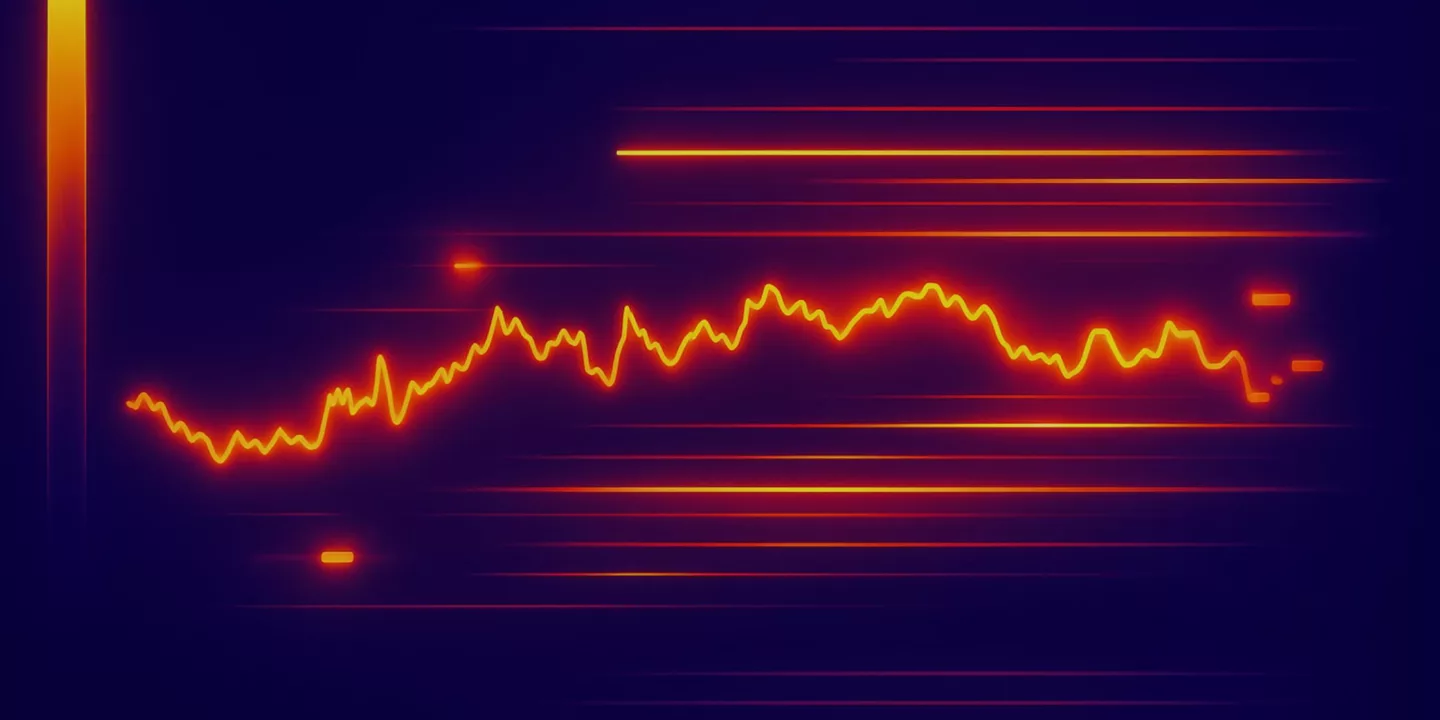
Large concentrations of leveraged positions in certain price zones can create pressure points in the market. A crypto futures heatmap, also commonly known as a liquidation heatmap, visually shows where these positions are clustered, helping spot potential areas of sharp price movement. A single bright spot could mean the market is about to make its next big move.
In this blog, we’ll break down how leverage build-up works, how a heatmap reveals it, and how you can use this insight to stay ahead of major market moves.
Understanding the Basics
What is Leverage Build-Up?
When many traders open highly leveraged positions in the same direction and around a similar price level, it’s called a leverage build-up. On a heatmap, this appears as a bright band, showing that a large cluster of leveraged trades is concentrated there.
If the price moves sharply against these positions, it can trigger a squeeze, also known as a liquidation cascade, where one wave of forced closes drives the price further, setting off more liquidations in a rapid chain reaction.
These positions are more vulnerable because traders are using borrowed capital, which means even small price changes can have a big impact on their margin.
When the price moves in the opposite direction of most traders’ positions, some of them reach their liquidation point, i.e., the price level where the exchange automatically closes their trade to prevent further losses.
This forced selling (for longs) or forced buying (for shorts) pushes the price even further in the same direction, causing more liquidations.
If most traders are long and the price drops, their positions start closing rapidly, forcing them to sell. This cascade of selling triggers a long squeeze, pushing prices down even faster.
If most traders are short and the price rises, they’re forced to buy back at higher prices, triggering a short squeeze that accelerates the upward move.
The larger the leverage build-up, the more violent these squeezes can be, because the market is essentially sitting on a pile of unstable positions waiting to be tipped over.
What is a Crypto Futures Heatmap?
A crypto futures heatmap is a visual chart that shows where large clusters of leveraged positions are sitting in the market.
It maps out liquidation zones, price levels where traders would be forced to close their positions if the market moves there.
The heatmap uses colors and bands to represent how much leverage is stacked at each price level:
Bright or hot colors (yellow, orange, red) indicate high concentrations of leveraged positions. These are zones where a price move could trigger many liquidations, leading to sharp price swings.
Darker or cooler colors (blue, green) show lower concentrations, meaning fewer positions are at risk and the price is less likely to react strongly there.
Traders often watch these zones closely because they act like pressure points; if the price reaches them, a big reaction is more likely.
The Role of Open Interest (OI) in Leverage Build-Up
Open Interest (OI) is the total number of open futures contracts in the market at any given time, usually measured in the number of contracts or their value (in USD). In simple terms, it shows the value of positions, both long and short, that are currently active and have not yet been closed or settled.
For example, if the open interest for BTC on Bybit is $15 billion, it means traders collectively have active futures positions worth $15 billion that are still open and unsettled in the market.
When OI is rising, it means more traders are entering new positions, increasing overall market participation. This often signals growing conviction in a price move or, in some cases, a build-up of speculative positions that could later trigger volatility.
When you combine OI trends with heatmap data, you may get a much clearer picture.
For example, a heatmap may show heavy leverage build-up at certain price levels, but if OI is also increasing rapidly, it confirms that fresh money may be piling into those zones.
This combination strengthens the signal that if price approaches these levels, the reaction, whether a sudden breakout or a liquidation-driven squeeze, could be much stronger.
Step-by-Step Guide: How to Detect Leverage Build-Up Using a Heatmap
Step 1: Open a liquidation heatmap tool (e.g., Coinglass, Hyblock)
Pick any reliable heatmap that shows liquidation zones and open interest (OI). Select the coin (for example, BTC or ETH), the main exchange (such as Binance), and a timeframe. Most tools also let the map sit “behind” the price chart so price and hot zones can be seen together.
Step 2: Spot bright areas and track changes in brightness
On the map, color shows the concentration of positions.
Brighter / hotter colors (often yellow, orange, or red) = many leveraged positions at that price.
Darker / cooler colors (green or blue) = fewer positions.
Two things to watch:
Where the bright bands sit relative to today’s price.
Whether they are getting brighter over time. Growing brightness means more traders are piling in at that level, a sign of leverage build‑up.
Why this matters: Brightness on a heatmap shows where a price change could trigger a liquidation cascade, a chain reaction where one set of forced closes pushes the price further, which then triggers more liquidations, and so on.
Here’s how it works: imagine a large set of traders has opened long positions with liquidation prices very close to each other. If the market price dips into that zone, the first liquidations occur. These forced sells push the price down even more, hitting the next group of liquidation levels.
This domino effect can cause a sharp and sudden price drop, even without any big news event. The same can happen in reverse with short positions, where a quick price spike upward forces short sellers to close, fueling a rapid rally.
Step 3: Cross‑check with Open Interest (OI) trends
Open Interest = number of active futures contracts that are still open.
OI rising while the heatmap band grows brighter, fresh positions are being added and kept open at that level (strong build‑up).
OI flat with a steady band may mean some leverage build‑up, but not growing fast.
OI falling while the band fades would mean leverage is being reduced (cool‑down), often after a wipe‑out.
Step 4: Identify whether the build‑up is above or below the price
Leverage build‑up below current price: If the price dips into that band, forced selling can start and extend the drop (long squeeze).
Leverage build‑up above current price: If the price pops into that band, forced buying can start and extend the pump (short squeeze).
Knowing the side that’s crowded hints at the likely squeeze direction if that zone is touched.
Step 5: Decide the trading approach
Now that you’ve identified where leverage build-up is happening, the key is figuring out how to act on it. The location of these clusters relative to the current price is what gives you clues:
If the leverage build-up is above the current price: This often means a large number of traders are short from that area. If the price starts moving upward and touches this zone, it could trigger a short squeeze, and shorts are forced to close, pushing the price even higher. In this case, some traders position early for a breakout, while others wait for confirmation before going long.
If the leverage build-up is below the current price: This usually signals that a lot of traders are long from that area. If the price drops into this zone, it could cause a long squeeze; longs are forced to sell, driving the price down further. Here, traders might prepare for a short position or trade the momentum lower.
If signals are mixed or unclear: Sometimes, the heatmap and OI data might not align, or multiple clusters might exist both above and below. In such cases, the market could be volatile in both directions. The safest move here is often to observe from the sidelines until a clearer setup forms.
The goal is not to react to every bright spot on the heatmap, but to combine band location, OI trends, and price action to decide if the setup is worth trading.
Even with the best heatmap tools, new traders often misinterpret signals or overlook critical confirmations. Here are the top pitfalls to avoid:
Ignoring OI data
A heatmap alone doesn’t tell the full story. Without checking open interest (OI), you can’t confirm whether a bright zone actually represents a growing cluster of positions or just a temporary spike in activity. Always pair heatmap readings with OI trends or other indicators to avoid false signals.
Confusing short-term spikes with real build-up
A sudden burst of brightness on the heatmap might just be the result of a few large trades, not a sustained leverage build-up. Real build-up is gradual and consistent, often holding its place for hours or days, not just a few minutes.
Trading without stop-losses in squeeze zones
Squeeze zones (bright areas right above or below the price) can create explosive moves in either direction. Entering these zones without a clearly defined stop-loss is risky because squeezes can overshoot by a large margin before reversing.
Conclusion
Spotting leverage build-up on a crypto heatmap isn’t about predicting the future; it’s about stacking the odds in your favor. By pairing heatmap visuals with open interest data, you can filter out market noise and focus on the price zones where the real action is likely to happen.
Trade smart, manage your risk, and remember, in crypto, the best opportunities often come right before the crowd notices them.
Trade with confidence on a secure platform with 100% FIU compliance, like Mudrex. Start today!
Siri is a writer venturing into the exciting realms of blockchain technology, cryptocurrency, and decentralized finance (DeFi), eager to explore the transformative potential of these innovations. She brings a unique perspective that bridges traditional industries and cutting-edge technology, often infused with a touch of humor through memes. She has a rich background in real estate and interior design, having previously contributed to NoBroker, where she crafted blogs and assets on these topics.