Ethereum vs Solana: Ecosystem Deep Dive and the 2025–2028 Outlook
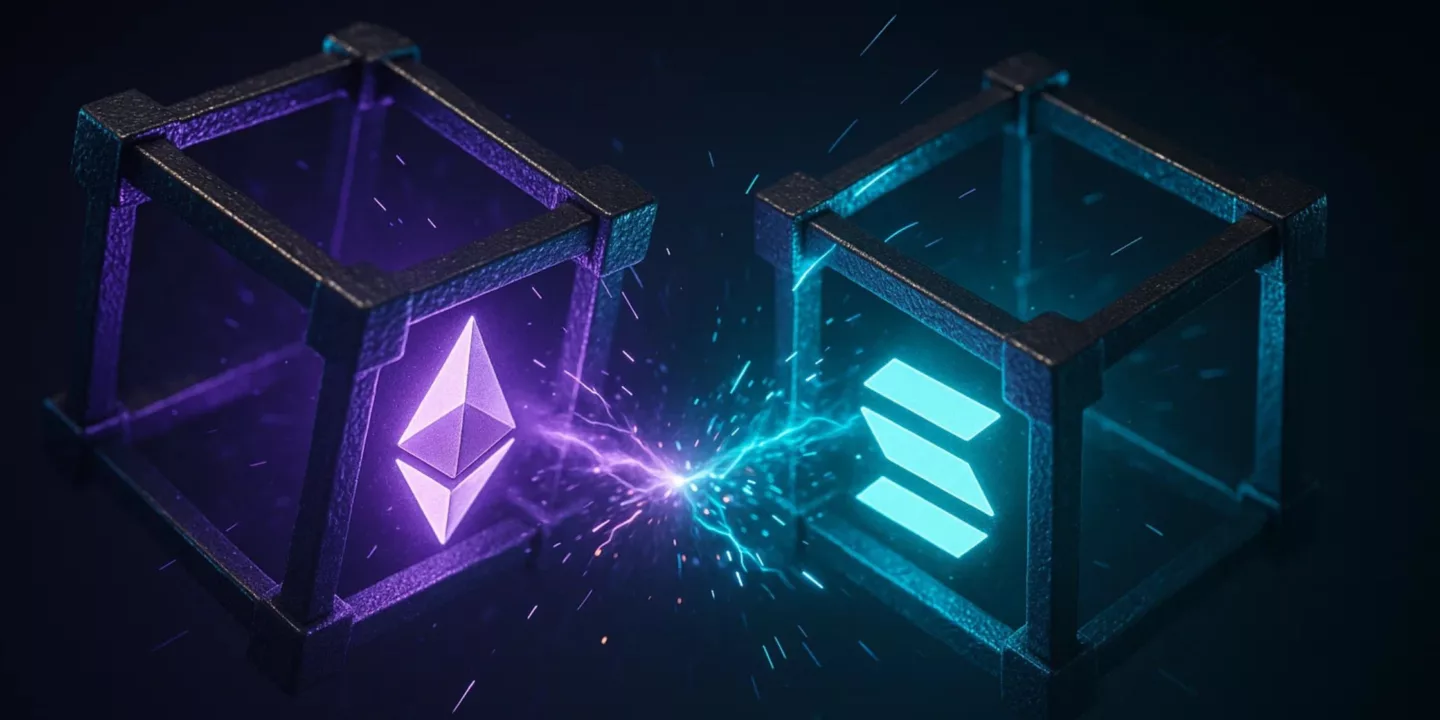
Ethereum and Solana define two opposite ends of the crypto spectrum. Ethereum prizes decentralization and composability, while Solana pursues performance and consumer-scale usability. For investors, both ecosystems are winning — but for different reasons. As 2025 unfolds, the real question isn’t which will dominate, but which will deliver more consistent value accrual and growth per risk taken.
The macro context: A Maturing Cycle and Diverging Theses
The 2021–2022 era rewarded speculation. The 2025–2028 cycle is about execution. Capital is flowing into projects that show durable user growth, efficient economics, and transparent governance. Ethereum and Solana are the only two non-Bitcoin ecosystems showing consistent traction across developer, user, and liquidity metrics.
Ethereum: The Compounding Foundation
Ethereum has matured into the base layer of trust for most of Web3. Nearly every serious DeFi or institutional application either runs directly on Ethereum or settles to it through an L2. The rollout of cheap data availability through the Dencun upgrade transformed rollup economics, making transactions on L2s cheaper and more predictable.
For investors, ETH is now a “yield plus growth” asset. Staking yields hover in the 3–4% range, and fee burns continue to reduce supply when activity surges. The blend of yield + deflation + ecosystem lock-in gives ETH a strong case as a core holding for long-term crypto portfolios.
Solana, by contrast, represents crypto’s first real attempt at mainstream usability.
Its single, high-speed chain enables transactions measured in milliseconds, not seconds. Fees stay near zero, even during heavy network use. The result is simple: retail users and app builders actually like using it.
The biggest shift since 2023 has been the explosion of consumer applications — gaming, social, and payments — built natively on Solana. Token trading has gone retail-first, with high-frequency activity becoming the norm. Solana has managed to position itself as crypto’s “front end” chain — fast, fun, and experiential.
From an investment standpoint, SOL behaves like a high-beta growth stock: explosive during expansions, volatile during corrections. But when activity spikes, the flywheel is powerful — fees rise, a portion burns, and validator demand grows, supporting price momentum.
For investors, ETH offers structural value capture — it earns from every layer of its ecosystem. SOL offers velocity-based value capture — its value scales with transaction volume and speculative intensity.
Ethereum vs Solana: DeFi, Staking, and Yield Exposure
On Ethereum, yield comes from staking and protocol revenue. ETH’s staking is relatively liquid via LSTs like stETH, giving holders flexible yield exposure. The growth of restaking and yield-bearing stablecoins is creating a layered income ecosystem on top of ETH.
On Solana, yield is higher but more volatile. Validator rewards depend heavily on network performance and staking participation. DeFi yields on Solana tend to be more event-driven — when trading volumes and memecoin activity surge, liquidity pools pay out aggressively, but the window can close quickly.
Investors seeking compounding yield stability tend to overweight ETH. Those seeking asymmetric yield spikes and early-stage DeFi exposure lean toward SOL.
Ethereum’s NFT market remains the cultural anchor of Web3 — from collectibles to high-value art. But transaction costs and congestion pushed newer projects toward Solana, where minting thousands of items costs less than a single Ethereum transaction.
That affordability is catalyzing a second NFT wave: not speculation, but utility-driven NFTs in games, loyalty systems, and on-chain social apps. For investors, this shift matters because Solana-based tokens may capture the next retail cycle’s attention first, while Ethereum continues to dominate high-end, brand-aligned digital assets.
Ethereum vs Solana: Adoption Catalysts for 2025–2028
For Ethereum
Rollup consolidation around lower data fees after Dencun.
Institutional integration of L2s into fintech and stablecoin infrastructure.
Continued EVM dominance attracting enterprise builders.
For Solana
Broader wallet adoption and consumer UX improvements.
New client (Firedancer) improving reliability and throughput.
Growth in tokenized gaming, mobile apps, and creator-driven tokens.
Ethereum vs Solana: The Investor Framework- Where Each Fits in a Portfolio
A simple way to think about portfolio exposure:
Ethereum = Digital oil + yield asset
Stable base layer for long-term exposure.
Generates passive income through staking.
Hedge against layer-1 obsolescence risk.
Solana = Crypto’s high-speed equity bet
Plays on adoption, not infrastructure.
High upside in consumer cycles.
Volatility premium for tactical positioning.
An optimal crypto portfolio in 2025 might allocate ETH for durability and SOL for optionality. Both assets capture growth from different layers of the same expanding industry.
Ethereum vs Solana: Risk Landscape- What Could Derail Each Thesis
Ethereum risks
Rollup fragmentation diluting liquidity and developer attention.
MEV concentration and governance bottlenecks.
Slow consumer adoption due to complex UX.
Solana risks
Hardware concentration leading to validator centralization.
Outage risk if client diversity remains limited.
Dependence on retail speculation for token demand.
Investors should monitor the composition of network usage — real economic activity vs speculative churn — as a leading indicator of sustainable value.
Ethereum vs Solana 2025–2028 Price Outlook
The next three years will likely define whether Ethereum and Solana evolve into complementary infrastructure assets or diverge into separate economic layers of crypto. Here’s how their trajectories could play out across scenarios investors can model against.
Scenario
Ethereum (ETH)
Solana (SOL)
Investor Takeaway
Base Case (Gradual Expansion)
$4,500–$6,000
$220–$280
Ethereum grows steadily with rollup integration and staking demand; Solana consolidates retail adoption in apps and DeFi.
Bull Case (Full Market Maturity)
$7,000–$9,000
$400–$550
Both benefit from sustained inflows, real-world assets on Ethereum, and breakout consumer dApps on Solana. Liquidity depth expands dramatically.
Bear Case (Cycle Fatigue)
$2,000–$2,800
$70–$120
Regulatory slowdown, weak on-chain activity, or macro tightening cap growth. Ethereum holds better due to staking income and institutional adoption.
Ethereum vs Solana: How to interpret these ranges
ETH is built for resilience. Its base case leans conservative but reliable; staking returns cushion downside while rollup adoption expands the addressable market.
SOL is built for convexity. Small improvements in reliability or viral app growth can multiply network volume, creating reflexive upside.
Correlation remains high — both assets move broadly with the crypto cycle, but SOL’s amplitude will always be greater.
ETH is for investors who want sustainable exposure to crypto infrastructure, staking income, and long-term value accrual.
SOL is for investors who can stomach volatility in exchange for growth from new app cycles.
Both remain complementary, not competitors. The real edge comes from understanding their rhythms — ETH for accumulation phases, SOL for expansion waves.
Conclusion
Ethereum and Solana have matured beyond narrative battles. They now represent two different engines of crypto progress — one for institutional scale, one for consumer velocity. The next few years will test which can sustain real-world adoption without sacrificing performance or trust. For investors, the smart play isn’t to choose sides but to position ahead of both. ETH compounds the base layer; SOL captures the frontier. Together, they define the next era of digital value creation.
For more such insights, explore Mudrex Learn and subscribe to the Mudrex YouTube channel for weekly deep dives into tokens, trends, and strategy.
FAQs
1. Is Ethereum or Solana better for long-term investing? Ethereum is the more stable compounding asset due to its yield and network dominance. Solana offers higher upside but with more volatility.
2. Can Solana outperform Ethereum in the next cycle? It can during speculative phases when consumer adoption surges, but sustaining that lead depends on reliability and ecosystem depth.
3. How should I split my investment between ETH and SOL? A balanced approach of 60–70% ETH and 30–40% SOL fits most investors seeking growth with stability.
4. Will rollups make Ethereum as fast as Solana? They’ll get close in UX, but Solana’s monolithic design still delivers smoother real-time performance.
5. Which token has better long-term economics? Ethereum’s deflationary model is structurally stronger, but Solana’s burn plus usage velocity gives it higher cyclical torque.
Krishnan is a Bangalore-based crypto writer dedicated to simplifying complex crypto concepts. He covers blockchain, DeFi, and NFTs, with a focus on real-world asset tokenization and digital trust. Previously he has written on Real Estate related assets for NoBroker. Krishnan holds a B.Tech degree from the College of Engineering Trivandrum.