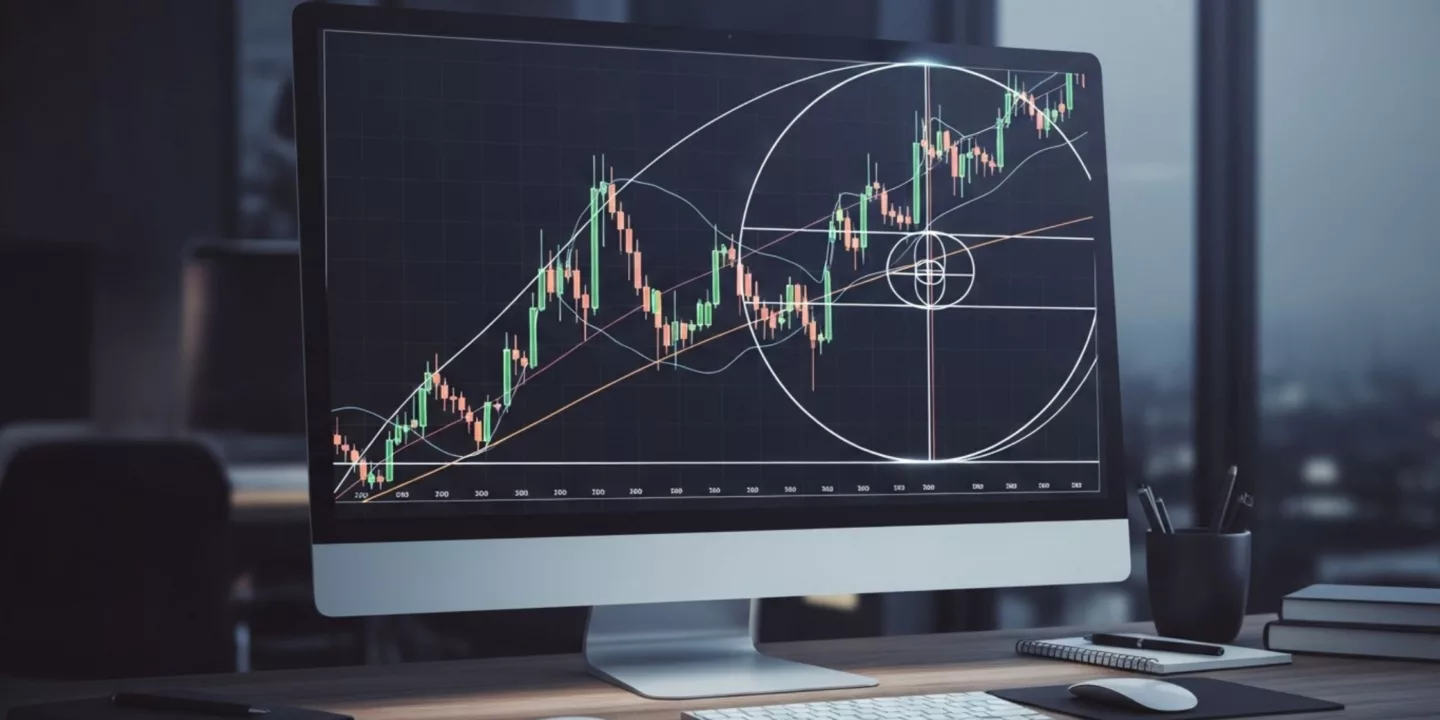
All Fibonacci Levels Explained: Where Does the Golden Pocket Fit?
The Fibonacci indicator in crypto is one of the most complex-looking indicators in Crypto.
The good news is you only need a few simple ideas to use them with confidence. In this friendly guide, we will unpack each major Fibonacci level, show you exactly where the famous golden pocket sits, and give you easy rules you can test on your charts today.
Fibonacci Levels: What are Fibonacci numbers and why do traders use them?
Fibonacci numbers are a simple series where each number is the sum of the two before it. The sequence goes 0, 1, 1, 2, 3, 5, 8, 13, and so on. As the numbers grow, the ratio between neighbors gets close to a special constant called the golden ratio. Its value is about 1.618.
The inverse of this value is about 0.618. Traders take these ratios and create lines on a chart to find possible support and resistance. These levels are not magic. They work because many traders watch the same zones and often react there.
In fast crypto markets, a shared map helps. When many people look at the same levels, price can pause or bounce around those places. This is why Fibonacci level tools are popular across markets. They offer a common language to measure how deep a pullback is and where a trend might resume.
In an uptrend, anchor the tool from the swing low to the swing high. In a downtrend, anchor from the swing high to the swing low. This helps the tool calculate how much of the move price has given back during the pullback. Use the most recent clear leg, not a very old one that the market has already broken.
Keep timeframes consistent. If you want a 4 hour trade, draw the Fib on a 4 hour swing. If you want a daily swing trade, use the daily chart.
Treat levels as zones, not exact lines. Price can overshoot and wick through a level before reversing.
Waiting for a reaction, such as a strong candle or a clear bounce in volume, will help filter false moves. You can also mark your own pocket by shading the area of interest.
Fibonacci retracement levels are checkpoints. They show where pullbacks often pause. Below are the most common levels and how many traders view them.
1. 23.6 percent: shallow dip in strong momentum
This level appears in very strong trends when buyers or sellers do not let price fall far. It is rarely used alone for entries. Many traders wait for more confirmation or a deeper level to improve the reward-to-risk.
2. 38.2 percent: the first serious pullback
This zone is popular in steady trends. It is often the first place where price tests the will of trend followers. You may see moving averages or a prior support zone lining up here. If you like early entries, you can scale a small position here and keep more size for deeper levels.
3. 50 percent: the halfway mark
The 50 percent level is not from the Fibonacci sequence, but it is widely used. Markets often give back about half of a move before choosing the next direction. Many traders monitor this midpoint to judge whether the pullback is mild or more serious.
4. 61.8 percent: the golden ratio
This is the star level. It sits close to the golden ratio inverse and often draws strong reactions. Price reaching this line can attract both dip buyers and stop hunts. It is a key part of the golden pocket you will learn below.
5. 65 percent: the golden pocket partner
This level is also not a classic Fibonacci number. Traders add it to create a band with 61.8 percent. The idea is to treat support as a small zone rather than a razor line.
6. 78.6 percent and 88.6 percent: deep pullbacks
These deeper levels appear when a trend is weaker or when the market seeks liquidity before a move. Some swing traders prefer to wait for 78.6 percent to reduce the chance of catching a falling knife.
The 88.6 percent line is a final deep retrace for strict plans. If price breaks past these with conviction, many traders treat the prior trend as invalid and step aside.
Fibonacci extension levels and how to plan targets
Fibonacci Retracement levels help you plan entries on pullbacks. Extension levels help you plan targets once price pushes beyond the previous swing.
The most common extension ratios are 127.2 percent, 161.8 percent, and 261.8 percent. These can act like future resistance or support where traders take profits or trail their stops.
Here is an easy example. If price rallies from 20,000 to 30,000 and then breaks above 30,000, the 1.618 extension sits around 36,180.
Many traders take partial profits near 1.272 and leave a runner for 1.618. You can also use extensions from the larger timeframe to plan final targets and trail using structure on the smaller timeframe.
The golden pocket is the small band between 61.8 percent and 65 percent retracement. Many traders see it as a sweet spot for entries during a pullback.
Why a band and not a line?
Markets often overshoot levels by a bit. Stop hunts can push price just beyond 61.8 before the bounce begins. By shading a pocket, you give your plan room to work while keeping risk small.
The golden pocket often blends with other clues. You may find it near a prior resistance that turned into support, a key moving average, or the lower edge of a rising channel. When a golden pocket aligns with such a structure, the trade idea gains strength. Remember, the pocket does not force price to turn. It only points to a place where a decision is likely.
Confluence means you have more than one reason to act. A golden pocket setup gets stronger when it aligns with other signals. Look for prior swing highs or lows near the pocket. Check if a 50 EMA or 200 EMA sits close. Study the volume.
Pullbacks on lower volume and bounces on higher volume are healthier. Simple momentum checks also help. For example, RSI moving back above 50 in an uptrend can confirm buyers returning.
You can add trend lines or channels for structure. If the pocket sits on a rising trend line inside a channel, you have extra support. If you trade breakouts, you can wait for price to leave the pocket and break a small trend line on the lower timeframe, then enter with tight risk. Confluence is not about more indicators. It is about simple, independent reasons that point to the same zone.
Here is a basic playbook you can test in an uptrend pullback:
Identify a clean swing and draw Fib from swing low to swing high.
Wait for price to reach 0.618 to 0.65. Do not pre-empt.
Watch for a trigger. Examples include a strong bullish candle, a higher low on lower timeframes, or RSI crossing above 50.
Enter with a small size first. You may scale across the pocket rather than a single entry point.
Place your stop just beyond the next deeper Fib level such as 0.786, or below the prior swing low.
Take partial profits at 0.382 and 0.5 on the way back up. Let a runner ride to the prior high, then consider 1.272 and 1.618 extensions.
This rule set is simple on purpose. It allows you to learn with controlled risk. With practice, you can tune position size, the trigger you like, and how you trail stops.
Example 1: Suppose ETH rallies from 1,800 to 2,400. On a pullback, the 61.8 percent line sits near 2,040. The 65 percent line sits near 2,010. You can plan an entry zone around 2,040 to 2,010.
If you place your stop below 0.786, say around 1,940, you know your risk. For targets, you can take a first partial back at 2,250 near the 0.5 retracement, a second partial at 2,400 near the prior high, and then plan 1.272 and 1.618 extensions above the high for the final runner.
Example 2: Imagine BTC rising from 50,000 to 60,000. If it pulls back to the golden pocket around 56,180 to 55,500 and shows a strong bounce with volume, a trend trader might enter. A conservative trader might wait for a higher low on the 1 hour chart, then enter with a stop below the pocket. Both plans are valid as long as risk is defined and the targets are clear. The key is to make your plan before the touch happens.
Price just nailed the 1.677 Fibonacci extension at 0.000022454, marking a textbook completion of wave (5) on the 2H chart. Now trading at 0.000022295, BONK is flashing signs of a short-term corrective phase.
Do not force the tool on messy charts. If the swing is not clear, wait for a better leg. Treat levels as zones, not thin lines. Price often wicks through and returns. Do not rely on Fibonacci levels alone. Add structure, a moving average, or a simple momentum check. Skipping confluence is a common mistake.
Another mistake is ignoring the higher timeframe. If the daily chart shows a heavy downtrend, a long setup on a 15-minute golden pocket is a lower probability play. Position size is another risk. Keep it small, especially while you are learning. Finally, do not move stops too soon or remove them. Stops exist to protect your equity so you can trade again tomorrow.
Use multiple time frame alignment. If a 4-hour golden pocket aligns with the daily 38.2 percent level, confidence increases. Consider the chart scale. When the price has moved a very large percentage, a log chart can make levels more meaningful. Time your entry. Many traders place a limit order inside the pocket, then add a small market order only after a strong reaction appears.
Plan partial exits. Taking some profit at 0.382 or 0.5 on the way back up reduces pressure and lets you ride the rest with a clear head. Combine Fib with channels. If the pocket sits at the lower rail of a rising channel, you get a natural place to add or trail. Above all, keep the method simple and repeatable.
Most charting platforms include Fibonacci retracement and extension tools by default. You can save a template that shows 23.6, 38.2, 50, 61.8, 65, 78.6, and 88.6. Add 127.2, 161.8, and 261.8 for extension targets. Mark the 0.618 to 0.65 band with a soft shading to make the golden pocket stand out. This speeds up your reading and keeps your plan consistent.
A quick setup routine helps. Decide on your timeframe. Find a clean swing. Draw in the direction of the trend. Mark the pocket and your next deeper level for stops. Set alerts near the pocket so you do not stare at the screen all day. With this process, you focus on planning rather than chasing.
No method wins all the time. Your edge is a mix of small losses and bigger wins. Use a simple risk rule. Many traders risk only 0.5 to 1 percent of their capital per trade. Place stops beyond structure, not inside noise. For a long setup, below 0.786 or under the prior swing low are common choices. For shorts, place stops above 0.786 or above the swing high.
Aim for at least a 2 – 1 reward-to-risk on average. If your stop is 2 percent, plan for 4 percent or more in gains. Take partials to lock progress, then trail stops as price moves in your favor. If the pocket breaks with strong momentum, do not fight it. Exit and prepare for the next clean swing. Consistent risk discipline will do more for your results than any entry trick.
Think of this as a cheat sheet when you plan your next trade.
23.6 percent: very shallow dip in a strong trend
38.2 percent: first healthy pullback and early scale zone
50 percent: psychological midpoint and common pause area
61.8 to 65 percent: golden pocket and popular reversal band
78.6 percent: deep pullback with trend still possible
88.6 percent: last deep retrace before many traders call it invalid
127.2, 161.8, 261.8 percent: common extension targets for profit taking
Keep this map on your desk. Use it to plan entries, stops, and exits. Adjust only after you record results for a fair sample of trades.
Conclusion
Fibonacci levels are simple lines that help you measure pullbacks and plan targets. You now know how to draw them, what each level often signals, and where the golden pocket fits.
The pocket at 0.618 to 0.65 is a popular zone because it blends math with trader behavior. It gives a fair balance of deeper discount and strong reaction. Use Confluence, keep your risk small, and take partial profits at logical checkpoints. With a clear plan and steady practice, Fibonacci tools can become a calm, reliable part of your trading routine.
And if you want to put this knowledge into action, Mudrex gives you everything you need in one place—advanced charting tools, spot and futures trading, and a simple interface built for both beginners and pros. It’s a platform where strategies like Fibonacci levels can go from theory to practice with confidence.
FAQs
1) What exactly is the golden pocket, and why do traders like it? The golden pocket is the 0.618 to 0.65 retracement band. Traders like it because many eyes watch it, and reactions often appear there. It gives a wider entry zone than a single line and fits well with common stop and target rules.
2) Is 50 percent a Fibonacci level? No. The 50 percent level is not a Fibonacci ratio. It is a widely used midpoint where many markets tend to pause. Traders still include it because it helps frame pullbacks and targets.
3) Which retracement levels should beginners focus on first? Start with 38.2 percent, 50 percent, and 61.8 to 65 percent. These cover shallow, middle, and deeper pullbacks. With these three zones, you can plan entries, stops, and partial exits without getting overwhelmed.
4) Do Fibonacci tools work only in crypto? No. Traders use Fibonacci tools in stocks, forex, commodities, and crypto. The value comes from shared behavior and structure. Use them with other clues such as support and resistance, momentum, and volume.
5) Where should I place stops in a golden pocket trade? Common choices are below the 0.786 level or below the prior swing low for long trades. For short trades, stops go above 0.786 or above the prior swing high. Place stops where the trade idea is clearly wrong, not inside typical noise.
6) Should I use log or linear charts for Fib? If the asset has moved a very large percentage, a log chart can make the levels more meaningful. Try both on your asset. Choose the one that best aligns with actual reactions on past swings.
7) How can I improve my results with Fib tools? Combine Fibonacci with structure, a moving average, and a simple momentum check. Keep risk small. Record your trades in a journal. Adjust one variable at a time so you can learn what truly helps.
Krishnan is a Bangalore-based crypto writer dedicated to simplifying complex crypto concepts. He covers blockchain, DeFi, and NFTs, with a focus on real-world asset tokenization and digital trust. Previously he has written on Real Estate related assets for NoBroker. Krishnan holds a B.Tech degree from the College of Engineering Trivandrum.