
Render [RNDR] is a decentralised GPU rendering network, designed to connect users who need high-performance computing with those who have spare GPU power. As demand grows across AI workloads, 3D graphics, gaming, and metaverse applications, projects like Render are gaining attention.
But does that make RNDR a good investment?
Render is a decentralised GPU rendering network that connects people who need heavy computing power with those who have spare GPU capacity. In simple terms, it works like a marketplace for GPU power. Instead of relying only on expensive centralised providers, users can access distributed computing resources through the Render Network.
This model is especially useful for tasks that need strong visual or processing performance, such as 3D rendering, animation, visual effects, digital design, and other compute-heavy creative workflows. With higher demand for high-performance infrastructure, Render has also gained attention for its relevance to AI-related compute demand. This is where GPUs play a central role.
At the center of this system is RNDR, the native token. It acts as the payment and reward layer that helps the network function.
Traditional GPU compute can be expensive, limited, or difficult to access at scale. That is where decentralized networks like Render stand out. Instead of depending on a few large providers, Render aims to make GPU access more flexible, distributed, and potentially more efficient.
This is also why Render is often discussed within the broader DePIN narrative, where blockchain projects are building real-world infrastructure networks. In Render’s case, that infrastructure is decentralized GPU power.
The RNDR token powers activity across the Render ecosystem. Users pay for rendering services with RNDR, while node operators and GPU providers earn rewards for supplying computing power. That gives the token a direct role in network usage.
In practical terms, RNDR demand depends on how much the network is actually used and how much the ecosystem grows over time. The more creators, developers, and businesses rely on Render, the stronger the token’s utility case becomes.
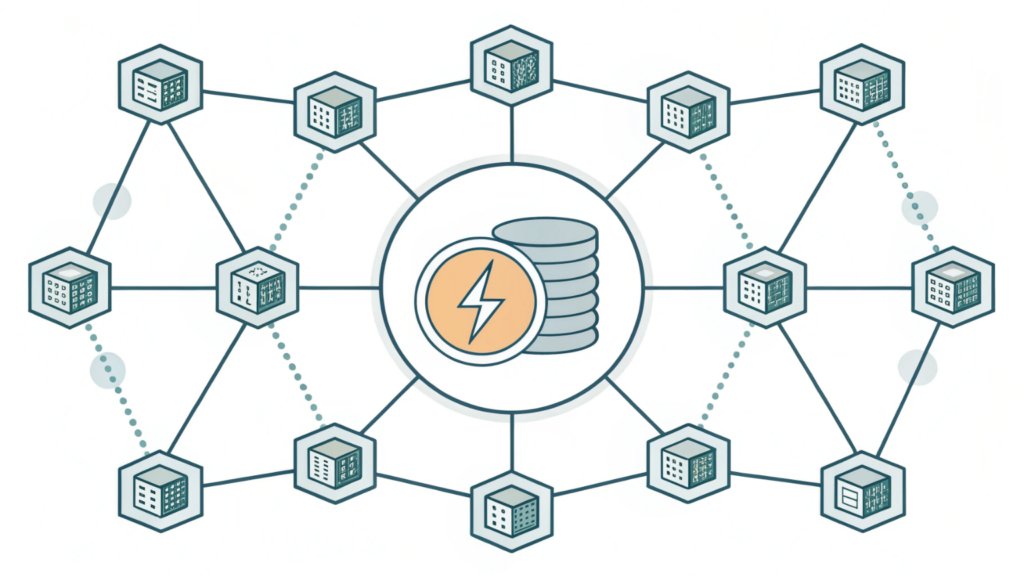
One of the biggest RNDR price drivers is its connection to the growing demand for GPU power, especially in the context of AI. As artificial intelligence, machine learning, and advanced graphics applications expand, the need for high-performance compute infrastructure has increased significantly. This has pushed GPU-related projects into the spotlight.
RNDR benefits from this, as it directly ties into how computing resources are accessed and distributed. When AI becomes a dominant market theme, tokens linked to infrastructure often attract increased attention from investors. However, while strong narratives can support price in the short term, long-term value depends on whether actual usage and adoption follow through.
A key part of RNDR’s investment potential lies in its real-world utility. Unlike purely speculative tokens, Render is designed to serve practical use cases such as 3D rendering, animation, visual effects, and other compute-heavy workflows. Demand from creators, studios, and developers can create a more sustainable foundation for growth.
Infrastructure tokens like RNDR tend to perform better over time when there is measurable network activity. If the Render Network continues to see increasing usage, it can strengthen the token’s value proposition. This makes render network adoption and RNDR demand important factors to watch beyond just price trends.
Despite its strong utility narrative, RNDR is still influenced by market conditions. Like most altcoins, its price often moves in response to overall sentiment. Altcoin rallies, AI-driven hype cycles, and Bitcoin-led market trends can all impact RNDR’s performance.
Investor sentiment can amplify both upside and downside. During bullish phases, RNDR may benefit from increased attention toward AI crypto tokens and infrastructure plays. On the flip side, during market corrections, even fundamentally strong projects can see sharp pullbacks.
The long-term bull case for Render starts with where it sits in the market. RNDR is at the center of three high-interest themes: AI, GPU infrastructure, and digital content rendering. That gives it a stronger narrative. If demand for compute keeps rising, especially for creative workflows and AI-related tasks, Render has a clearer use case.
What also strengthens the case is that Render is tied to real-world utility. It is not just a meme-driven asset or a purely theoretical blockchain idea. The network is designed to serve creators, studios, designers, and users who need GPU power. That gives RNDR exposure to infrastructure demand rather than only consumer excitement. If decentralized compute becomes more important over time, Render could benefit from being early in that category.
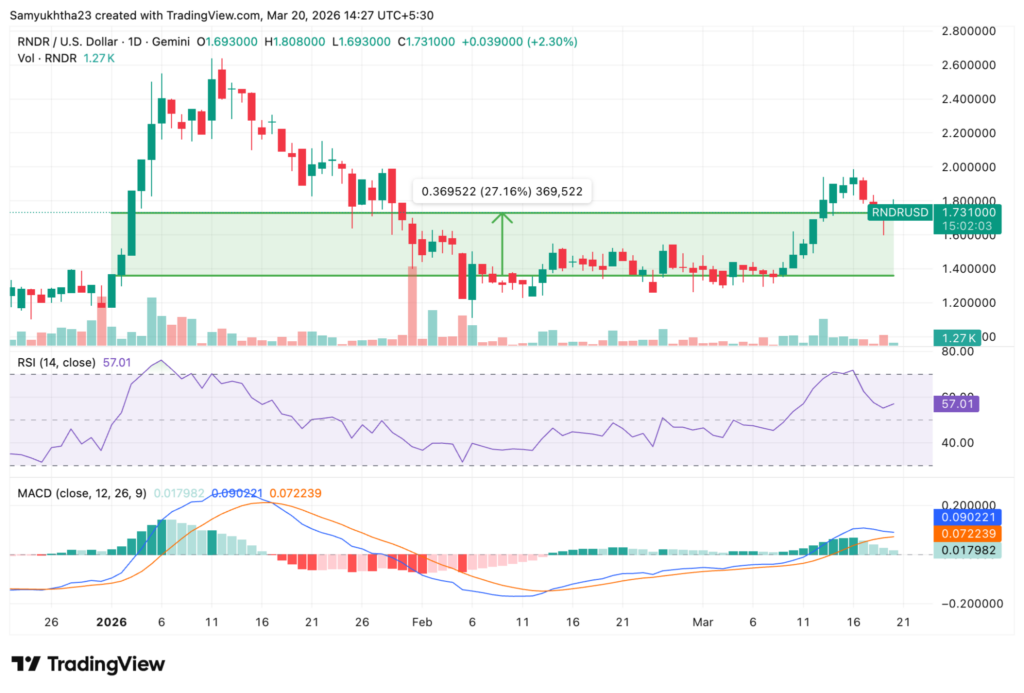
Year to date, RNDR appears to have rebounded from roughly the $1.36 support zone to around $1.73; about a 27.16% rise. This means buyers are still willing to step in when price returns to key demand areas. RSI was near 57, so there’s better pace; MACD remains positive, so the recovery is stronger than we think.
The biggest challenge for Render is that strong narratives alone do not guarantee strong returns. RNDR still faces real competition from centralized cloud GPU providers as well as other crypto infrastructure projects trying to capture the same AI and compute narrative. That makes Render a compelling story, but not an automatic winner.
Another risk is adoption. The market can get excited about GPU and AI-related tokens quickly, but actual network usage may grow more slowly than investors expect. During hype phases, token prices can move far ahead of real demand. That can create corrections if expectations slow down. Infrastructure-focused projects can also be harder for casual investors to value, because growth depends on usage and development.
RNDR may suit investors who are specifically looking for infrastructure and utility-driven altcoins. It also makes more sense for readers who want exposure to AI-adjacent crypto themes without buying into projects that have little real-world application.
Long-term investors who are comfortable with volatility, trend rotation, and theme-based investing may find Render more appealing.
RNDR may be less suitable for investors seeking low-volatility assets or straightforward crypto exposure.
Readers who prefer simpler narratives like Bitcoin [BTC] or Ethereum [ETH] may find Render harder to evaluate and riskier to hold through market swings. It is also not ideal for traders chasing guaranteed short-term upside.
One of the biggest risks with Render is that network growth has to keep pace with investor expectations. RNDR benefits from strong narratives around AI, GPU demand, and decentralized infrastructure, but narratives can move faster than actual usage. That is especially important for Render because the long-term investment case depends on measurable adoption.
Render also operates in a very competitive space. On one side, there are powerful centralized GPU and cloud providers that already dominate much of the compute market. On the other, there are other blockchain infrastructure and DePIN projects trying to build similar relevance. That is the trade-off of being in a hot sector. The opportunity is larger, but so is the competition.
Before buying RNDR, it helps to look beyond price momentum and focus on fundamentals. Start with token utility inside the ecosystem. Then look at adoption signals.
It is also worth evaluating the project’s position within broader AI and infrastructure trends. Render has a strong story, but a good story alone is not enough. Investors should also think about its competitive moat.
A simple way to evaluate RNDR is to ask a few practical questions before investing:
It can be, for investors who believe in the long-term growth of decentralized GPU infrastructure and AI-driven demand. Render stands out with a strong utility-focused model and exposure to a high-interest sector.
That said, it is not without risks. It’s best viewed as a higher-risk infrastructure play, not a low-risk core holding.
To make better crypto decisions, focus on learning fundamentals, managing risk, and staying informed. Explore detailed guides on Mudrex Learn and subscribe to the Mudrex YouTube channel for crypto market insights and investing education.
RNDR is used in the Render Network to pay for decentralized GPU rendering and compute-related services.
Indirectly, yes. RNDR benefits from broader interest in GPU infrastructure, which overlaps with AI and compute demand.
It can be for investors who believe decentralized infrastructure will grow, but it remains a volatile altcoin.
Competition, adoption pace, and broad crypto market volatility.
Investors looking for utility-driven, infrastructure-focused exposure within crypto.