Mudrex Learn logo

Should I Exit Crypto Now?

Crypto markets move fast — often faster than investors can emotionally handle. When prices drop sharply, headlines turn pessimistic, and social media fills with panic, it’s natural to wonder:

Should I exit crypto now?
Should I sell my crypto now or hold?
Should I cash out before things get worse?

The truth: deciding whether to exit crypto is not a simple yes-or-no question — whether you’re considering a partial trim or planning to sell crypto to INR and move funds to your bank. It depends on your goals, financial needs, risk tolerance, and where the market is in its broader cycle. This guide gives you a clear, structured framework to make that decision with confidence — without being influenced by fear or hype.

Buy The Dip

PIPPIN
₹33.71
▼ 24.16%24H
MYX
₹465.53
▼ 11.80%24H
HASH
₹2.41
▼ 9.12%24H

Before diving into the detailed steps, let’s start with the short answer most investors are looking for.

Should You Exit Crypto Right Now?

Wondering if you should sell crypto for INR now?

You may consider exiting or trimming your crypto if:

  • You urgently need cash for essential expenses or emergencies.
  • Crypto makes up too much of your portfolio (e.g., >20–30%) and you can’t sleep at night.
  • You no longer believe in the long-term fundamentals of the asset you’re holding.
  • You invested based on hype and now feel overexposed.

You probably shouldn’t exit completely if:

  • You’re reacting to headlines, fear, or temporary volatility.
  • You don’t have a clear plan for what you’ll do after selling.
  • You still believe in the long-term thesis but are stressed about short-term price movement.
  • You panic-sold in past cycles and regretted it.

In simple terms:

You should exit for financial reasons, not emotional ones.
You should stay invested if you have a long-term plan and your exposure is sensible.

Now let’s break this down.

Why Investors Ask, “Should I Exit Crypto Now?”

Most investors ask, “Should I exit crypto now?” because of fear — not fundamentals.

1. Volatility and Sharp Corrections

Crypto can drop 30–50% in weeks.

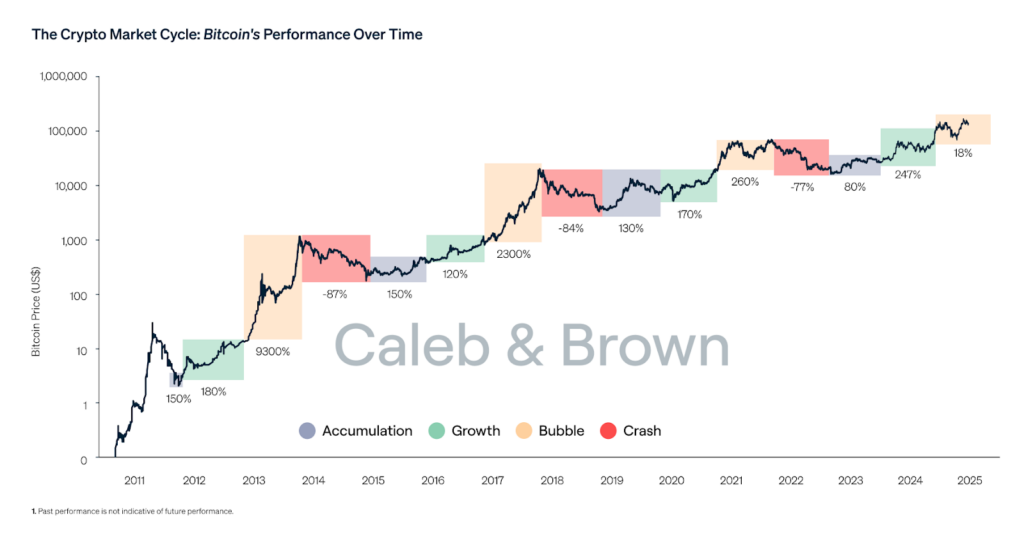
  • Bitcoin fell from $20,000 to $3,200 in 2018 — an 84% crash.
  • In 2022, BTC dropped from $69,000 to under $20,000, pulling down all major altcoins.

For new investors, these drawdowns feel catastrophic. For long-term investors, they’re part of the cycle.

2. Media-Driven Panic

Every bear market brings “Crypto is dead” headlines.

Bitcoin alone has been declared “dead” 470+ times by mainstream outlets, yet it continues reaching higher long-term highs.

3. Herd Psychology

When others sell, retail investors follow.
In 2018, heavy panic selling occurred — but holders saw Bitcoin rise over 1,000% in the next three years.

Most “exit now” impulses come from temporary fear, not signals that the technology or long-term story is broken.

📖 Related: Crypto Market Cycles: Understanding the Ups and Downs

Understanding Market Cycles in Crypto

Step 1 – Understand Where We Are in the Crypto Market Cycle

Before deciding whether to sell, you must understand the larger cycle.

The Four Phases of a Crypto Market Cycle

1. Accumulation Phase

After a major crash, prices stabilize. Smart money — institutions, whales — slowly accumulate.

2. Markup Phase

Retail investors enter as prices rise steadily. Optimism returns.

3. Distribution Phase

The peak. Hype and euphoria dominate. Smart money starts reducing exposure.

4. Markdown Phase

Prices fall rapidly. Panic sets in. Weak hands exit.
The cycle eventually resets into accumulation.

This cycle repeats — but each time, crypto has established higher lows over the long term.

Should I Exit Crypto Now? A Complete Guide to Making the Right Decision

How Halvings Have Shaped Past Bull and Bear Markets

Bitcoin halvings cut mining rewards in half every four years. Historically, they act as catalysts for new market cycles.

Past halving outcomes:

  • 2012 → BTC rose from $12 to ~$1,150
  • 2016 → BTC soared from $650 to ~$20,000
  • 2020 → BTC surged from $8,700 to $69,000

Halvings reduce supply issuance, often triggering bull markets 6–18 months later.

Understanding the cycle context is crucial because investors who exit at the bottom often end up buying back higher.

📖 Related: What is Crypto Winter and How to Survive It?

Step 2 – Analyse Your Crypto Before You Sell

Before hitting the sell button, evaluate what you’re holding.

Fundamental Check (For Long-Term Investors)

Ask yourself:

  • Is the project solving a real problem?
  • Is the team credible and active?
  • Is the tokenomics model sustainable?
  • Is adoption growing?
  • Is regulation affecting the project?

If fundamentals remain strong but the price is volatile, a full exit may be premature. Long-term assets tend to recover if the underlying utility remains intact.

Technical Check (For Traders)

If you trade shorter-term, rely on structure — not emotion.

Look at:

  • Support and resistance levels
  • Trend direction (uptrend/downtrend)
  • Risk–reward ratio
  • Stop-loss and take-profit levels

Traders exit not because they “feel fear,” but because their rules tell them to.

Step 3 – Understand the Tax Impact Before You Cash Out

Most investors forget this step — but taxes directly affect your net returns.

What Is the 1% Rule in Crypto (For Indian Investors)?

In India, many crypto transactions attract a 1% TDS.

This means:

  • Frequent buying/selling can lock up liquidity.
  • Traders who jump in and out of positions lose 1% each time.
  • If you exit fully and re-enter later, you may be paying TDS again.

This is important because the “exit now and buy back lower” strategy becomes more expensive than people assume.


Capital Gains When You Sell Crypto

In India:

  • 30% flat tax on crypto gains.
  • No adjustment for inflation.
  • No deductions (other than acquisition cost).
  • No ability to offset losses against other income categories.

This means:
Selling impulsively can trigger taxes that permanently reduce your capital.

Always evaluate post-tax impact before deciding.

ALSO READ: How to Calculate Crypto Tax in India

Step 4 – Smarter Alternatives to Exiting Crypto Completely

For most investors, the question isn’t “Should I exit crypto now?”
It’s “How can I reduce risk without abandoning long-term upside?”

Here are better approaches:


1. Partial Profit-Taking (Sell Some, Not All)

This lets you:

  • Secure gains
  • Reduce emotional stress
  • Still stay exposed to long-term upside

Example: sell 20–30% at major milestones while holding the rest.


2. Rebalancing Your Portfolio

If crypto is too large a share of your portfolio (e.g., >25–30%), trimming brings balance.

Rebalancing prevents:

  • Overexposure
  • Panic selling
  • FOMO buying

A stable long-term allocation (like 10% crypto) reduces emotional decisions.


3. DCA Out / SIPs (Exit Gradually Over Time)

Dollar-cost averaging out is as effective as DCA in.

Instead of exiting in one shot:

  • Sell a fixed amount at fixed intervals
  • Reduce timing risk
  • Exit without reacting to dips or pumps

SIPs in reverse form a disciplined exit strategy.


4. Rotating Within Crypto (Shift to BTC/ETH)

If altcoins feel risky, consider shifting to:

  • Bitcoin (historically resilient)
  • Ethereum (strong ecosystem)

Rotation reduces risk without fully exiting the market.


Should I Invest in DeFi Protocols After a Crash?

DeFi can offer high yields, but it also carries:

  • Smart contract risk
  • Liquidity risk
  • Depeg risk
  • Protocol failure risk

After a crash, entering DeFi is only advisable for:

  • A small portion of your portfolio
  • Investors who understand risks deeply

Your “safe” alternative is not chasing yields — it’s strengthening your long-term strategy.

Risks of Exiting Crypto Too Soon

Exiting during fear-driven downturns has historically been costly.

1. Opportunity Cost

Many investors who sold at the 2018 bottom missed:

  • Bitcoin’s rise from $3,000 → $69,000
  • Ethereum’s rise from $80 → $4,800

Crypto’s biggest returns often occur after the market has shaken out weak hands.


2. Rising Institutional Adoption

Examples:

  • BlackRock’s BTC ETF filing
  • PayPal enabling crypto payments
  • Countries experimenting with Bitcoin adoption

When big institutions accumulate, selling early can lock you out of long-term upside.


3. Ongoing Technological Evolution

Crypto is still in early innings.

Sectors growing fast:

  • DeFi
  • Tokenized real-world assets
  • NFTs
  • Layer-2 scaling
  • AI + blockchain integrations

Exiting entirely means potentially missing the next wave of innovation.

📖 Related: How Long will the Crypto Bull Run Last?

When Exiting Crypto Might Actually Make Sense

There are rational, strategic reasons to exit or reduce exposure.

1. You Need Liquidity

Emergency funds take priority over investments.

2. You’re Overexposed

If crypto dominates your portfolio and creates stress, trimming is healthy.

3. Your Risk Tolerance Has Changed

Approaching retirement, life changes, or financial responsibilities may require shifting to lower volatility assets.

Knowing when to walk away is part of disciplined investing — as long as it’s for the right reasons.

📖 Related: How to Manage Risk Management in Crypto Futures Trading?

Smarter Alternatives to Exiting Completely

Instead of going all-in or all-out, you can adopt middle-ground strategies:

  1. Partial Profit-Taking: Sell portions of your holdings at set milestones. Example: Sell 20% after BTC doubles, but keep the rest for long-term growth.
  2. Staking / Yield Strategies: Holders of ETH, ADA, or SOL can earn 4–8% annually by staking, creating passive income without selling.
  3. Dollar-Cost Averaging (DCA): Regularly investing fixed amounts reduces the risk of buying at peaks. Historically, DCA into Bitcoin over 5+ years has been profitable regardless of timing.

    📖 Related: What is Dollar-Cost Averaging in Crypto?
  4. Systematic Investment Plans (SIPs) Platforms like Mudrex let you automate small, regular investments — perfect for long-term wealth creation.

🎥 Watch: Goal-Based SIPs in Crypto

Building a Long-Term Crypto Strategy

Should I Exit Crypto Now? A Complete Guide to Making the Right Decision

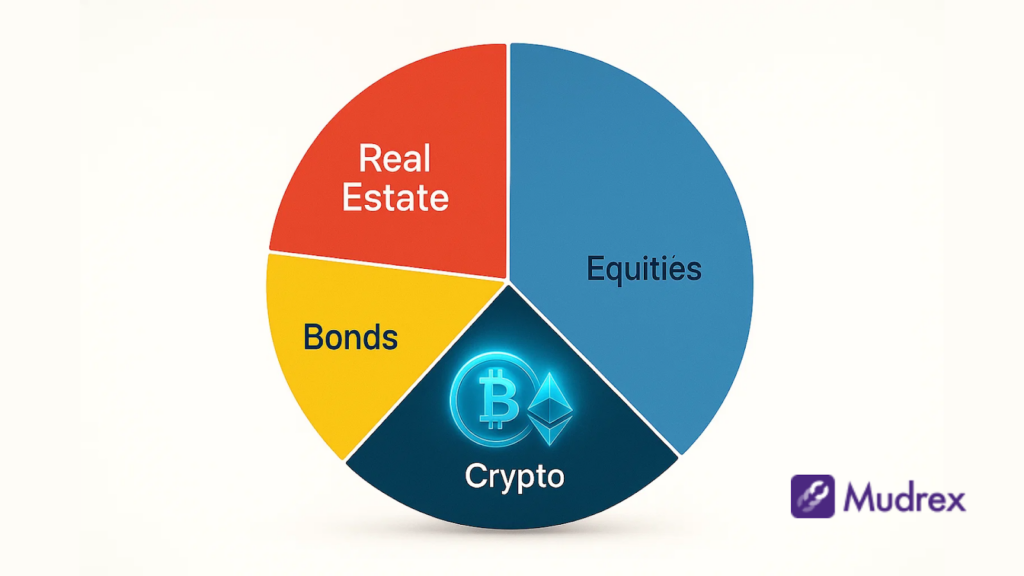
Image caption: Your crypto portfolio can be a valuable addition to a diversified investment strategy that also includes real estate, bonds, and equities.

To avoid panic exits, create a framework.

1. Set Allocation Rules

Example:

  • 60% equities
  • 30% bonds
  • 10% crypto

This ensures crypto volatility doesn’t overwhelm your portfolio.

2. Diversify Within Crypto

  • BTC and ETH as core
  • Small allocation to high-potential altcoins

3. Define Your Goals

Why are you investing?

  • Retirement?
  • Wealth creation?
  • Diversification?

4. Learn From Institutions

  • MicroStrategy holds 150,000+ BTC
  • Tesla maintains Bitcoin even after volatility
  • BlackRock and Fidelity offer crypto products

Long-term conviction is often what separates successful investors from emotional ones.

📖 Related: How to Build a Crypto Portfolio for Long-Term Gains

Conclusion

So, should you exit crypto now?

There’s no one-size-fits-all answer — but there is a smart framework:

  • Understand the market cycle
  • Analyse fundamentals and technicals
  • Evaluate tax implications
  • Consider partial exits or rebalancing
  • Maintain a long-term strategy
  • Avoid emotional decisions

History shows that crypto has recovered from every downturn and reached new highs each cycle. The real question isn’t just whether to exit, but how to position yourself for the next phase of the market.

Ready to make smarter investing decisions? Explore more guides on Mudrex Learn and subscribe to the Mudrex YouTube channel for weekly insights that simplify crypto investing.

FAQs

1. Should I exit crypto now?

Exit only if you need liquidity, feel severely overexposed, or no longer believe in the asset. Avoid exiting due to fear or short-term volatility.

2. Should I sell my crypto now or hold?

If you have a long-term strategy and balanced exposure, holding is usually better. If your risk tolerance has changed, partial selling can help.

3. Should I cash out my crypto or stay invested?

Cashing out locks your current value but removes future upside. Staying invested exposes you to volatility but maintains long-term potential.

4. When is the right time to exit the crypto market?

When your financial goals are met, you need funds, or your risk tolerance no longer matches your exposure.

5. How do I know if I’m overinvested in crypto?

If crypto is over 15–25% of your portfolio and market swings cause anxiety, you’re likely overexposed.

6. Should I buy crypto now or wait for lower prices?

Timing markets is nearly impossible. DCA strategies help reduce timing risk and smooth out volatility.


Krishnan is a Bangalore-based crypto writer dedicated to simplifying complex crypto concepts. He covers blockchain, DeFi, and NFTs, with a focus on real-world asset tokenization and digital trust. Previously he has written on Real Estate related assets for NoBroker. Krishnan holds a B.Tech degree from the College of Engineering Trivandrum.


Leave a Reply

Your email address will not be published. Required fields are marked *

Trade Crypto Futures on Mudrex at lowest Fees
Trade Crypto Futures with Lowest Fees
One Click Away from Better Crypto Decisions
Trade Crypto Futures on Mudrex at lowest Fees
Trade Crypto Futures with Lowest Fees
One Click Away from Better Crypto Decisions