What Is a Stop Hunt in Crypto and How Can You Avoid It?
Stop hunting is one of the most frustrating realities of crypto trading. One moment your trade looks safe, the next a sudden spike wipes out your stop-loss before the price bounces back.
Many new traders mistake this for random volatility, but in truth, it’s a calculated strategy. In this article, we’ll explore what stop hunting in crypto is, why it happens, who’s behind it, and how you can outsmart it.
Crypto Stop Hunts, Explained
Stop hunting is the practice of deliberately moving the price of a cryptocurrency to trigger stop-loss orders placed by traders. Once those stops are hit, positions are liquidated, creating more selling pressure. This allows larger players to buy back assets at a cheaper price or push the market in their desired direction.
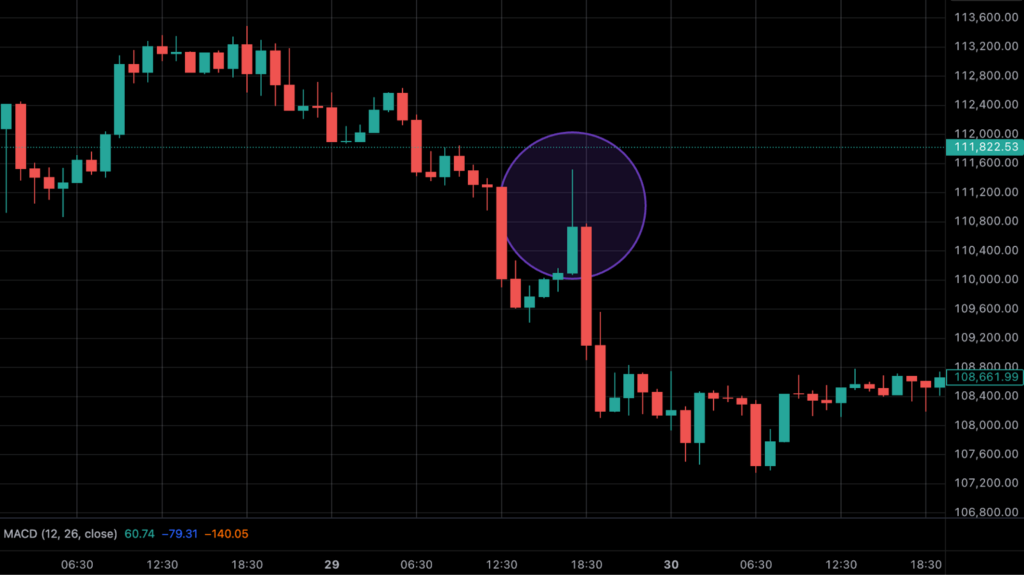
On a chart, stop hunts appear as sharp “wicks”—sudden downward or upward spikes that quickly reverse. While these moves may look like organic volatility, they’re often engineered.
Sharp wicks often signal engineered moves, not organic volatility.
Why Does Stop Hunting Happen in Crypto?
The main reason is liquidity.
In trading, liquidity refers to how easily an asset can be bought or sold without major price changes. Stop-losses act as concentrated pockets of liquidity because they are predictable. Many retail traders place stops at the same obvious levels, such as just below support or just above resistance.
For whales and institutions, this creates opportunity. By pushing the market into those zones, they can trigger liquidations, collect liquidity, and then reverse the market in their favor.
Crypto is more vulnerable to stop hunting compared to traditional markets because:
On May 19, 2021, Bitcoin experienced one of its most infamous crashes. Following negative headlines about China’s mining ban, BTC dropped sharply from $42,000 to below $30,000.
But the crash wasn’t just panic selling. It was a massive stop hunt.
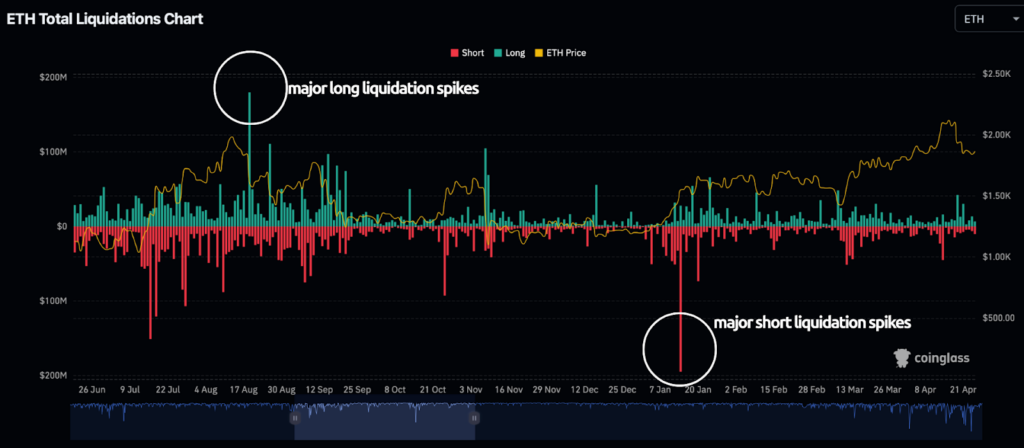
According to Coinglass, over $8.6 billion in leveraged positions were liquidated in 24 hours. The price wicked as low as $29,000 before bouncing back above $32,000 within hours.
Case Study: Ethereum Liquidations in September 2022
In September 2022, just days before the much-anticipated Ethereum Merge, ETH experienced a sharp dip. The price briefly fell below $1,300, liquidating millions in long positions.
At first glance, this seemed like a panic move tied to uncertainty around the Merge. But closer analysis showed a classic stop hunt: whales deliberately pushed ETH down to scoop up liquidity before the price rebounded.
Stop hunting thrives on human psychology. Most traders cluster their stops at predictable levels, such as right under a key support zone. Algorithms and whales know this, and they exploit it.
Fear amplifies the effect. When traders see their stops triggered, they assume the trend is broken and sell, fueling the cascade further. This “herd behavior” makes stop hunting one of the most effective manipulation tactics.
You can’t eliminate stop hunting, but you can reduce the risk of being caught:
Avoid obvious stop zones: Don’t place stops exactly at round numbers or clear support levels.
Use wider stops with smaller positions: This reduces the risk of being flushed out.
Try mental stops: Monitor prices manually instead of placing visible stops on the exchange.
Limit leverage: The higher your leverage, the easier it is to get liquidated.
Hedge positions: Use inverse pairs or stablecoins to reduce downside risk.
Advanced Strategies to Outsmart Stop Hunters
For more experienced traders, there are tools and methods to anticipate stop hunts:
Liquidation heatmaps: Platforms like Coinglass show where stops and liquidations cluster.
Order book analysis: Watching liquidity walls helps identify potential manipulation targets.
On-chain data: Tracking whale wallet movements can reveal coordinated dumps or buys.
Dollar-cost averaging (DCA): Long-term investors can avoid stop hunts by accumulating over time rather than relying on tight stop-losses.
Heatmaps often reveal the zones whales are targeting for stop hunts.
The Ethics and Debate Around Stop Hunting
Is stop hunting manipulation or just smart trading?
In traditional markets like forex, stop hunting is common but rarely considered illegal—it’s part of market dynamics. In crypto, where regulation is still developing, the debate is even more complex.
Critics argue it unfairly punishes small traders. Supporters claim it’s simply the natural process of liquidity finding its level. Regardless, the lack of oversight in crypto exchanges makes it a persistent risk.
As institutional adoption grows, stop hunting may evolve.
Institutions bring larger capital, but also more transparency. Exchanges may implement better tools to reduce manipulation, like improved order book transparency or risk controls.
At the same time, decentralized exchanges (DEXs) create new dynamics. While on-chain transparency makes stop zones more visible, it also provides traders with new tools to track whale behavior.
Ultimately, stop hunting won’t disappear. It will simply adapt as the crypto market matures.
Conclusion
Stop hunting is one of crypto’s most frustrating realities, but also one of its most important lessons. It shows that markets aren’t just about price and news—they’re about liquidity, psychology, and strategy.
While you can’t prevent hunting entirely, you can learn to recognize it, anticipate it, and avoid falling victim. By adapting your trading approach and using smarter tools, you can transform stop hunting from a risk into a competitive edge.
To make your trading journey easier, download the Mudrex app, where you can access advanced tools, curated strategies, and insights designed to help you trade smarter and safer. And if you’d like to discuss strategies, share experiences, or learn from fellow traders, join our Mudrex Telegram community—a space where thousands of traders exchange real-time insights every day.
FAQs
1. Is stop hunting illegal in crypto? No. Stop hunting is not illegal in crypto markets. Since the industry is largely unregulated, it is seen as part of normal trading behavior, though it is controversial.
2. What’s the biggest example of a crypto stop hunt? One of the largest occurred on May 19, 2021, when Bitcoin crashed to $29,000. Billions in liquidations were triggered before the price rebounded, marking a textbook stop hunt.
3. How do whales manipulate stop losses? Whales push prices toward obvious stop-loss levels, triggering liquidations. Once traders are flushed out, they can accumulate assets at discounted prices.
4. How do I set stop-loss orders without being hunted? Avoid placing stops at obvious levels like round numbers. Use wider stops combined with smaller position sizes to reduce risk.
5. Does stop hunting happen in DeFi markets too? Yes. While DeFi markets are transparent, stop hunts still occur because whales can see liquidity zones and exploit them just like on centralized exchanges.
Krishnan is a Bangalore-based crypto writer dedicated to simplifying complex crypto concepts. He covers blockchain, DeFi, and NFTs, with a focus on real-world asset tokenization and digital trust. Previously he has written on Real Estate related assets for NoBroker. Krishnan holds a B.Tech degree from the College of Engineering Trivandrum.