XRP vs Solana: Key Differences, Use Cases, Risks, and Long-Term Outlook (2026)
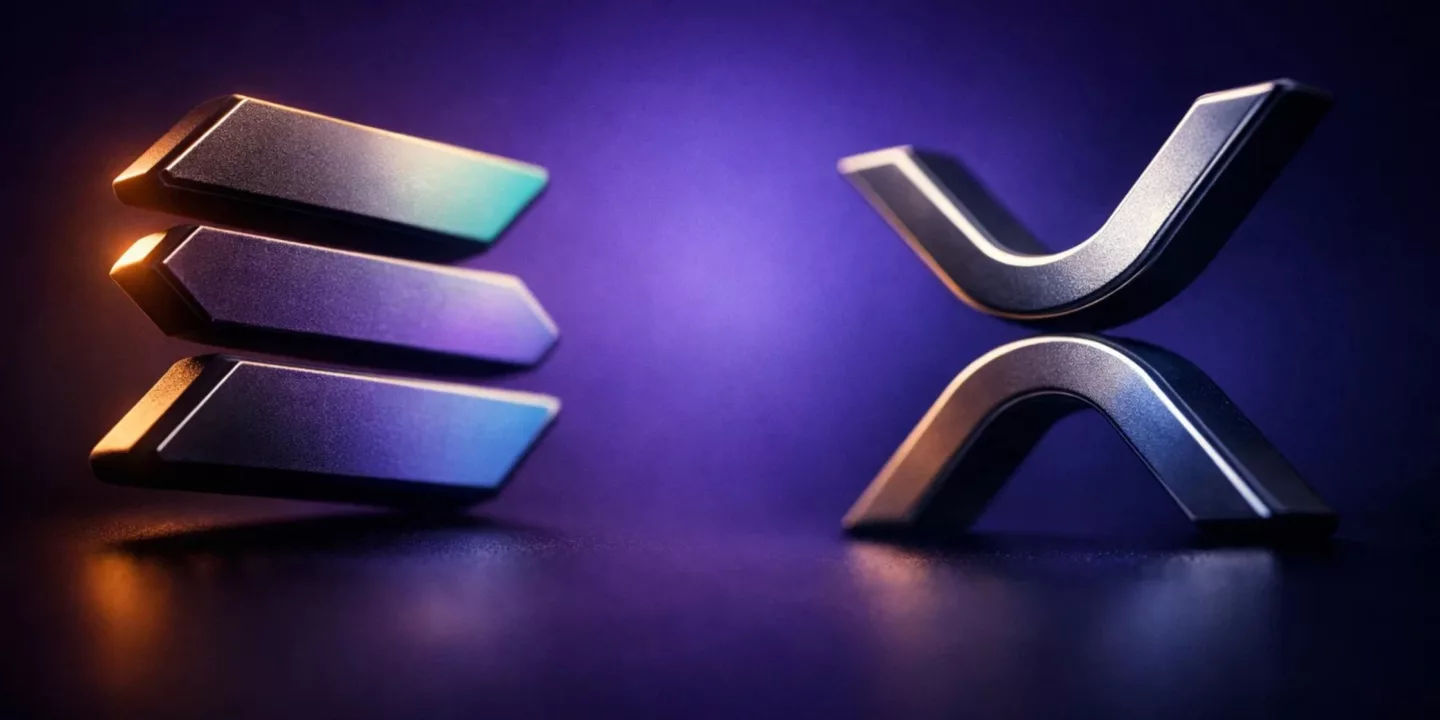
XRP vs Solana is a comparison between two high-speed blockchain networks built for very different goals. XRP focuses on cross-border payments and settlement efficiency. Solana is designed as a smart contract platform powering DeFi, NFTs, and consumer apps.
Understanding XRP vs Solana requires looking beyond speed and fees to examine decentralization, ecosystem strength, tokenomics, and long-term adoption potential heading into 2026 and beyond.
XRP vs Solana: Which One Should You Choose?
When evaluating XRP vs Solana, the real question is not which is faster; it is which network aligns with your investment thesis.
Choose XRP if:
You want exposure to payments and remittance infrastructure
You prefer a purpose-built ledger model over complex smart contracts
You believe institutional settlement rails will expand
You value stability and a narrower use case
Choose Solana if:
You want exposure to DeFi, NFTs, gaming, and consumer crypto apps
You believe developer network effects drive value
You want a smart contract platform upside
You are comfortable with higher ecosystem volatility
In XRP vs Solana, “better” depends entirely on what you want exposure to.
XRP vs Solana Comparison: Speed, Fees, Design, and Risks
Feature
XRP
Solana
Primary purpose
Cross-border payments
Smart contracts and dApps
Network design
XRP Ledger with validator consensus
Proof-of-Stake + Proof-of-History
Confirmation time
3–5 seconds
Sub-second to a few seconds
Fee behavior
Very low and stable
Very low but can spike under extreme demand
Reliability history
Stable, minimal major outages
Past network outages during high load
Decentralization signals
Validator-based system
Large validator set but high hardware requirements
Ecosystem strength
Payments-focused integrations
Strong DeFi, NFT, gaming activity
Tokenomics
Fixed max supply
Ongoing issuance with staking incentives
Key risks
Adoption pace, centralization perception
Network reliability, ecosystem cyclicality
How to Judge “Better” in XRP vs Solana
In XRP vs Solana, “better” depends on your goal. For payments exposure, XRP may fit. For app-layer growth and smart contract exposure, Solana may be more relevant. As investments, both depend on adoption, liquidity cycles, and ecosystem growth.
XRP vs Solana Use Case Breakdown
XRP’s Best-Fit Use Cases
XRP is optimized for cross-border settlement and remittance-style transfers. The XRP Ledger focuses on liquidity bridging between currencies. In XRP vs Solana, XRP is less about decentralized apps and more about efficient value transfer.
Its design favors predictability and cost control, making it attractive for institutional-style payment corridors.
Solana’s Best-Fit Use Cases
Solana is built for decentralized applications. In XRP vs Solana, Solana dominates in DeFi, NFTs, on-chain trading, and gaming ecosystems. Its high throughput enables consumer-facing crypto apps with lower friction.
Solana competes more directly with Ethereum than with XRP in terms of application-layer activity.
Do XRP and Solana Compete?
In XRP vs Solana, overlap exists mainly in speculative trading and exchange liquidity. Both are fast and relatively low-cost networks.
However, XRP focuses on institutional payment rails, while Solana focuses on decentralized app ecosystems. Their long-term adoption paths are structurally different.
Technology Differences Between XRP and Solana
How Transaction Finality Works
In XRP vs Solana, finality refers to how quickly transactions become irreversible.
XRP achieves finality through validator consensus within seconds. Solana achieves rapid finality through its high-performance architecture, combining Proof-of-Stake and Proof-of-History.
For users, what matters is settlement certainty and network reliability rather than technical labels.
Why Solana Scales
Solana’s design prioritizes throughput and user experience. High-performance architecture allows thousands of transactions per second. This makes Solana attractive for consumer apps.
However, in XRP vs Solana, this scaling approach has historically introduced reliability trade-offs during periods of extreme demand.
Why XRP Emphasizes Stability
XRP’s narrower focus reduces complexity. In XRP vs Solana, XRP sacrifices broad app-layer flexibility in favor of stable, efficient settlement performance.
The trade-off is less ecosystem diversity compared to Solana.
Adoption and Ecosystem Strength in XRP vs Solana
Institutional Adoption Signals
In XRP vs Solana, XRP’s adoption narrative centers on payment infrastructure and financial integrations. Investors should evaluate corridor expansion, liquidity usage, and institutional settlement products rather than headline announcements alone.
Solana’s institutional signals often relate to investment products, venture funding, and ecosystem partnerships.
Developer and Application Ecosystem Signals
In XRP vs Solana, Solana leads in DeFi categories such as decentralized exchanges, NFT marketplaces, and stablecoin usage. Metrics like total value locked, developer activity, and wallet growth are key indicators.
For XRP to catch up in this dimension, it would need meaningful expansion into broader smart contract ecosystems.
Tokenomics and Supply: Understanding Valuation in XRP vs Solana
Supply Model Comparison
XRP has a fixed maximum supply, with a large portion initially created and distributed. Token releases and escrow mechanisms influence circulating supply dynamics.
Solana has ongoing issuance, with staking rewards incentivizing validators. Inflation gradually decreases over time, but still affects supply expansion.
In XRP vs Solana, understanding dilution versus demand growth is critical for valuation.
For XRP to reach $100, its total valuation would need to reach levels comparable to the largest global asset classes. This would require massive real-world settlement dominance and sustained demand.
Investors evaluating XRP vs Solana price potential should focus on realistic adoption scenarios rather than speculative targets.
Price Performance and Volatility in XRP vs Solana
What Moves XRP’s Price
In XRP vs Solana, XRP’s price tends to react to regulatory developments, exchange liquidity conditions, and institutional adoption narratives. Broader risk-on cycles in crypto also influence performance.
What Moves Solana’s Price
Solana’s price often responds to ecosystem activity, DeFi growth, memecoin cycles, NFT momentum, and network reliability perception.
Correlation and Market Cycles
Both assets are influenced by broader crypto market cycles. In XRP vs Solana, outperformance often rotates depending on whether payments narratives or smart contract ecosystems dominate investor attention.
Long-Term Outlook for XRP and Solana (2026-2030)
The long-term outlook for XRP vs Solana depends less on short-term price cycles and more on whether each network successfully expands its core use case. From 2026 to 2030, adoption depth, network resilience, and ecosystem growth will likely matter more than hype-driven rallies.
Bull and Bear Case for XRP
Bull Case for XRP
Expanded institutional payment integration If more financial institutions use XRP as a bridge asset for cross-border settlement, consistent transactional demand could emerge beyond speculation. Real usage would strengthen its value proposition.
Increased settlement volume Higher on-chain volume tied to real remittance or liquidity flows would signal functional adoption rather than narrative-driven momentum.
Regulatory clarity Clear and stable regulation in major markets would reduce uncertainty, improve exchange accessibility, and increase institutional confidence.
In this scenario, XRP evolves into a specialized but widely used settlement layer.
Bear Case for XRP
Slower-than-expected adoption If institutions favor alternatives such as stablecoins or internal settlement systems, XRP’s real-world usage growth could stall.
Limited ecosystem expansion Without broader developer activity or diversified applications, XRP could remain narrowly positioned, limiting long-term demand growth.
In this case, XRP may remain relevant but struggle to achieve transformational scale.
Bull and Bear Case for Solana
Bull Case for Solana
Sustained DeFi and consumer app growth If decentralized exchanges, gaming platforms, and on-chain consumer apps continue expanding, Solana could benefit from strong fee generation and network effects.
Improved reliability and uptime Continued infrastructure upgrades that minimize outages would strengthen confidence among developers and institutions.
Developer ecosystem expansion Growth in active developers and new application categories would reinforce Solana’s position as a leading smart contract platform.
In this scenario, Solana becomes a high-performance foundation for large-scale crypto applications.
Bear Case for Solana
Network reliability concerns If outages or congestion re-emerge during peak usage, user trust and developer commitment could weaken.
Competitive pressure from other smart contract platforms Ethereum upgrades, Layer 2 scaling solutions, or emerging high-performance chains could dilute Solana’s market share.
In this case, Solana may retain relevance but face slower growth and higher volatility.
From a 2026–2030 perspective, XRP vs Solana is ultimately a question of payments adoption versus application ecosystem dominance. The winner is likely to be the network that converts narrative into sustained, measurable usage.
Catalysts Checklist for Investors
Developer activity trends
Fee market behavior
Network uptime metrics
Institutional product launches
Stablecoin and liquidity growth
Monitoring these factors helps contextualize beyond price speculation.
Conclusion
XRP vs Solana is not a simple speed comparison. It is a contrast between a purpose-built settlement network and a high-performance smart contract platform. XRP targets institutional-style payments and liquidity bridging. Solana targets developer-driven ecosystem growth. Investors evaluating XRP vs Solana should focus on use case alignment, adoption metrics, tokenomics, and risk tolerance rather than short-term price movements.
To deepen your understanding of crypto, explore resources on Mudrex Learn. For simplified breakdowns, ecosystem insights, and long-term strategy discussions, subscribe to the Mudrex YouTube channel and stay informed through every market cycle.
FAQs
Which is better, XRP or Solana?
It depends on your goal. XRP focuses on payments and settlement, while Solana focuses on smart contracts and decentralized applications.
Will XRP overtake Solana?
Possible in market cap terms during certain cycles, but it depends on adoption growth in payments versus app-layer expansion.
Do XRP and Solana compete?
They overlap in trading markets, but their core use cases are different: payments infrastructure versus decentralized applications.
Will XRP hit $100?
Highly unlikely without extraordinary adoption that would justify a massive market capitalization.
Is Solana more decentralized than XRP?
Solana has a broad validator set but requires high-performance hardware. XRP uses a validator consensus model with a different governance structure. Both involve trade-offs.
Is XRP faster than Solana?
Both networks offer very fast settlement. Solana can process more transactions per second, while XRP emphasizes stable and predictable settlement times.
Siri is a writer venturing into the exciting realms of blockchain technology, cryptocurrency, and decentralized finance (DeFi), eager to explore the transformative potential of these innovations. She brings a unique perspective that bridges traditional industries and cutting-edge technology, often infused with a touch of humor through memes. She has a rich background in real estate and interior design, having previously contributed to NoBroker, where she crafted blogs and assets on these topics.