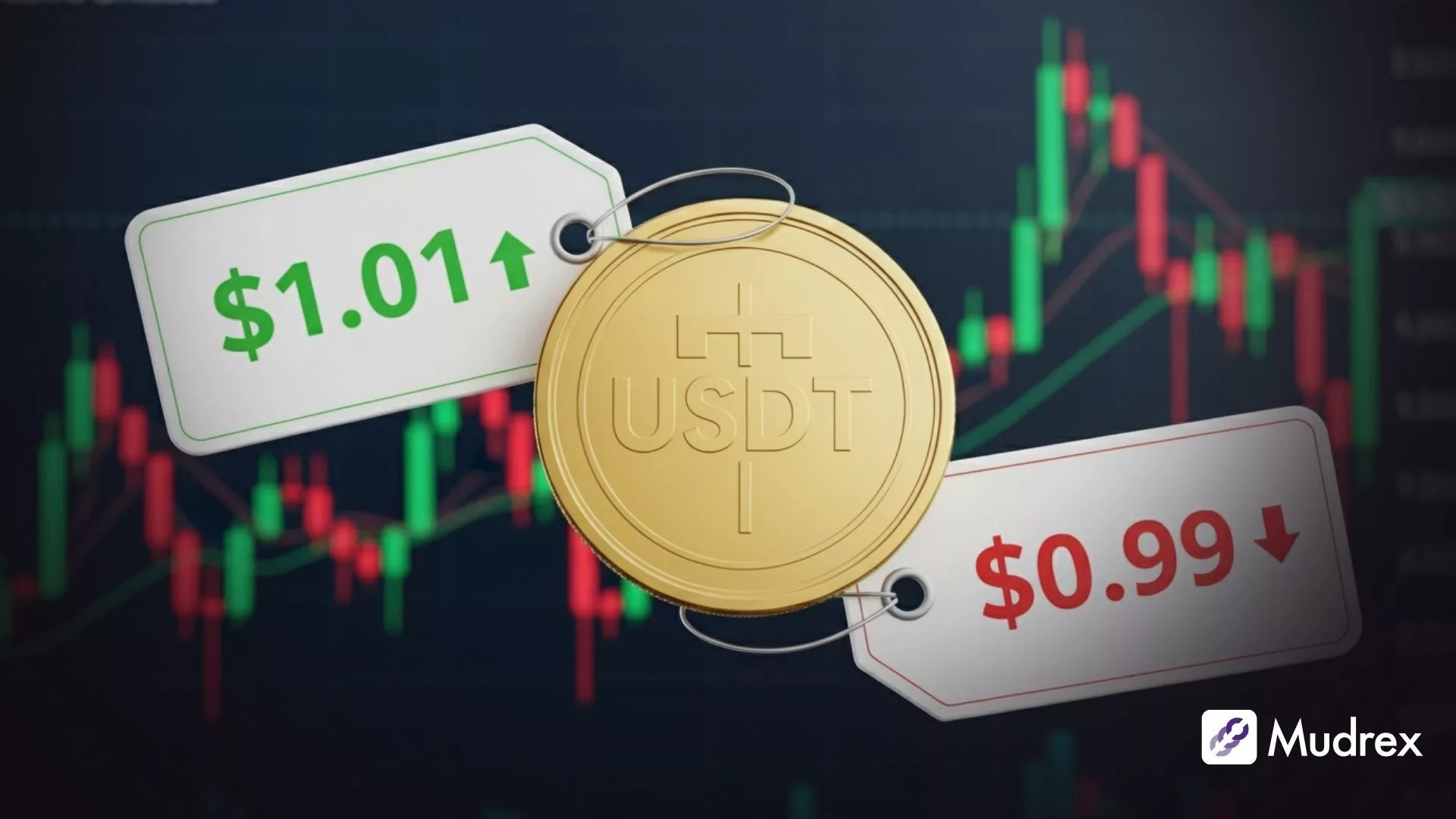
If you’ve ever tried to buy or sell Tether (USDT) on Mudrex (or any crypto platform) with your local currency, you may have noticed something confusing: the price to buy USDT is higher than the price to sell USDT.
Since USDT is a stablecoin pegged to the US dollar (ideally 1 USDT = 1 USD), it might seem confusing that there’s any price difference at all. Rest assured, this difference is normal and happens on most platforms. In this beginner-friendly guide, we’ll explain why USDT’s buy price and sell price can differ and outline the various reasons behind this gap.
USDT is a USD-pegged stablecoin, but its buying and selling rates in local currency can differ due to market forces.
Think of buying/selling USDT like exchanging currency at a bank or airport kiosk. When you exchange money, there’s one rate at which the shop will sell you US dollars (if you’re buying USD with INR, for example) and a different rate at which it will buy USD from you.
The “buy price” (for USDT or any currency) is the price you pay to purchase it, and the “sell price” is what you get if you sell it. Typically, the buy price is a bit higher than the sell price. This difference is known as the bid-ask spread, or simply the spread, and it exists in almost every financial market.
In the context of Mudrex (or any crypto exchange), when you see USDT quoted at two prices, it’s not a mistake; it’s how markets function. For example, you might see that 1 USDT costs ₹90 if you are buying, but if you sell 1 USDT, you might only get ₹88. Let’s dive into the key reasons why these prices differ.
1. The Bid-Ask Spread (Difference Between Buy and Sell Prices)
Bid-Ask Spread is a fundamental concept.
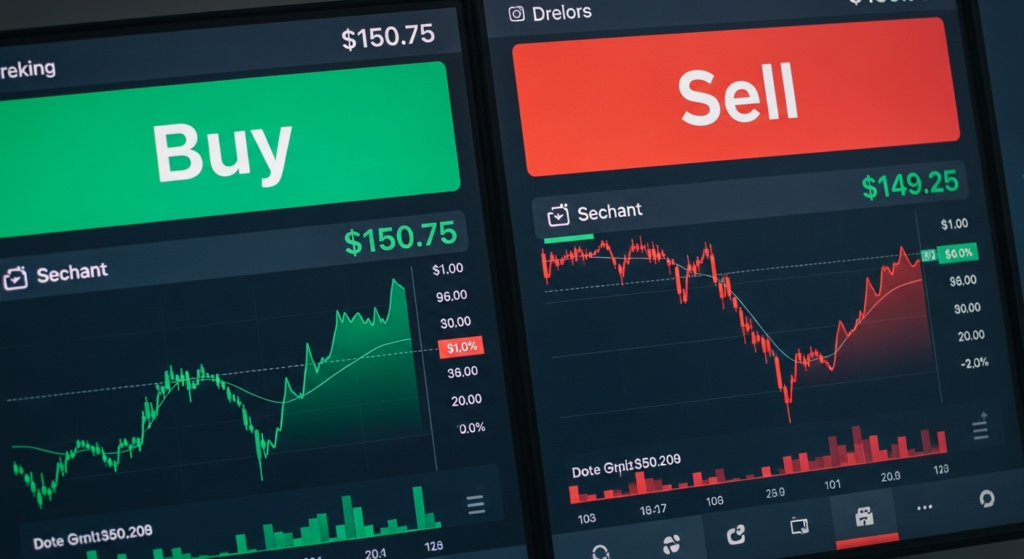
It’s the gap between the price buyers offer and the price sellers ask for. In simpler terms, it’s the difference between the sell price and buy price on the platform.
Every market has a spread; it’s how exchanges and market makers facilitate trades and often how they earn a profit.
When you place a market order to buy USDT, you’ll pay the ask price (the lowest price a seller is willing to accept). When you sell USDT, you receive the bid price (the highest price a buyer is willing to pay). Naturally, the ask price is higher than the bid price at any given moment. This difference compensates the market maker or exchange for facilitating the trade.
- Why have a spread? It ensures the platform or liquidity provider isn’t caught losing money on rapid trades. The small gap covers transaction costs and provides a cushion against market fluctuations.
- Analogy: If one platform lets you buy Bitcoin at $50,000 but the selling price is $49,500, that $500 gap is the spread – essentially the cost of immediate liquidity. The same idea applies to USDT, even if the numbers are smaller. For instance, buying USDT at ₹90 vs selling at ₹88 implies a ₹2 spread.
The bid-ask spread is a normal market mechanism. It’s not unique to Mudrex; virtually all exchanges or currency converters have a spread. This is a primary reason you see a difference between USDT’s buy and sell rates.
2. Liquidity and Market Demand
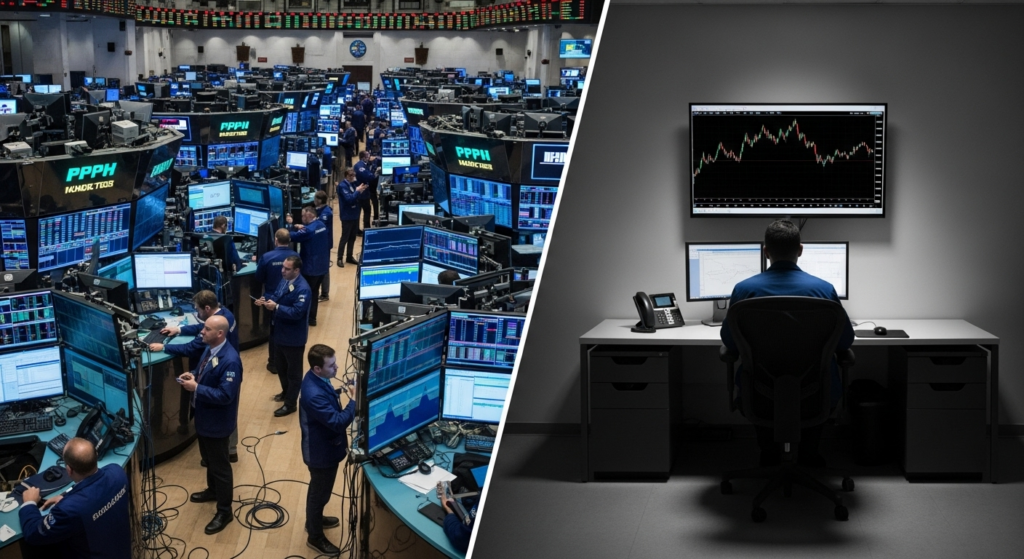
The size of the spread largely depends on liquidity – how easily and in what volume USDT is being traded on the platform. If there are lots of buyers and sellers actively trading USDT, the spread tends to be narrow (small difference between buy/sell price) because competition pushes prices closer together.
Conversely, if trading activity is low or one side (buy or sell) has fewer participants, the spread can widen.
- High Liquidity = Tighter Spread: USDT is one of the most traded cryptocurrencies globally, so on major international exchanges, its spread is usually very small (often just fractions of a cent). Lots of market makers are ensuring you can buy or sell near $1.
- Lower Liquidity or Imbalance = Wider Spread: On a smaller platform or during times of low activity, you might notice a bigger gap. If a few people are selling USDT and many want to buy (high demand, low supply), sellers can charge a bit more, raising the buy price. If the opposite occurs (few buyers, many sellers), the sell price might drop lower.
Demand and supply imbalances directly affect USDT’s price in local markets. Although USDT’s value is intended to stay at $1, heavy demand in one region can make the local price of USDT creep above $1 (in terms of that region’s currency).
Likewise, low demand could make it slightly cheaper. Usually, these differences are small globally, often on the order of 1–2% at most under normal conditions. But local market dynamics can amplify the effect (as we’ll discuss for India below).
Remember: Mudrex’s platform reflects a market. If users on Mudrex (and its liquidity partners) are mostly buying USDT, the price to buy will rise until more sellers come in to balance it. This dynamic helps explain why, at times, you’ll see a noticeable gap; it’s not just a preset fee, it’s also market-driven by user activity.
3. Platform Fees and Conversion Costs
Every exchange or broker needs to earn revenue and cover costs, and they do this through fees or spreads. Mudrex, for instance, has transparent trading fees (between 0.12%–0.45% for spot trades as per account tier) but also zero fees on INR deposits.
Some platforms explicitly charge a fee per trade, while others reduce upfront fees but maintain a slightly less favorable exchange rate. If you’re converting your INR to USDT on a platform, the rate you get might factor in various costs: payment processing, compliance, and the brokerage’s profit.
Key points regarding fees and conversion costs:
- Payment Gateway Charges: If you’re using a direct fiat on-ramp (like a UPI, bank transfer, or card) to buy USDT, the third-party processor or bank may have charges. The platform might recoup these by adjusting the rate.
- Operational Overheads: Compliance with local regulations, handling of taxes (like TDS in India), and ensuring liquidity all have costs. Part of these can reflect in the buy/sell prices offered.
- Profit Margin: Exchanges often take a tiny margin on each conversion. This is standard business practice. It’s similar to how currency exchange houses might say “no fee”, but their USD/INR rate is a bit worse than the official rate – that difference is their profit.
On Mudrex and other exchanges, both explicit trading fees and the implicit fee in the spread contribute to the difference in buy vs sell price. The good news is that for large-volume stablecoins like USDT, these spreads are usually as tight as possible, due to competition.
4. Currency Exchange Rates and Fluctuations
USDT is pegged to the US dollar, which means 1 USDT is meant to equal 1 USD. However, if you’re dealing in a different currency (like Indian Rupees, INR), the price of USDT will depend on the USD/INR exchange rate at that moment.
If the rupee’s value changes, the INR price of USDT changes correspondingly. This can sometimes create confusion for beginners: USDT itself is stable against USD, but against INR it can move up or down because the USD-INR rate moves.
For example, suppose $1 = ₹83. If there were no other factors, 1 USDT should cost around ₹83. But if the rupee weakens to ₹85 per $1, then 1 USDT would roughly cost ₹85. These forex movements can happen daily. So one reason you might see different buy/sell prices is simply timing – exchange rates fluctuate.
The platform may update prices periodically or use a certain reference rate. In a fast-moving market, the rate might be set slightly cautiously to account for any minor currency shifts in the time it takes to complete the transaction.
Additionally, conversion spread plays a role. Just like when you convert currency at a bank, the bank uses a buy rate and sell rate for USD that are a bit apart, a crypto platform converting INR<->USDT does similarly. They might base it on the current interbank USD/INR rate but add a small buffer.
In short, part of the USDT price difference is simply the nature of currency conversion. USDT’s stability is with respect to USD. When you introduce another currency, you have to consider that currency’s market and conversion costs.
Mudrex, serving Indian users, will display USDT prices in INR that encapsulate the current rupee-dollar value plus any spread. If you’re using Mudrex elsewhere with a different currency, the same principle applies with that currency.
5. Local Market Conditions and Regulations (The Case of India)
Beyond the general factors above, regional market conditions can significantly impact USDT’s buy/sell price difference. This is especially evident in countries like India, where demand for USDT is high but direct access is restricted.
On Indian exchanges and platforms, USDT often trades at a premium – meaning it costs more than the equivalent of $1 in INR. This premium can range widely. Typically, Indian prices for USDT are about 5–7% higher than global USD prices, and at times the premium has reached 10–12%. In practical terms, if $1 is ₹83 globally, the market might price USDT around ₹87–₹93 in India. Why does this happen?
Several India-specific factors contribute to this difference:
- High Demand, Limited Supply: With more traders wanting USDT (for trading and as a dollar substitute) and fewer willing or able to sell it at the base USD rate, the price gets bid up. It’s a simple demand-supply imbalance. Everyone in India wants that stable dollar value in digital form, but getting USDT into the country has hurdles.
The result is an increased value of USDT locally due to demand outpacing supply. This is analogous to the famous “Kimchi premium” in South Korea, where local crypto prices ran higher than global rates because of restricted capital flows – a similar phenomenon is happening with USDT in India’s market. - Restrictions on USD/USDT Inflows (Arbitrage Limits): In a free market, if USDT is expensive in one country, traders would simply buy it cheaper from abroad and sell locally to profit, which should eliminate the price gap. However, Indian regulations (like FEMA rules) limit sending money abroad to buy crypto. Because it’s not easy to bring in loads of USDT from outside, the higher local price persists.
- INR Volatility and Preference for Stable Value: The rupee has seen consistent depreciation over the years and can be volatile. Many Indians prefer holding value in dollars (or dollar-pegged assets like USDT) to protect against INR fluctuations. This adds to demand for USDT as a store of value or hedge, further boosting its local price. Essentially, people are willing to pay extra to convert their rupees into a currency that doesn’t drop in value as fast.
- Taxation and Trading Costs: India imposes a 1% TDS (tax deducted at source) on crypto trades and a 30% tax on gains. This has made frequent trading expensive. As a result, many traders just buy USDT (paying the premium) and hold or invest long-term rather than doing many short trades. Fewer active traders means lower liquidity on exchanges, which can keep spreads slightly wider. (Some exchanges have started adjusting policies, but it’s a factor in overall market activity.)
- Use of USDT for Remittances: On a related note, some expats or individuals use USDT to remit money (because it’s faster/cheaper than formal channels). This non-trading use case also fuels demand. While this might not directly concern a Mudrex user just investing, it’s part of the broader demand picture that influences price.
What this means for you: If you’re a Mudrex user in India wondering why you pay a premium on USDT, it’s not Mudrex alone – all Indian platforms reflect this higher market price. It’s a market condition resulting from high demand and regulatory bottlenecks. The premium is essentially the cost of getting a stable USD-equivalent value within a restricted environment.
Mudrex sources liquidity in compliance with regulations, so the rates you see include those market-driven premiums. The sell price for USDT will likewise be a bit lower than the buy price, but roughly in line with other exchanges’ sell rates. Over time, if regulations ease or more competitors enter with direct USD liquidity, this premium may reduce. Until then, this difference persists across the board.
Conclusion: Putting it All Together
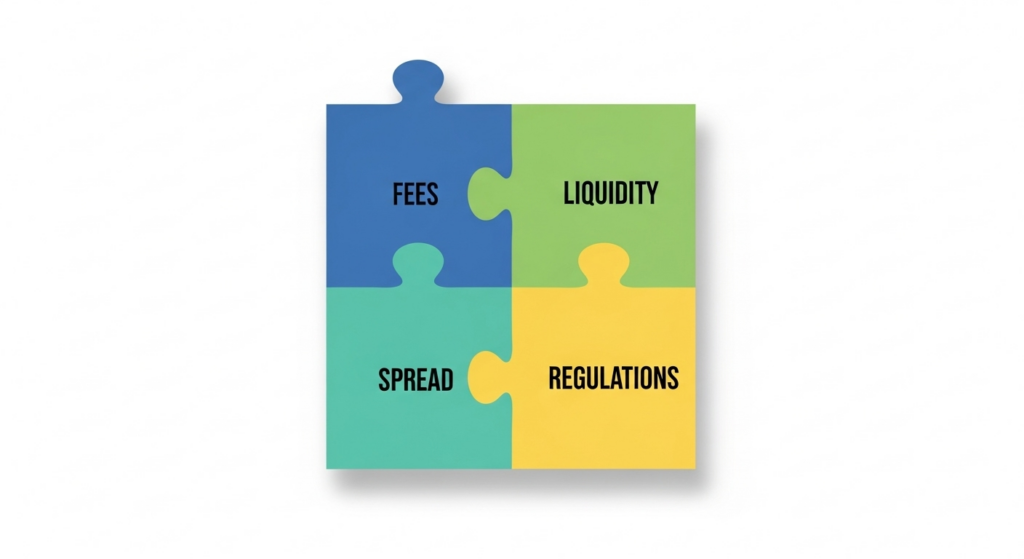
The difference between USDT’s buy and sell prices boils down to a combination of market mechanics and local market factors. Every exchange has a spread – that’s the basic reason you never see identical buy/sell quotes. On top of that, things like liquidity, fees, and currency conversion rates can widen the gap slightly. In places like India, additional factors (regulatory hurdles and high demand) create a noticeable premium on USDT, which is reflected in platforms like Mudrex as well.
For a beginner, the key takeaways are:
- It’s Normal: A higher buy price and lower sell price for USDT is normal on any platform. It’s similar to how money changers operate. This spread is not lost money for no reason – it’s the cost of trading convenience and liquidity.
- Know the Reasons: Part of the difference covers the platform’s fees or the payment processor’s cut (even if labeled “fee-free”). Part is due to real market demand and supply at that time. In a vibrant market with many participants, the difference will be small. In a constrained market, it can be larger.
- Plan Accordingly: As an investor, understand that when you convert INR (or your local currency) to USDT, you’ll pay a slight premium, and when converting back, there’s a slight loss on the spread. This is important when calculating your overall costs and returns. It might be tempting to look for ways around it, but any legitimate platform will have similar pricing for the same conditions. Non-compliant or informal routes might offer a better rate but come with significant risks (and are not advised).
In summary, the difference in USDT buy vs sell price comes from the inherent structure of trading markets plus specific local market dynamics. By being aware of these reasons, you can make more informed decisions and avoid surprises. While we all wish 1 USDT would straightforwardly equal ₹X without any spread, reality is a bit more complex – but now you know exactly why that extra ₹1–2 (or a few percent) difference is there.