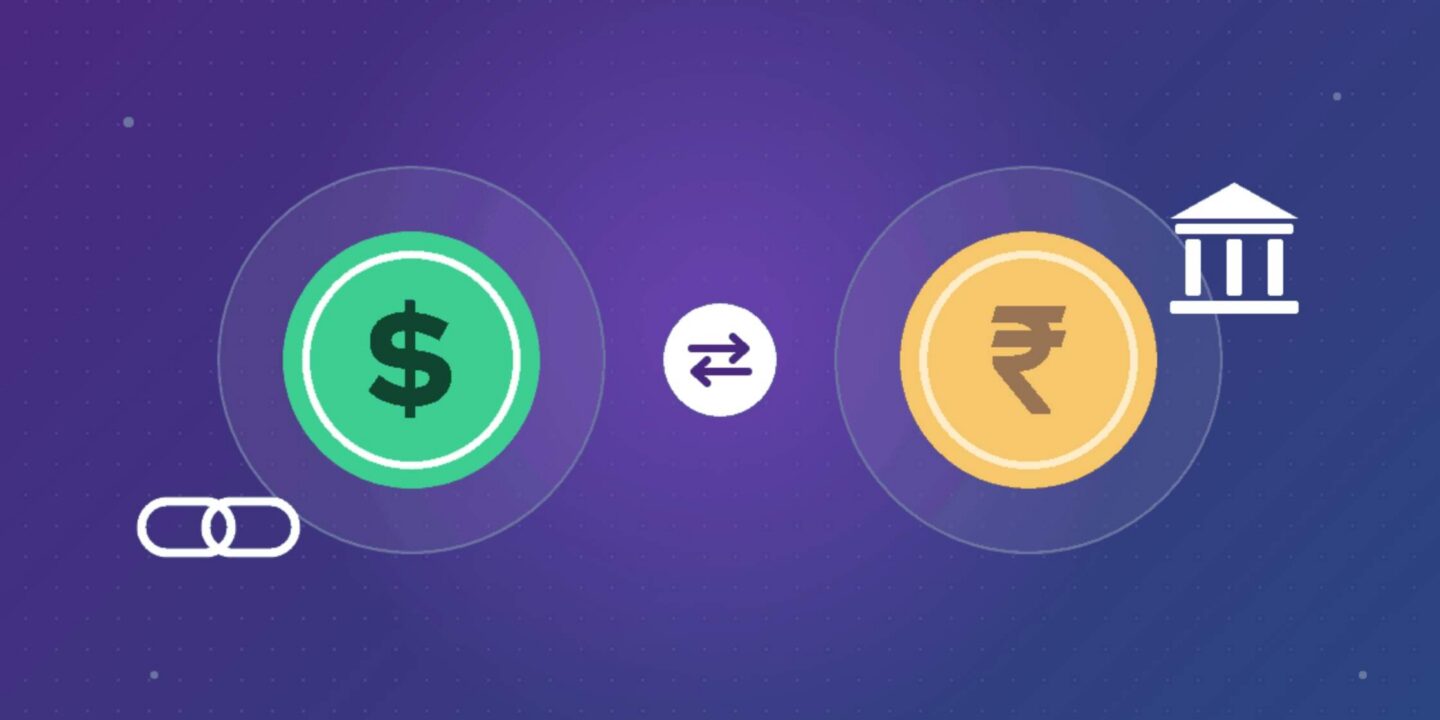

Have you ever thought of the difference between an INR stablecoin and India’s digital rupee? Both are digital forms of money, but they are significantly different. Stablecoins like USDT or a possible INR-backed token are issued by a private company, while a central bank digital currency (CBDC) like the digital rupee is issued by a central bank.
To understand stablecoins vs CBDCs better, let us look at how they differ, how they maintain their value, and what they are used for. This article provides the basic differences and explores some popular stablecoins available on Mudrex.

Basically, stablecoins are digital tokens that maintain a stable value. These tokens track the value of an asset, such as the US dollar or gold. For example, US-dollar based stablecoins like USDT and USDC aim to maintain the value of 1 US dollar.
Stablecoins are often used for crypto trading, digital payments, and transferring money between platforms. But traders should be aware of the fact that stablecoins do not come without risk. A stablecoin can lose its peg if its reserves, liquidity, or issuer face problems.
At the same time, a CBDC is a digital form of a country’s official currency. As the central bank issues it, the asset is a direct liability of the bank. India’s digital rupee (e₹) is an example of a CBDC. It is issued by the Reserve Bank of India. It maintains the value of the rupee, which means that ₹100 in digital rupees is worth ₹100. CBDCs support digital payments. They can also make money transfers better and faster.

The main difference between stablecoins and CBDCs is their issuer and value maintenance
| Feature | Stablecoins | CBDCs |
|---|---|---|
| 1. Issuer | Private companies or other entities | Central banks |
| 2. Value | Usually linked to an asset, such as the US dollar | Represents the country’s official currency |
| 3. Backing | Cash, government securities, crypto assets or other mechanisms | A direct liability of the issuing central bank |
| 4. Price stability | Can lose their peg under certain conditions | Same face value as the equivalent physical currency |
| 5. Main uses | Crypto trading, transfers and digital payments | Digital payments and other official currency uses |
| Examples | USDT, USDC and DAI | India’s digital rupee (e₹) |
Stablecoins depend on their design and the systems used to maintain their value. Their risks could include weak reserves, liquidity problems, and issuer-related issues. CBDCs are issued by central banks and represent official central bank money.
Another key difference is their connection to crypto markets. Stablecoins are widely used to trade crypto assets and move funds between platforms. CBDCs are digital forms of official currency. Their features depend on each country’s design.
Many fiat-backed stablecoins use reserves to support their value. These reserves may include cash, bank deposits, and short-term government securities. For example, USDT and USDC maintain a value close to $1. But not all stablecoins use similar models. Some crypto-based stablecoins use other crypto assets as collateral. At the same time, algorithmic stablecoins rely on mechanisms designed to manage supply and demand.
A CBDC does not need private-company reserves to maintain a separate market peg. Instead, it is designed to hold the same face value as the country’s official currency. For example, one digital rupee has the same value as one physical rupee.

The safety of both stablecoins and CBDCs depends on how they are issued and managed. While CBDCs are direct liabilities of the central bank that issues them, stablecoins depend on their reserves, issuer, and the mechanisms used to maintain their value.
As CBDCs are issued by central banks, they carry fewer risks. Stablecoins, on the other hand, may face higher risks based on their reserves or issuer. Crypto-backed stablecoins can fluctuate based on market volatility.
However, the safer choice depends on your needs and the risks you are ready to accept. It is also worth noting that a central bank’s backing does not remove every operational or privacy risk. Also, a stablecoin’s target price does not guarantee its value.
Interestingly, stablecoins and CBDCs are used for different purposes. Although both of them support digital transactions, they serve different needs. Stablecoins are closely linked to crypto markets, while CBDCs bring official currency into digital payment systems.
| Use case | Stablecoins | CBDCs |
|---|---|---|
| Crypto trading | Commonly used to trade crypto assets | Not generally designed for crypto trading |
| Digital payments | Possible on supported platforms and networks | Designed for payments using official currency |
| Transfers | Can move between supported wallets and networks | Can support digital transfers under the issuing system |
| Cross-border payments | Possible, subject to network access and local rules | Depends on the country’s design and cross-border arrangements |
| Holding value | Tracks an asset, but can lose its peg | Holds the face value of the official currency |
It is important to understand that being digital does not make stablecoins and CBDCs automatically decentralized. The level of control depends upon who issues them and how their systems operate.
Many of the fiat-backed stablecoins have a central issuer. The company manages issuance and redemption of the token. While some stable tokens use decentralized protocols, their governance, collateral, and smart contracts could still create risks.
At the same time, CBDCs will operate under the scrutiny of the central bank that issues them. Although some use distributed ledger technology, it does not make them decentralized in the same way as permissionless public crypto networks
The digital rupee is India’s central bank digital currency, issued by the Reserve Bank of India. Stablecoins are digital tokens issued by a private company. While both support digital transactions, they differ in multiple ways, including the issuer.
The RBI’s digital rupee, also called e₹, represents the Indian rupee. It has the same face value as physical cash. Stablecoins like USDT and USDC maintain a stable value against the US dollar. The digital rupee is for official digital payments. Stablecoins are used for crypto trading, transfers, and payments on supported platforms. Their availability and use depend on local laws and platform support.
Stablecoins vs CBDCs come down to their issuer, backing, and purpose. Stablecoins are private digital tokens that usually track an asset. At the same time, CBDCs are digital forms of official currency issued by central banks.
If you want to explore stablecoins for crypto trading, you can check the supported cryptocurrencies on Mudrex. Review each asset’s risks and availability before making a decision.
To build stronger conviction in crypto investing, explore in-depth guides on Mudrex Learn and subscribe to the Mudrex YouTube channel for insights on markets, tokens, and long-term crypto trends.
A stablecoin is a digital token issued by a private entity that aims to maintain a stable value. A CBDC is digital money issued by a central bank and represents an official currency.
No, CBDCs are not usually treated as cryptocurrencies like Bitcoin.
Private companies or other entities issue stablecoins. Central banks issue CBDCs.
Many stablecoins use cash, bank deposits, or government securities to support their value. A CBDC is a direct liability of its issuing central bank.
Neither type is automatically decentralized.
The RBI issues the digital rupee as official Indian currency. A stablecoin is generally issued by a private entity and may track the value of a currency such as the US dollar.
Crypto assets involve risks, including the possible loss of your invested money. Stablecoins can lose their target value because of reserve, liquidity, or issuer problems. Leverage can magnify both gains and losses. Examples in this article are for learning purposes only and are not financial advice.