
The best crypto investments before Diwali are not always the coins making the biggest short-term gains. With crypto prices changing quickly, buying into festive hype can expose you to losses if a project lacks lasting value. A smarter approach is to look beyond price movements and assess an asset’s use, adoption, market size, liquidity, and risks.
A Mudrex survey of over 6,000 Indian crypto traders found that 50.7% of respondents allocated less than 10% of their portfolios to crypto. This highlights the importance of treating crypto as part of a wider investment plan rather than an all-or-nothing bet.
In this guide, we explore cryptocurrencies worth researching for their long-term potential, the market signals to watch, and the risks Indian investors should weigh before Diwali 2026.
Bitcoin, Ethereum, Solana, XRP, and BNB are five cryptocurrencies worth researching for their different uses, adoption, and market positions. None is guaranteed to deliver gains before Diwali. Your choice should depend on your time horizon, risk tolerance, and the evidence behind each asset.
The table below compares five leading cryptocurrencies using CoinGecko’s historical data for October 10, 2026 (UTC). Prices reflect daily closing values, while market capitalisation and trading volumes are rounded.
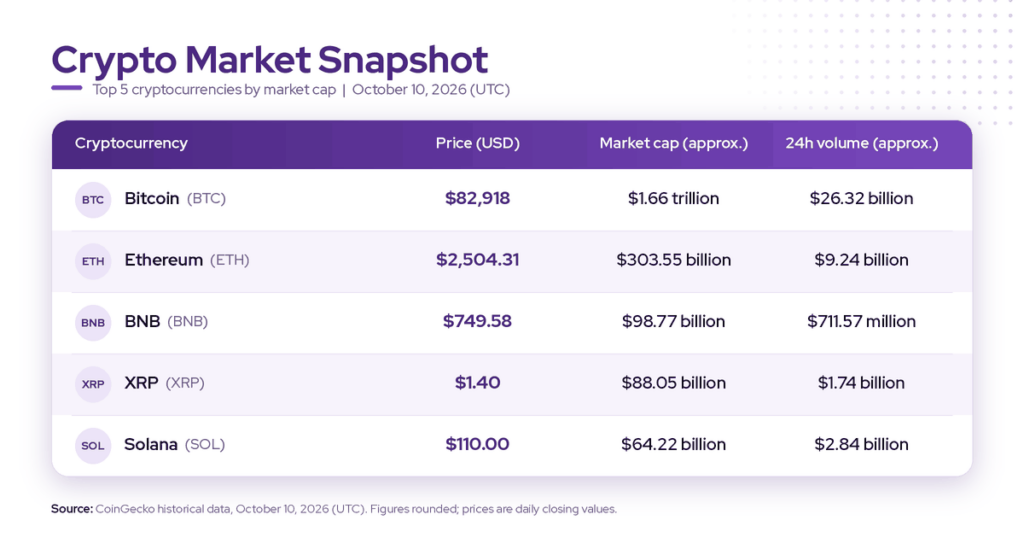
Bitcoin (BTC) is worth researching for its fixed maximum supply of 21 million coins, global recognition, and deep trading market. It can provide exposure to the crypto market without depending on the success of one application or blockchain ecosystem. However, its price remains sensitive to investor sentiment, macroeconomic conditions, and institutional fund flows.
Track weekly digital-asset fund-flow reports alongside these factors, but do not treat inflows as a guarantee of future gains.
Ethereum (ETH) supports smart contracts, decentralised applications, and a large ecosystem of blockchain services. Its proof-of-stake network allows participants to help secure the network by staking ETH. ETH crypto investment case depends partly on network use, transaction demand, competition, and how activity translates into demand for it.
Ethereum’s network recorded approximately 1.645 million transactions on October 10, 2026, according to YCharts data sourced from Etherscan. This provides a snapshot of network activity, although transaction counts alone do not show how much demand translates into ETH value. Watch transaction activity, fees, staking participation, and competition when assessing its longer-term potential.
Solana (SOL) is a high-performance blockchain designed for fast, low-cost transactions and decentralised applications. Its ecosystem includes trading, payments, and other on-chain activity, making developer adoption and real network use important factors to track. Solana recorded about 159.77 million transactions excluding validator votes on October 9, 2026, according to StakeCake’s network data. This shows substantial transaction activity, but investors should also examine successful transactions, active users, fees, and whether activity reflects lasting demand rather than short-term speculation.
Solana also carries risks. Network reliability, competition, token supply, and shifts in speculative activity can affect its performance. Check whether usage remains strong beyond short-lived trading trends.
XRP and BNB serve different purposes in the crypto market. Their long-term potential depends on adoption, ecosystem activity, and the risks linked to each asset.
XRP supports payments and asset transfers on the XRP Ledger. Before considering it, investors should examine:
BNB has uses within the BNB Chain ecosystem and is closely linked to Binance-related services. Key factors to assess include:
Use several indicators together rather than relying on a single chart or social media trend. Market data can help you understand an asset, but it cannot predict its next move with certainty.
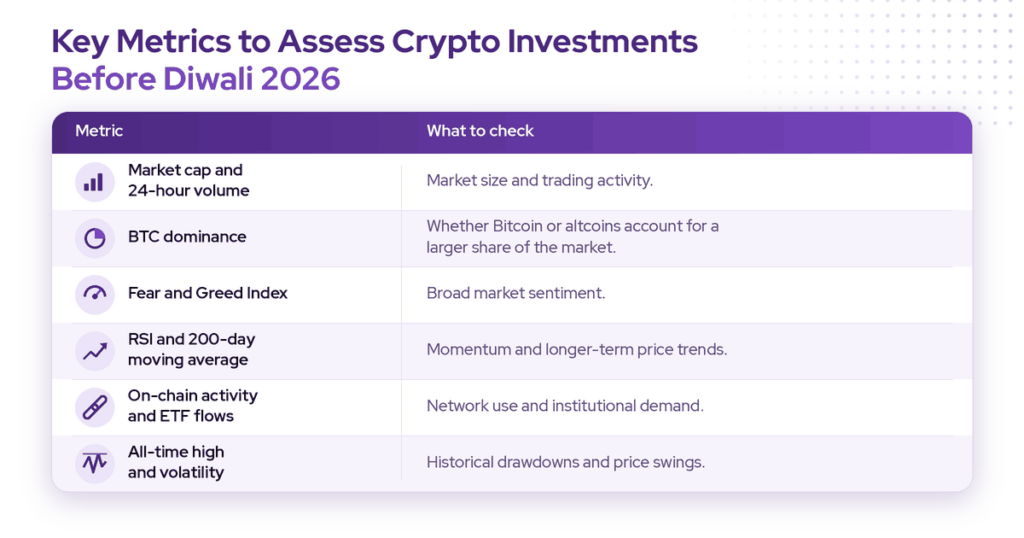
Use fundamental analysis to understand an asset’s purpose and adoption, then use technical indicators as supporting evidence. No single metric is a reliable buy signal.
Crypto assets can lose value quickly, including during periods of strong market interest. A festive deadline can encourage rushed decisions, so avoid investing money needed for near-term expenses.
Indian investors should also understand the tax and compliance rules that apply to virtual digital assets (VDAs). Under Section 115BBH of India’s Income-tax Act, income from transfers of covered VDAs is generally taxed at 30%, plus applicable surcharge and a 4% health and education cess. The Income Tax Department explains the rate and reporting requirements in its ITR-2 FAQ. Check the rules that apply to your circumstances, keep transaction records, and account for applicable taxes and fees.
Crypto and tokenised stocks offer access to global assets and trading options that differ from traditional markets. Here are some features traders may find useful:
However, these features vary by product and platform. Tokenised stocks may not offer the same ownership rights as conventional shares. Futures trading also involves leverage, which can magnify both gains and losses, making risk management essential.
The best crypto investments before Diwali 2026 are the ones you understand and can hold within a sensible risk plan, not simply the coins gaining attention. Bitcoin, Ethereum, Solana, XRP, and BNB each have different use cases and risks. Compare their fundamentals, market data, and adoption before deciding, and never assume Diwali will bring a rally.
If you understand the risks and want to explore available futures products, visit Mudrex Futures and start trading.
Review adoption, network activity, liquidity, token supply, competition, and security risks. Decide how much volatility you can tolerate before investing.
Diwali is a calendar event, not a reliable market signal. Base decisions on research, valuation, risk tolerance, and your time horizon rather than festive sentiment.
Bitcoin has a more established market, while altcoins offer exposure to different networks and use cases.
Only invest an amount you can afford to lose without affecting essential expenses or financial goals. Set an allocation limit that reflects your risk tolerance.
Consider price volatility, liquidity, scams, security failures, regulatory changes, taxes, and the risk of losing your crypto investments. Leverage can increase losses further.
Cryptocurrency and futures trading carry a risk of loss, and you may lose some or all of your capital. Leverage magnifies both gains and losses. Examples and market data are illustrative, can change, and are not financial advice or a guarantee of future performance. Do your own research and consult a qualified financial advisor before making investment decisions.