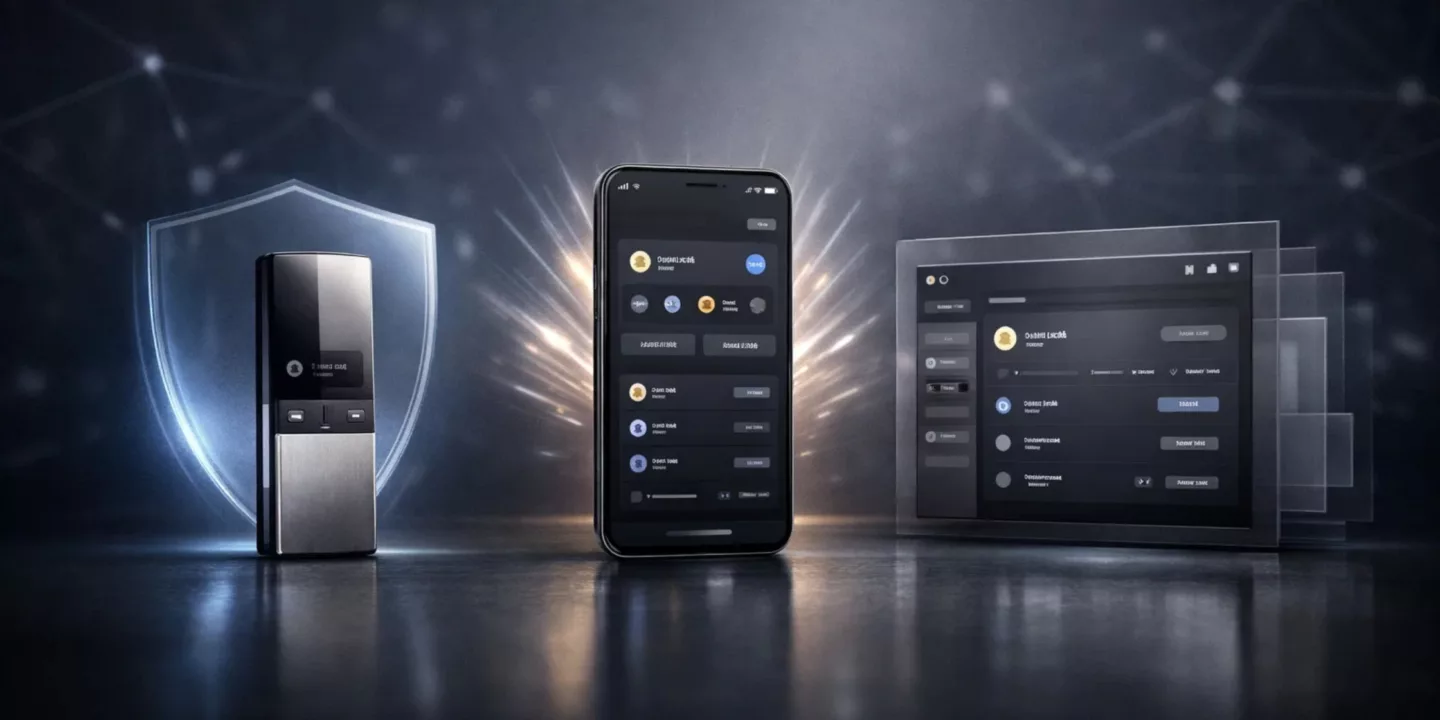

Choosing the best crypto wallets in 2026 is more important than ever. As cryptocurrency adoption grows globally, so do security threats, phishing scams, and platform vulnerabilities. Your crypto wallet is not just a storage tool — it is your personal gateway to blockchain networks.

Whether you are a beginner buying your first Bitcoin or a long-term investor protecting a large portfolio, the right wallet determines your level of security, accessibility, and financial control. This guide breaks down everything you need to know in a clear and structured way.
A crypto wallet is a digital tool that allows users to access, manage, and transfer cryptocurrencies stored on blockchain networks. Contrary to common belief, wallets do not physically store cryptocurrency. Instead, they manage cryptographic keys that prove ownership of blockchain assets.
When you send cryptocurrency, your wallet signs the transaction using a private key. Without this digital signature, the blockchain will not approve or process the transaction
Cryptocurrency exists on decentralized blockchain networks, not inside your wallet app or hardware device. Your wallet simply provides access to your blockchain address.
This distinction is critical. If your device breaks or your app is deleted, your funds are not lost as long as you still have your recovery phrase. What truly matters is access to your private keys.
A private key is a long cryptographic code that gives complete control over your crypto assets. Modern wallets convert this key into a 12 or 24-word recovery phrase for easier backup.
Anyone who gains access to this phrase can move your funds without permission. That is why it must be stored offline in a secure location and never shared digitally.
A public key generates your wallet address, which you can share to receive funds. It functions similarly to a bank account number and does not allow spending access.
A private key, however, authorizes outgoing transactions. It acts as your digital signature and must remain confidential at all times. The security of the best crypto wallets depends largely on how well they protect this key.
Custodial wallets are managed by third-party platforms such as exchanges. In this setup, the company controls your private keys and grants access through login credentials.
Non-custodial wallets give users full control over their private keys. This increases ownership and independence but also means full responsibility. If you lose your recovery phrase, no company can restore your funds.
| Feature | Custodial Wallet | Non-Custodial Wallet |
| Private Key Control | Held by platform | Held by user |
| Account Recovery | Password/email reset | Only seed phrase |
| Security Responsibility | Platform-managed | User-managed |
| Risk Type | Exchange breach risk | User error risk |
| Ideal For | Beginners & traders | Long-term holders |
ALSO READ: Understanding Custodial and Non-Custodial Wallets
Understanding wallet categories helps you choose the best crypto wallets based on your needs and risk tolerance.
Hot wallets are internet-connected wallets that operate through mobile apps, desktop software, or browser extensions. They are designed for fast transactions and frequent usage.
Because they remain online, they are more vulnerable to hacking attempts, phishing attacks, and malware compared to offline storage solutions.
Hot wallets function on devices connected to the internet, such as smartphones and computers. This allows users to quickly send, receive, trade, or stake cryptocurrencies.
Their accessibility makes them ideal for active traders and users who interact frequently with crypto platforms.
The primary advantage of hot wallets is convenience. Transactions are fast, and interfaces are generally beginner-friendly.
However, constant internet connectivity increases exposure to cyber threats. They are best suited for holding smaller amounts rather than entire portfolios.
Cold wallets store private keys offline, significantly reducing exposure to remote hacking attempts. They are commonly used for long-term storage of cryptocurrencies.
Because they are not constantly connected to the internet, they offer stronger protection compared to hot wallets.
Cold wallets operate without continuous internet access. Transactions require manual connection and deliberate authorization.
This additional step reduces risk by limiting potential attack surfaces.
Cold storage is widely considered a best practice for safeguarding large crypto holdings. Many institutional investors and experienced holders rely on offline storage strategies.
The trade-off is reduced convenience, as accessing funds requires additional steps.
ALSO READ: Hot Wallet vs. Cold Wallet: Major Differences Explained
Hardware wallets are physical devices specifically designed to store private keys securely offline. Leading manufacturers include Ledger and Trezor.
They combine offline protection with secure transaction signing, making them one of the best crypto wallets for long-term security.
These devices connect temporarily to a computer or smartphone only when signing a transaction. The private key never leaves the hardware device during the process.
Even if your computer contains malware, the transaction must still be physically confirmed on the wallet.
Private keys are stored within a secure chip inside the hardware device. This isolation prevents online attackers from extracting them.
Because of this design, hardware wallets significantly reduce the risk of remote theft.
Paper wallets involve printing private and public keys on paper for offline storage. While technically secure from online attacks, they are considered outdated today.
Paper can be lost, damaged, or improperly generated, leading to permanent loss of funds. Modern hardware wallets offer safer and more practical alternatives.
| Wallet Type | Security Level | Convenience | Cost | Best For |
| Hot Wallet | Moderate | High | Free | Traders |
| Hardware Wallet | Very High | Medium | Paid | Long-term investors |
| Custodial Wallet | Variable | Very High | Free | Beginners |
| Paper Wallet | Low practical | Low | Free | Not recommended |
Beginners require simplicity, guided setup processes, and clear instructions. Overly technical wallets increase the likelihood of mistakes.
Mobile wallets offer intuitive interfaces and simple onboarding flows. They guide users through backup procedures and transaction confirmations.
These wallets are ideal for first-time crypto users who want convenience without complex configuration.
Some examples include:
Exchange wallets allow users to store crypto directly on trading platforms. The exchange holds the private keys and manages security.
This reduces technical responsibility but introduces counterparty risk if the platform experiences issues.
Exchange wallet examples include:
Custodial wallets remove complexity and provide easy recovery options. However, users sacrifice full ownership control.
Non-custodial wallets promote independence but require careful seed phrase management. Beginners should weigh convenience against long-term security.
For users prioritizing security, hardware wallets deserve special attention among the best crypto wallets available.
Hardware wallets store private keys offline and require physical confirmation before approving transactions. This eliminates most remote hacking threats.
Because the key never leaves the device, it cannot be intercepted by malware or phishing scripts.
When choosing a hardware wallet, evaluating internal security features is essential.
A secure element chip is a tamper-resistant microprocessor that stores private keys safely. It protects against advanced physical extraction attacks.
This chip enhances overall security by encrypting sensitive information inside a secure hardware boundary.
Hardware wallets require a PIN to unlock access. If someone steals the device, they cannot access funds without the correct code.
Many devices reset after multiple failed attempts, preventing brute-force attacks.
During setup, hardware wallets generate a recovery phrase that allows wallet restoration.
Storing this phrase securely offline ensures you can recover funds if the device is lost or damaged.
Hardware wallets are ideal for long-term investors, high-value portfolio holders, and security-conscious users.
If cryptocurrency represents a significant financial investment, a hardware wallet provides strong peace of mind.
DeFi and Web3 participants require wallets that support smart contract interaction and decentralized applications.
Browser wallets like MetaMask integrate directly with decentralized applications. They allow users to connect seamlessly to NFT marketplaces and DeFi protocols.
These wallets are popular among Web3 users because of their flexibility and compatibility.
Modern crypto users interact with multiple blockchains. Wallets such as Trust Wallet support various networks in a single interface.
Multi-chain support reduces complexity and improves portfolio management.
DeFi wallets allow users to approve smart contracts for staking, swapping, and lending. These approvals grant limited permissions to decentralized platforms.
Users must carefully review permissions before confirming transactions to avoid malicious approvals.
Web3 wallets are common phishing targets. Fake websites often imitate legitimate platforms to trick users.
Verifying URLs and using hardware wallet integration significantly improve security for DeFi activities.
Long-term investors focus on minimizing risk and maximizing asset protection.
A cold storage strategy involves storing most funds offline while keeping a smaller portion in hot wallets for transactions.
This layered approach balances accessibility with maximum security.
Multi-signature wallets require multiple private keys to approve a transaction. This reduces the risk of single-point compromise.
They are often used by organizations, businesses, and large investors.
Many investors connect hardware wallets to software interfaces for convenience. The software provides usability, while the hardware device signs transactions securely.
This hybrid approach offers both security and functionality.
Selecting from the best crypto wallets depends on individual needs and usage patterns.
Smaller portfolios may function safely in well-managed hot wallets. However, larger investments require stronger protection mechanisms.
As your holdings grow, upgrading to cold storage becomes increasingly important.
Frequent traders benefit from quick access through hot or custodial wallets.
Long-term holders who rarely move assets should prioritize offline storage for better protection.
Users who are comfortable managing seed phrases may prefer non-custodial wallets.
Less technical individuals may initially choose custodial platforms for ease of use.
If security is your top priority, hardware wallets provide the strongest protection.
If convenience and accessibility matter more, mobile wallets may be sufficient for smaller balances.
READ MORE: How to Choose the Right Crypto Wallet?
Evaluating wallet features carefully helps prevent costly mistakes.
Look for encryption standards, secure chips, and strong authentication mechanisms. The architecture determines resilience against hacking attempts.
A robust security framework should always be a top consideration.
Ensure the wallet supports all cryptocurrencies you plan to hold. Some wallets specialize in specific ecosystems.
Choosing a wallet with broader compatibility offers long-term flexibility.
Hardware wallets require an upfront purchase. Software wallets may charge network or swap fees.
Understanding fee structures helps you manage costs efficiently.
A reliable seed phrase backup process ensures recoverability. Without it, asset restoration becomes impossible.
Testing recovery procedures before transferring large funds is recommended.
An intuitive interface reduces the likelihood of transaction errors. Clear confirmation screens improve security awareness.
Choose a wallet that balances usability with strong protective measures.
Avoiding common mistakes significantly improves asset safety.
Crypto wallets can be extremely secure when used correctly, but safety depends largely on user behavior and storage choices.
Even the best crypto wallets cannot protect against careless actions. Clicking on malicious links or approving suspicious transactions can compromise funds.
Responsible usage and awareness dramatically reduce risk.
Self-custody provides financial independence but requires discipline. Losing your recovery phrase means permanent loss of access.
Proper storage and backup practices are essential for long-term safety.
Phishing emails and malicious extensions are common threats in crypto.
Keeping devices updated and verifying transaction details helps prevent attacks.
ALSO READ: StilachiRAT: The Dangerous Crypto Wallet Malware
Understanding trade-offs helps you make informed decisions.
Hot wallets offer fast transactions and easy access for daily use. They are convenient and often free to use.
However, their internet connectivity increases exposure to hacking risks, making them unsuitable for storing large sums.
Hardware wallets provide maximum security through offline key storage and physical confirmation. They are ideal for safeguarding significant investments.
Their drawbacks include upfront cost and a slightly more complex setup compared to mobile apps.
Custodial wallets simplify onboarding and recovery, making them attractive for beginners.
However, users must trust the provider’s security and policies, reducing full ownership control over assets.
The best crypto wallet depends on your needs. Hot wallets are easy to use, hardware wallets are more secure, and custodial wallets are simple for beginners. Choose based on how much you invest and how often you trade.
To learn more about crypto and wallet safety, check out Mudrex Learn. Also, subscribe to the Mudrex YouTube channel for simple guides and regular updates to stay safe in crypto.
Hardware wallets are generally considered the safest because they store private keys offline and require physical confirmation for transactions. This design significantly reduces exposure to hacking risks compared to online wallets.
Yes, especially for users holding significant amounts of cryptocurrency. The added layer of offline protection justifies the upfront cost and provides long-term security benefits.
Hot wallets and custodial wallets can be hacked if security practices are weak or if platforms are compromised. Hardware wallets greatly reduce this risk due to private key isolation.
Exchanges provide convenience and liquidity, but users must trust the platform’s security. For long-term storage, non-custodial wallets generally offer stronger ownership control.
If you securely stored your 12 or 24-word recovery phrase, you can restore your wallet on a new device. Entering the seed phrase recreates your private keys and restores complete access to your funds.