As of Feb 07, 2026, Bitcoin (BTC) is trading at $69,057 (₹69,20,627.03). With a circulating supply of 19.98 million BTC and a maximum supply of 21 million BTC, Bitcoin remains the world’s largest cryptocurrency by market cap and the most recognized digital store of value globally.

Launched in January 2009 by the pseudonymous Satoshi Nakamoto, Bitcoin pioneered decentralized peer-to-peer money, allowing digital payments without financial intermediaries. Over time, it has evolved from a speculative asset into a hedge against inflation, fiat debasement, and systemic financial risk.
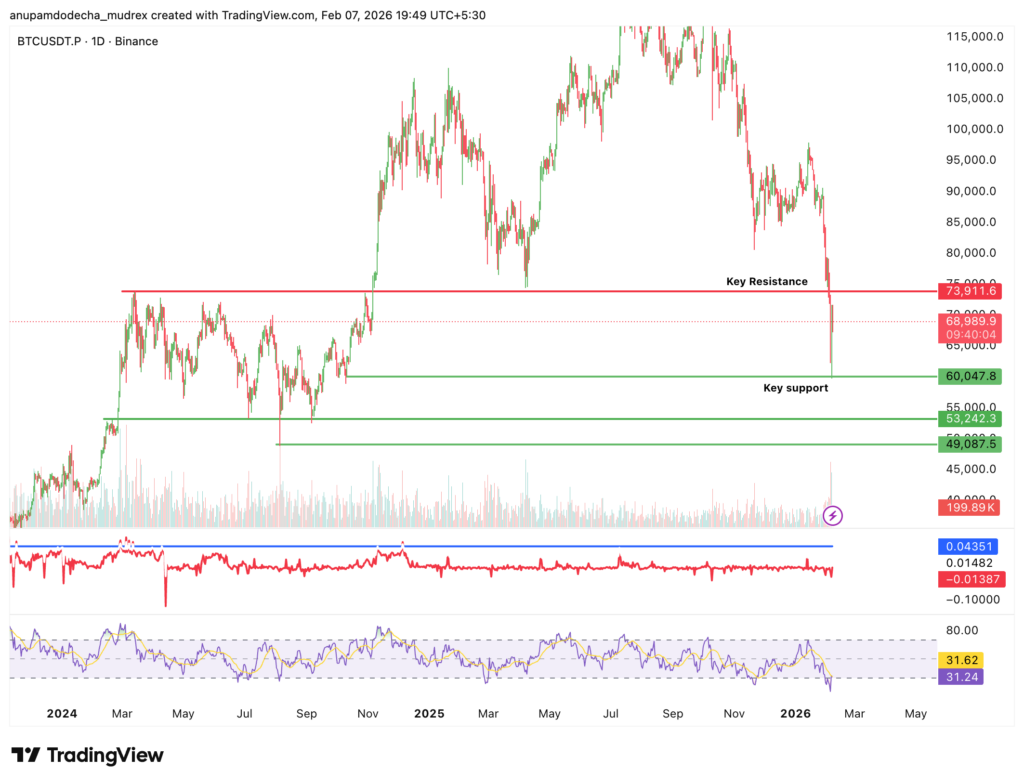
Bitcoin has been in a downtrend since the start of 2026, but after hitting the $60K zone, short-term reversal signals are starting to appear.
What’s supporting a short-term bounce / stability:
These conditions often precede a relief bounce or consolidation.
Bigger picture:
Despite short-term bullish signs, mid-to-long-term structure remains bearish. Trend and sentiment won’t shift unless BTC shows sustained strength and reclaims key EMAs with conviction.
Key levels to watch:
With Bitcoin trading near $69K, price action suggests a pause (as its weekend so low volume) after the recent move up. Momentum indicators point to stability in the very short term, followed by bullish continuation on higher timeframes as sentiment improves.
| Date | Forecasted Price |
|---|---|
| Today | $68,500 – $70,000 |
| Tomorrow | $69,000 – $71,000 |
| This Week | $72,000 – $76,000 |
| Next 30 Days | $75,000 – $85,000 |
| Year | Low Estimate | High Estimate | Reason |
| 2026 | $50,000 | $100,000 | Sustained ETF growth, broader financial accessibility, macro hedge |
| 2027–2028 | $80,000 | $200,000 | Pre-halving buildup, long-term accumulation phase, Layer 2 traction |
| 2029-2030 | $280,000 | $400,000 | Global reserve asset status, supply exhaustion, institutional trust |
More conservative asset managers and sovereign entities may allocate BTC into portfolios. The market benefits from maturity, increasing investor confidence, and improved financial tools that make Bitcoin investing accessible and regulated.
Investors begin anticipating the 2028 halving. Historically, the pre-halving years have seen major uptrends. With more app integrations, wallets, and Lightning adoption, Bitcoin’s ecosystem strengthens utility-wise as well.
By 2030, Bitcoin may achieve partial or full reserve asset status across multiple economies. Scarcity, generational investment shifts, and fiat distrust could converge to push Bitcoin toward multi-hundred-thousand-dollar valuations.
Bitcoin is still a strong long-term investment, but it demands patience and discipline. Short-term price moves are driven by liquidity and sentiment, often creating sharp swings that test conviction. Over the long run, Bitcoin’s fixed supply, growing institutional adoption, and increasing role as digital hard money remain intact. The opportunity lies in enduring volatility rather than trying to outsmart it. Markets reward conviction after they exhaust doubt.
Disclaimer: Crypto products and NFTs are unregulated and can be highly risky. There may be no regulatory recourse from any loss from such transactions.