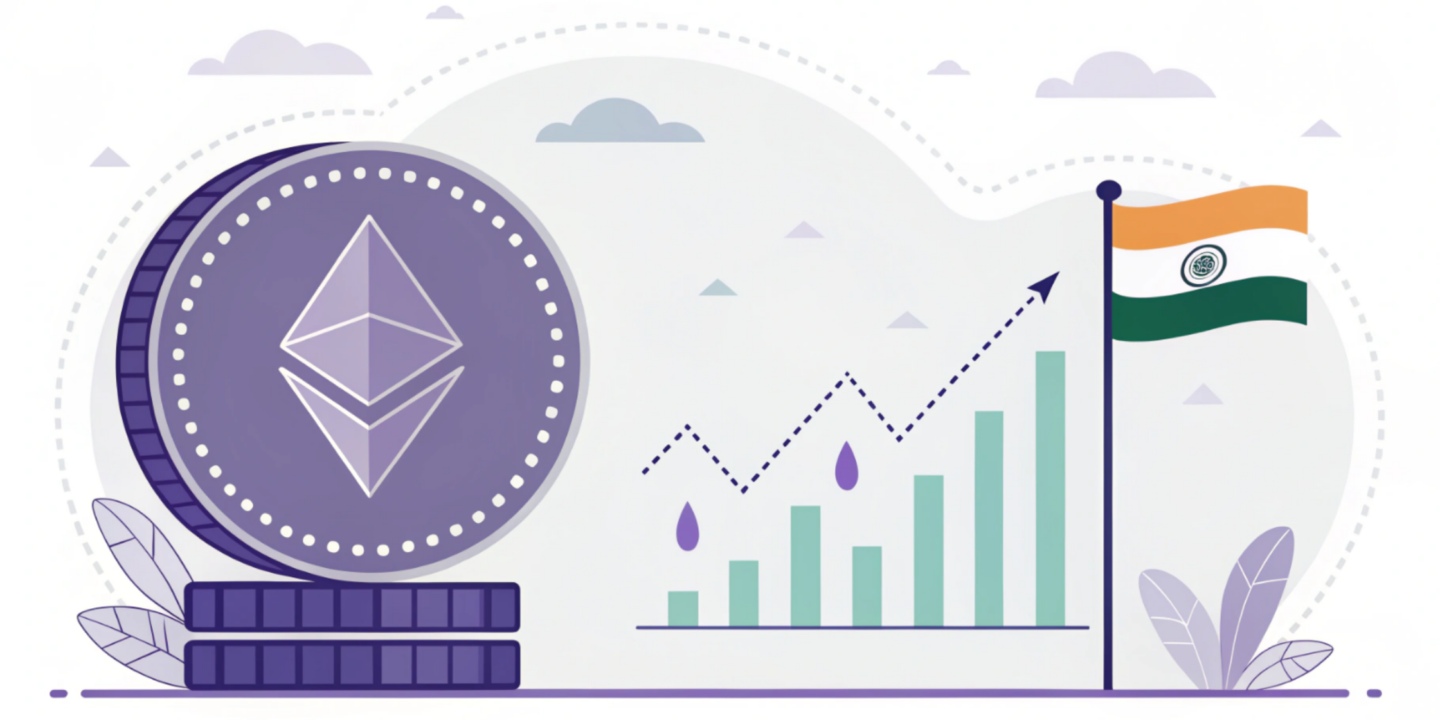

An Ethereum ETF is a financial product that allows investors to gain exposure to Ethereum without directly buying or storing the cryptocurrency. Many investors prefer ETFs because they offer a regulated investment structure that trades like stocks on exchanges.
However, when discussing how to buy Ethereum ETF in India, it is important to understand that India-listed options may be limited or unavailable.
In many cases, investors access Ethereum ETFs through international brokerage accounts. This guide explains both routes, along with costs, taxes, and practical considerations.
When people ask whether Ethereum ETFs are available in India, the meaning can vary. Some investors refer to ETFs that are directly listed on Indian stock exchanges, while others mean ETFs listed abroad but accessible to Indian investors through international brokers. Understanding this difference helps investors follow the correct investment route and avoid confusion when searching for Ethereum ETFs.
The term Ethereum ETF in India can refer to several different things depending on how the investor accesses the market. In one case, it may mean a hypothetical ETF listed on Indian exchanges like NSE or BSE that can be purchased through a Demat account. Another possibility is an overseas-listed Ethereum ETF that Indian residents access through international brokerage accounts. Some crypto platforms also label baskets or index products as ETFs, but these may not be regulated ETFs in the traditional financial sense.
Before you buy Ethereum ETF in India, investors should verify whether the product is a genuine regulated ETF. A real ETF typically has an official ticker symbol, exchange listing, and a factsheet provided by the issuer. Investors should also look for details such as the expense ratio, assets under management, and daily trading volume. If a product lacks these disclosures or cannot be found on a recognized exchange, it may not be a true ETF.
Understanding the structure of an Ethereum ETF helps investors evaluate whether it fits their portfolio. ETFs follow specific mechanisms such as net asset value calculations, expense ratios, and liquidity metrics. Investors should also understand the difference between spot and futures Ethereum ETFs because these structures can affect tracking performance and investment outcomes.
An Ethereum ETF is a fund that trades on a stock exchange and aims to provide exposure to Ethereum’s price movement. Instead of purchasing ETH directly, investors buy shares of the ETF through a brokerage account. The fund itself may hold Ethereum through a custodian or use financial instruments to track its value. Investors therefore own ETF shares rather than the cryptocurrency itself.
Spot Ethereum ETFs typically hold Ethereum directly or through custodial arrangements, allowing the ETF price to closely track the market price of ETH. Futures Ethereum ETFs, on the other hand, use futures contracts that are traded on regulated exchanges. Because futures contracts must be rolled periodically, the ETF may experience tracking differences compared to the spot price of Ethereum.
Several ETF metrics influence the overall returns investors receive from an Ethereum ETF. The expense ratio represents the annual management fee charged by the fund and gradually reduces returns over time. The bid–ask spread reflects the difference between buying and selling prices, which can create hidden costs during trading. Liquidity, trading volume, and tracking error also determine how closely the ETF follows Ethereum’s actual market value.
If an Ethereum ETF is listed on Indian exchanges, the process to buy Ethereum ETF in India would be similar to buying any other ETF listed on NSE or BSE. Investors would use a Demat account connected to a stock brokerage platform. Understanding the required steps helps ensure smoother execution and reduces the chances of trading mistakes.
Before buying an Ethereum ETF in India through Indian exchanges, investors need an active Demat account and trading account with a licensed broker. The account must be linked to a bank account and complete KYC verification as required by financial regulations. Once the setup is complete, investors can search for ETF tickers and place orders through their brokerage platforms.
The first step is to search for the correct Ethereum ETF using its ticker symbol or ISIN within the brokerage platform. Investors should review the trading volume and bid–ask spread to ensure the ETF has sufficient liquidity. Placing a limit order rather than a market order can help control the purchase price. After confirming brokerage charges and order details, investors can place the trade and verify the ETF shares in their Demat holdings.
Market orders execute immediately at the best available price but can sometimes result in unfavorable execution if liquidity is low. Limit orders allow investors to specify the price they are willing to pay, reducing the risk of paying significantly higher than expected. For ETFs with wider spreads, limit orders are generally the safer choice.
Once you buy Ethereum ETF in India, investors should monitor how its trading price compares with the underlying net asset value. Tracking whether the ETF trades at a premium or discount can provide insight into market demand. Investors should also define portfolio allocation levels and rebalance periodically. Exit decisions should be based on long-term strategy rather than short-term price volatility.
If Ethereum ETFs are not listed locally, some investors explore international markets where such ETFs are available. This approach usually involves opening an international brokerage account that allows Indian residents to trade foreign securities. Investors should understand currency conversion, compliance requirements, and trading discipline before choosing this route.
To buy a foreign Ethereum ETF, investors generally need access to an international brokerage platform that supports trading in global markets. The process typically includes identity verification, tax documentation, and linking a funding method. Investors should also understand the regulatory framework and ensure that their transactions follow applicable financial guidelines.
When investing in foreign ETFs, investors must convert Indian rupees into US dollars or another foreign currency. Banks and brokerage platforms may charge a markup during the currency conversion process. Additional costs may include transfer fees and platform charges. Currency fluctuations between the US dollar and the Indian rupee can also influence overall returns.
Investors start by searching for the Ethereum ETF ticker on their international brokerage platform. After opening the product page, they should review the expense ratio, assets under management, and liquidity levels. Placing a limit order during active trading hours helps reduce spread-related costs. Keeping transaction statements and confirmations is important for financial recordkeeping.
Investors should avoid trading during periods of low market activity because spreads may widen significantly. Buying immediately after sharp price spikes may also lead to emotional decisions. Waiting for stable market conditions and sufficient liquidity can help reduce unnecessary trading costs.
To buy Ethereum ETF in India, one must evaluate multiple factors rather than focusing on price alone. Investors should examine the structure of the fund, its operational costs, and the credibility of the issuer. A structured comparison framework helps investors identify ETFs that match their investment goals and risk tolerance.
The structure of the ETF, whether spot or futures, should be the first factor investors consider. Total costs include the expense ratio, trading spreads, and brokerage fees that can affect long-term performance. Liquidity and assets under management determine how easily investors can enter or exit positions. Tracking behavior, issuer credibility, and operational convenience also play an important role when selecting an ETF.
Certain warning signs may indicate that an ETF is not suitable for investment. Persistently low trading volume or wide bid–ask spreads may make it difficult to execute trades efficiently. Marketing-heavy promotions without transparent factsheets can also signal risk. Investors should avoid products labeled as ETFs if they lack standard disclosures and regulatory oversight.
To buy Ethereum ETF in India, you must consider several types of costs beyond the purchase price. These include fund management fees, brokerage charges, and potentially currency conversion expenses. Understanding how these costs affect overall returns helps investors make informed decisions.
The expense ratio is the annual fee charged by the fund manager to operate the ETF. Brokerage commissions and exchange-related charges may apply whenever investors buy or sell ETF shares. For overseas investments, currency conversion costs and transfer fees can also reduce total returns.
Tax treatment for ETFs may differ depending on the jurisdiction where the ETF is listed and how the investment is classified. Direct cryptocurrency investments in India currently follow different taxation rules compared to many securities. Investors should consult a qualified tax professional to understand their specific reporting obligations.
When you buy Ethereum ETF in India, ensure that you keep detailed records. This helps simplify tax reporting and portfolio tracking. Investors should record the purchase date, quantity of shares, transaction price, and any associated fees. Saving brokerage statements and ETF factsheets can also help document investment details when calculating capital gains.
Many crypto platforms use the term ETF loosely, which can cause confusion for investors seeking regulated exchange-traded funds. A genuine ETF is issued by a fund manager and trades on a recognized stock exchange. Understanding this distinction helps investors avoid buying products that do not offer the same regulatory protections.
A regulated ETF usually has a ticker symbol, issuer documentation, and a publicly available factsheet describing its structure. It trades on a recognized exchange and reports its net asset value regularly. Some crypto platforms instead offer baskets or index products that mimic ETF behavior but are not regulated securities. Investors should confirm that the product is listed on a stock exchange before assuming it is a true ETF.
Investors who simply want exposure to Ethereum have multiple options available. One option is to buy Ethereum directly through reputable cryptocurrency platforms after completing identity verification and funding the account. Another option is to buy Ethereum ETF in India through a brokerage account if it is accessible in the investor’s jurisdiction. The choice depends on whether the investor prefers direct crypto ownership or a traditional investment wrapper.
The decision between an Ethereum ETF and direct ETH ownership depends on personal investment goals. Each option offers different advantages and responsibilities. Understanding these differences can help investors choose the approach that best suits their strategy.
Ethereum ETFs allow investors to gain exposure to ETH through a familiar stock market structure. There is no need to manage private keys or cryptocurrency wallets. Investors can integrate the ETF easily into diversified portfolios that already include equities or other ETFs.
Buying Ethereum directly allows investors to transfer, store, or use the cryptocurrency within blockchain applications. This option also enables self-custody, which means investors control their own assets rather than relying on fund custodians. However, it also requires greater responsibility for security and asset management.
Even experienced investors sometimes make mistakes when entering new markets. Ethereum ETFs combine elements of cryptocurrency and traditional finance, so understanding potential pitfalls can improve investment decisions.
One common mistake is when you buy Ethereum ETF in India while expecting spot price tracking. Futures structures can behave differently from the underlying asset due to contract rollover costs. Another mistake is purchasing products labeled as ETFs that are actually unregulated baskets or synthetic instruments.
Trading ETFs with market orders in low-liquidity conditions can lead to significant price slippage. Investors may also overlook the cost impact of bid–ask spreads and currency conversion fees when trading international ETFs. Using limit orders and reviewing costs beforehand can help avoid these problems.
Over-allocating to a single asset class can expose investors to unnecessary risk, especially given Ethereum’s price volatility. Investors should define allocation limits and regularly review their portfolio balance. A clear exit strategy and periodic rebalancing plan can help maintain long-term investment discipline.
When you buy Ethereum ETF in India, there are two possible routes. If an Ethereum ETF becomes listed on Indian exchanges, investors could purchase it using a Demat account and a regular stock broker. If the ETF is listed overseas, investors may need access to an international brokerage account and must consider currency conversion costs and foreign investment rules. Regardless of the route, investors should evaluate ETF structure, expense ratio, liquidity, and tracking performance before making a decision.
To learn more about how to buy Ethereum ETF in India, explore detailed guides on Mudrex Learn, and subscribe to the Mudrex YouTube channel!
Yes, if they have access to the market where the ETF is listed, such as through international brokerage platforms. Availability within India may differ depending on domestic listings.
Typically the price of one ETF share, although some brokerage platforms may allow fractional investing depending on their features.
Not perfectly. Factors such as expense ratios, trading spreads, and differences between spot and futures structures can create tracking variations.
When you buy Ethereum ETF in India, there is no need for self-custody. There is still market risk because the price depends on Ethereum’s performance.
Before you buy Ethereum ETF in India, review the ETF structure, expense ratio, liquidity, trading spreads, assets under management, and the credibility of the issuer and custodian.