
Crude oil plays a major role in the global economy. From petrol and diesel prices to transportation and manufacturing costs, crude oil impacts almost everything around us. Because of this, many investors look for ways to gain exposure to oil prices… without directly buying physical oil.
This is where a crude oil ETF becomes useful.
If you are wondering how to invest in crude oil ETF in India, this guide will explain everything in a simple and straightforward way. You will learn what a crude oil ETF is, how it works, its risks, benefits, and how Indian investors can get started.
A crude oil ETF (Exchange Traded Fund) is a market-linked investment product that tracks the price movements of crude oil or related oil assets.
Instead of buying physical oil barrels, investors buy units of the ETF through the stock market. The ETF aims to reflect the price movement of crude oil by investing in oil futures contracts or oil-related companies.

A crude oil ETF allows investors to participate in oil price movements without handling commodities directly.
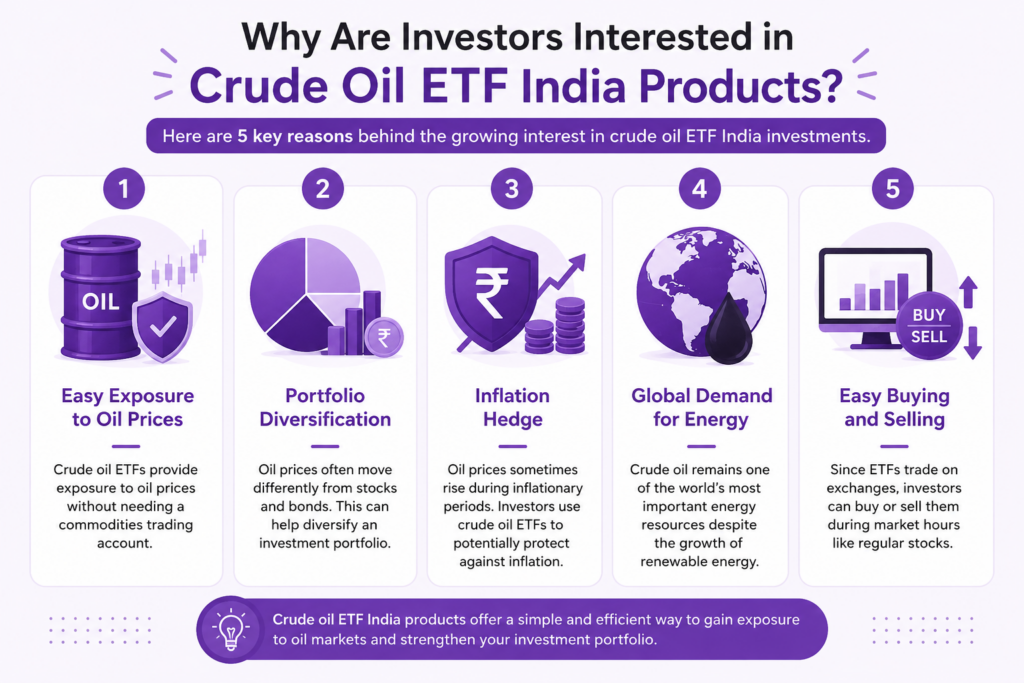
Most crude oil ETFs do not store physical oil. Instead, they usually invest in:
The ETF manager handles these investments to track oil price movements as closely as possible.
The value of the ETF rises or falls depending on crude oil market prices.
If you want to know how to invest in crude oil ETF in India, follow these simple steps:
You need a demat and trading account with a registered broker to invest in ETFs.
Finish your KYC verification using PAN, Aadhaar, and bank details.
Look for crude oil ETF options available through Indian exchanges or international investing platforms.
Before investing, review:
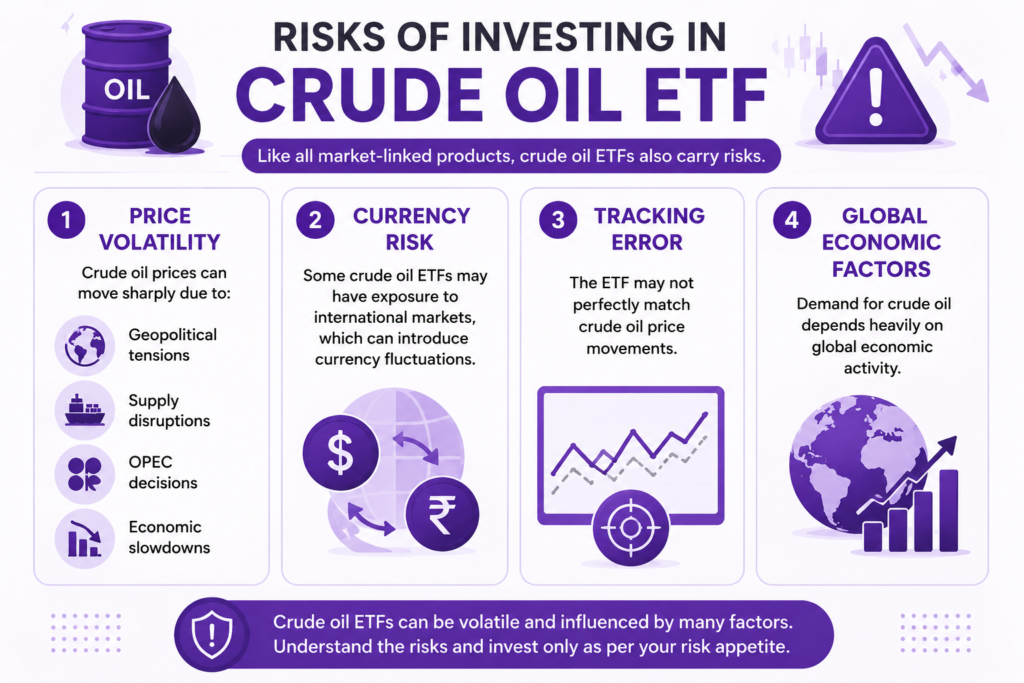
Oil prices can be highly volatile. Invest only the amount you are comfortable with.
If you are a beginner exploring crude oil ETF India investments, keep these points in mind:
Crude oil ETFs can be useful for diversification, but they may not be suitable for every investor.
READ MORE: 7 Powerful Truths About Crude Oil Volatility: Is Crude Oil Trading Profitable?
Crude oil ETFs are generally considered higher-risk investments because oil prices can remain volatile for long periods.
Some investors use them for:
Long-term investors should carefully evaluate whether crude oil fits their investment goals and risk tolerance.
Yes. Crude oil trading is no longer limited to traditional futures on commodity exchanges.
Tokenized products like CLUSDT let traders gain exposure to crude oil price movements in a crypto-native environment. Prices are influenced by factors like supply-demand, geopolitics, OPEC+ decisions, and macro trends.
For digital asset traders, tokenized crude oil offers a way to diversify beyond crypto and access a major global commodity market.
As with any leveraged or derivative product, understand the risks and do proper research before trading.
Understanding how to invest in crude oil ETF in India can help beginners explore commodity-based investing in a simple way. A crude oil ETF offers exposure to oil prices without directly trading commodities, making it more accessible for retail investors.
However, crude oil markets can be unpredictable and highly sensitive to global events. Beginners should always research carefully, invest gradually, and understand the risks involved before investing.
Before investing or trading, always understand the product, fees, risks, and your own risk appetite. To learn more about US stocks, crypto, trading strategies, and market trends, explore more guides on Mudrex Learn and watch beginner-friendly explainers on the Mudrex YouTube channel.
A crude oil ETF is an exchange traded fund that tracks crude oil prices or oil-related assets, allowing investors to gain exposure to oil markets without buying physical oil.
You can invest through a demat and trading account by purchasing available crude oil ETF products listed on exchanges or through platforms offering international investments.
Yes, crude oil ETF India investments can be volatile because oil prices are influenced by global supply, demand, geopolitical events, and economic conditions.