Death Cross in Crypto Trading: What It Means and How to Use It
In crypto trading, a death cross can sound like a bad market scenario, but it’s really just a technical signal based on moving averages. While it often sparks headlines and social media panic, it doesn’t guarantee a crash. Instead, it’s one of many tools traders use to understand market direction.
In this blog, we’ll break down what a death cross is, how it works, what it indicates, how to spot it on charts, and what it really means for crypto traders and investors.
What Is a Death Cross?
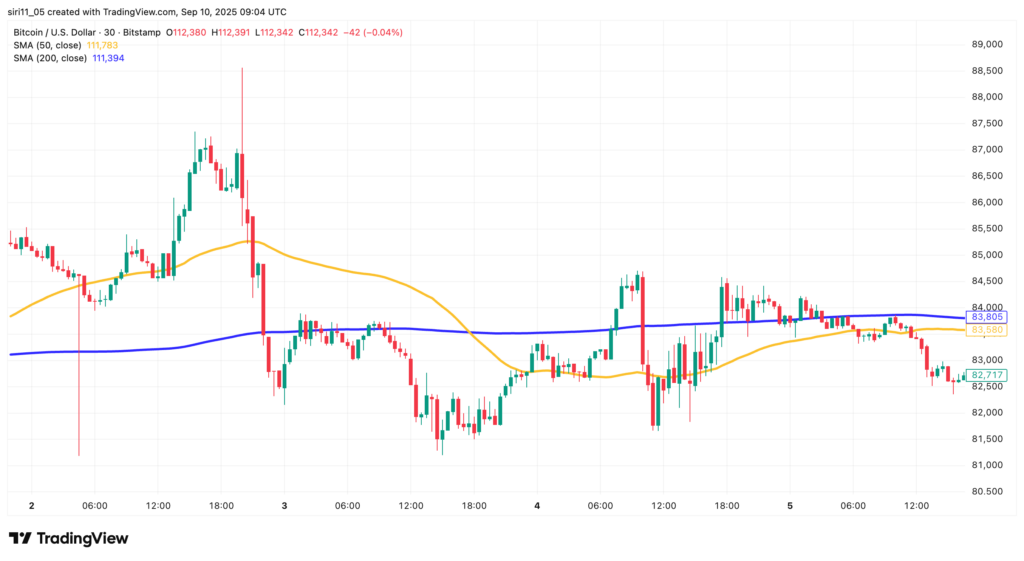
A death cross is a chart pattern that signals potential bearish momentum. It happens when the 50-day moving average (a measure of short-term price trends) crosses below the 200-day moving average (a measure of long-term price trends).
Death Cross in Crypto Trading | Meaning, How It Works & How to Spot It
Traders gave it a dramatic name because it often coincides with periods of declining prices, but in reality, it’s just a way to visualize when short-term weakness is overtaking long-term strength.
The mechanics are simple once you understand moving averages:
The 50-day moving average represents the average closing price of an asset over the past 50 days. It reacts more quickly to price changes.
The 200-day moving average represents the average over the past 200 days, giving a slower, broader view of the market trend.
When the faster 50-day line dips below the slower 200-day line, it shows that recent prices are weakening compared to the longer trend.
Think of it like a runner who has been slowing down gradually. Eventually, their recent pace (short-term average) drops below their career pace (long-term average). That’s the “death cross”, a signal that momentum is fading.
What Does a Death Cross Indicate?
Traders often view the death cross as a warning of bearish momentum. It can indicate:
Weak buying pressure – fewer traders are willing to push prices up.
Rising selling pressure – more traders are exiting or shorting positions.
Shift in sentiment – optimism is fading, and caution is growing.
But it’s not always doom and gloom. The death cross is a lagging indicator, meaning it reacts to price changes that have already happened. By the time it appears, the market may have already fallen significantly.
Sometimes, it even appears just before a rebound.
Why Do Traders Pay Attention to a Death Cross?
The death cross isn’t new; it’s been used in stock markets for decades. In crypto, it attracts even more attention because:
It impacts sentiment. The dramatic name creates headlines that can shake investor confidence.
It can trigger algorithms. Institutional traders or bots may automatically sell when a death cross forms, adding downward momentum.
It’s easy to understand. Unlike complex indicators, the death cross is simple to spot, even for beginners.
Does the Death Cross Always Mean a Crash?
No, and this is where many beginners misunderstand it.
The death cross doesn’t mean the market is about to collapse overnight. In fact, sometimes it happens after prices have already dropped significantly.
Examples:
2018 Bitcoin: The death cross aligned with the start of a long bear market.
2021 Bitcoin: A death cross formed, but BTC later rebounded to new highs.
This shows why context matters. A death cross works best when combined with other indicators like RSI (to measure if the market is overbought/oversold), MACD (to spot momentum shifts), and trading volume. On its own, it’s too simple to be fully reliable.
Examples of Death Crosses in Crypto History
April 2025: The Liquidation Trigger Cross
In early April 2025, Bitcoin confirmed a death cross when its 50-day moving average slipped below the 200-day line. Prices had already been under pressure, but the cross added fuel to bearish sentiment. Within hours, a sharp market-wide sell-off erased billions in value, and liquidations worth over $1.4 billion were recorded, mostly from overleveraged long positions.
The timing of the cross highlighted how fragile the market was, less a surprise signal, more a reinforcement that momentum had shifted firmly downward.
Just weeks before the April breakdown, traders had been closely watching the moving averages converge. By mid-March, Bitcoin hovered around $81,000-$88,000, and its 50-day average was rapidly approaching the 200-day line. Analysts flagged it as a potential death cross, raising caution even though prices were still elevated.
The market didn’t immediately collapse, but the looming cross dampened sentiment and made traders wary of chasing rallies. When the actual cross arrived in April, the groundwork for fear was already laid.
In May 2024, Cardano (ADA) recorded its first death cross of the year, with the 50-day average sliding under the 200-day mark. The token had already dropped from its March high near $0.80 to about $0.44, reflecting fading momentum and a shift in market tone.
Yet this cross turned out to be more of a pause than a collapse. By November, ADA had recovered strongly, forming a golden cross instead. It served as a reminder that while death crosses can signal weakness, they don’t always mark the start of a long bear cycle.
The death cross sounds intimidating, but it’s really just a chart pattern showing that recent price momentum is weaker than the long-term trend. It’s not a guarantee of a crash, but it’s a reminder to trade cautiously and watch the market closely.
Join the Mudrex Telegram community to learn from other traders, share insights, and stay updated on real-time market moves. That way, you’re not just reacting to the “death cross”; you’re making smarter, more informed trading decisions.
Siri is a writer venturing into the exciting realms of blockchain technology, cryptocurrency, and decentralized finance (DeFi), eager to explore the transformative potential of these innovations. She brings a unique perspective that bridges traditional industries and cutting-edge technology, often infused with a touch of humor through memes. She has a rich background in real estate and interior design, having previously contributed to NoBroker, where she crafted blogs and assets on these topics.