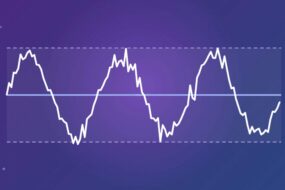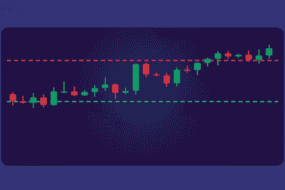

Options trading offers several strategies that allow traders to approach different market conditions without relying entirely on price direction. While some strategies aim to profit from strong upward or downward movements, others are designed for periods when the market is expected to remain relatively stable. The iron condor option strategy is one such approach.
This neutral options strategy combines two credit spreads to generate premium income when an underlying asset trades within a predetermined price range. It also uses protective options to limit potential losses on both sides. Understanding its construction, payoff structure, and risk factors can help traders determine when this strategy may fit their trading objectives.

An iron condor is a four-leg options trading strategy that involves buying and selling two put options and two call options with the same expiration date. It combines a bull put credit spread with a bear call credit spread.
The strategy is designed to generate a net premium when traders expect the underlying asset to remain within a specific price range until expiration. The two options sold are positioned closer to the current market price, while the purchased options are placed further out of the money (OTM) to provide protection against significant price movements.
Unlike a short strangle, which has theoretically unlimited upside risk, an iron condor uses protective options to establish a predefined maximum loss.
An iron condor consists of four option positions:
All four options generally have the same expiration date and underlying asset.
These positions form two credit spreads:
The trader receives a net credit when the premiums collected from the short options exceed the premiums paid for the protective options.
The ideal outcome occurs when the underlying asset expires between the two short strike prices. In this situation, all four options expire worthless, allowing the trader to retain the initial net credit.

Understanding the payoff structure is essential before implementing an iron condor trading strategy.
Maximum Profit
Maximum profit equals the total net premium received when opening the position. It occurs when the underlying asset expires between the two short strike prices.
Maximum Loss
Maximum loss is calculated by subtracting the net credit received from the width of the relevant spread.
For unequal spread widths, calculate the potential loss on each side separately:
Maximum loss = Greater of the two spread widths − Net credit received.
Break-even Points
An iron condor has two breakeven points:
The position is profitable at expiration when the underlying asset remains between these two breakeven points. Its maximum profit, however, is achieved only between the short strikes.
Consider a stock trading at $100. A trader expects it to remain range-bound and establishes the following position:
| Leg | Position | Strike price | Premium |
|---|---|---|---|
| 1 | Buy put | $90 | −$1 (paid) |
| 2 | Sell put | $95 | +$3 (received) |
| 3 | Sell call | $105 | +$3 (received) |
| 4 | Buy call | $110 | −$1 (paid) |
| Net credit received | +$4 per share |
The resulting payoff is:
| Metric | Calculation | Result (per share) |
|---|---|---|
| Maximum profit | Net credit | $4 |
| Maximum loss | $5 spread width − $4 net credit | $1 |
| Lower breakeven | $95 − $4 | $91 |
| Upper breakeven | $105 + $4 | $109 |
The possible outcomes at expiration are:
These figures exclude brokerage, transaction charges and applicable taxes. Actual contract-level profit and loss also depends on the contract multiplier and number of lots traded.
An iron condor may be considered under specific market conditions:
Strike selection can also involve Delta and the probability of profit (POP). Delta is sometimes used as a rough probability proxy, but it is not an exact measure of the probability that the entire iron condor will generate a profit.
An iron condor may be considered under specific market conditions:
Strike selection can also involve Delta and the probability of profit (POP). Delta is sometimes used as a rough probability proxy, but it is not an exact measure of the probability that the entire iron condor will generate a profit.
Advantages
Risks
Traders should monitor Delta, Theta and Vega to understand how price movements, time decay, and implied volatility affect the position. Gamma exposure can also become more significant as expiration approaches, particularly when the underlying asset trades near a short strike.
Both strategies are neutral options strategies involving four contracts, but their strike selection and payoff structures differ.
| Parameter | Iron condor | Iron butterfly |
|---|---|---|
| Short strikes | Separate put and call strikes | Same put and call strike |
| Market outlook | Range-bound market | Very narrow trading range |
| Maximum profit | Net credit received | Net credit received |
| Profit zone | Generally wider | Generally narrower |
| Risk | Defined | Defined |
| Premium potential | Generally lower | Generally higher, depending on construction |
An iron condor provides a wider range between its short strikes in which maximum profit can be achieved. An iron butterfly concentrates maximum profit around a central strike. The choice depends on market expectations, premium availability and risk tolerance.

The iron condor option strategy provides a structured approach to trading range-bound markets while keeping potential losses defined. By combining a bull put spread and a bear call spread, traders can collect option premiums without requiring a strong directional market view.
However, its limited profit potential and sensitivity to market movements make risk management essential. Traders should evaluate strike selection, implied volatility, time decay, liquidity, and the risk-reward ratio before entering a position.
For investors exploring opportunities beyond traditional markets, Mudrex offers access to crypto and tokenised investment products. Explore the platform to learn more about its available offerings and consider how they align with your investment objectives.
To build stronger conviction in crypto investing, explore in-depth guides on Mudrex Learn and subscribe to the Mudrex YouTube channel for insights on markets, tokens, and long-term crypto trends.
Traders generally consider an iron condor when they expect a range-bound market, relatively limited price movement and potentially declining implied volatility.
Neither. It is a neutral options strategy designed for situations where the underlying asset is expected to remain within a predetermined price range.
Maximum profit equals the net premium received when opening the position. It is achieved when the underlying asset expires between the two short strike prices.
The main risks include sudden price movements, rising implied volatility, early assignment, liquidity constraints and transaction costs. Although the strategy has defined risk, traders can still lose the entire maximum risk amount.
Options trading involves substantial financial risk and may not be suitable for every investor. Although defined-risk strategies such as the iron condor limit potential losses, traders can still lose the entire net amount at risk. This article is intended for educational purposes only and should not be considered investment advice; DYOR.