

Your weekly crypto digest is here: market shifts explained, top news unpacked, and one coin spotlighted for your radar.
Crypto markets are experiencing significant volatility this week as major assets like Bitcoin and Ethereum test key support levels amid regulatory shifts and macroeconomic uncertainty.

Bitcoin fell below the $75,000 mark over the weekend, hitting its lowest level since April 2025. Similarly, Ethereum dropped nearly 10% in a 24-hour period, falling below $2,200 at present time (2nd February, 1:55 PM).
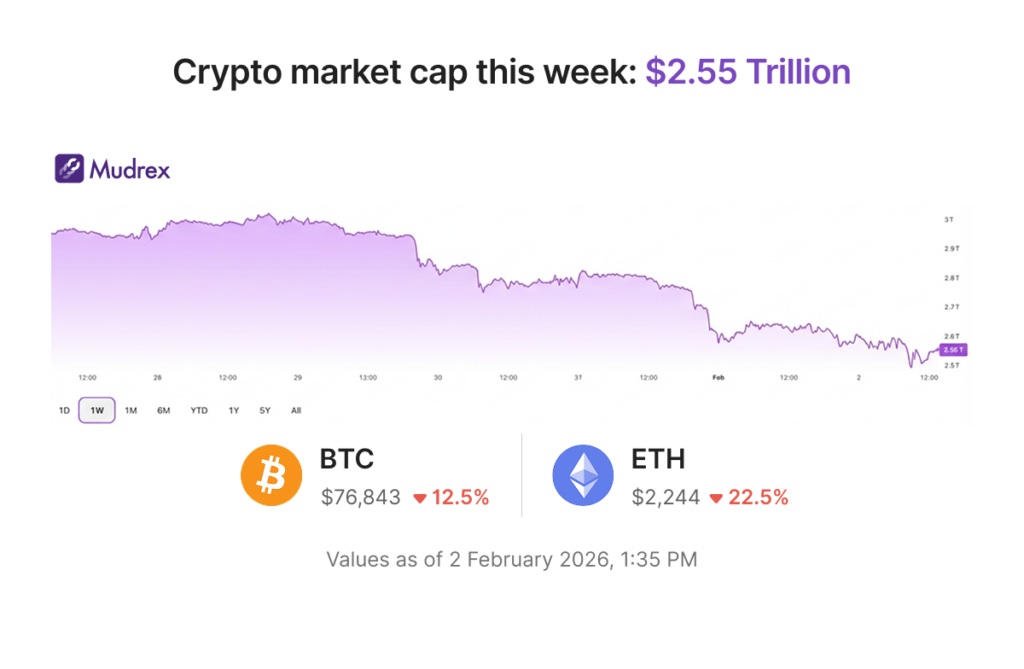
Bitcoin saw a sharp and unexpected decline over the weekend, breaking below key price levels and catching markets off guard. The timing played a major role—weekend trading typically has lower liquidity, which made the sell-off faster and more severe than it would have been during regular market hours.
The move was intensified by heavy use of leverage. As prices started falling, a large number of leveraged long positions were automatically liquidated. This triggered a chain reaction of forced selling, accelerating the drop and amplifying losses across the market in a short span of time.
The pressure wasn’t limited to crypto alone. Broader risk assets also showed weakness, reflecting a shift in investor sentiment. Macroeconomic uncertainty and a stronger dollar pushed investors to reduce risk exposure, contributing to the sell-off across multiple asset classes.
While Bitcoin’s long-term narrative remains intact, the episode highlighted structural vulnerabilities beneath the recent rally. High leverage, thin liquidity, and crowded positioning can still lead to sharp corrections. For investors, it was a reminder that even in strong market cycles, risk management remains critical.

The Solana network recorded a 115% month-over-month surge in daily active addresses as of Jan. 28, with totals frequently exceeding 5 million, according to Nansen data.
Despite following the broader market downtrend, Solana has seen a notable increase in on-chain activity. Key levels to watch are price behavior around $136 and the rising support trendline. As always, DYOR.
Look out for the next big opportunity. Check out the best cryptos for short term gains’ potential in February.
JOLTS data shows how strong the U.S. job market is and helps shape expectations around interest rates. Stronger data can pressure crypto by delaying rate cuts, while weaker data often supports crypto by improving liquidity and risk appetite
Initial Jobless Claims track how many people are filing for unemployment for the first time, offering a real-time view of labor market health. Higher claims can support crypto by increasing rate-cut expectations, while lower claims may pressure prices by keeping monetary policy tight.
The January Jobs Report shows overall employment growth, wages, and unemployment, shaping expectations around inflation and interest rates. A strong report can weigh on crypto by delaying rate cuts, while a weaker report often supports crypto through improved liquidity expectations.