
Your weekly crypto digest is here: market shifts explained, top news unpacked, and one coin spotlighted for your radar.
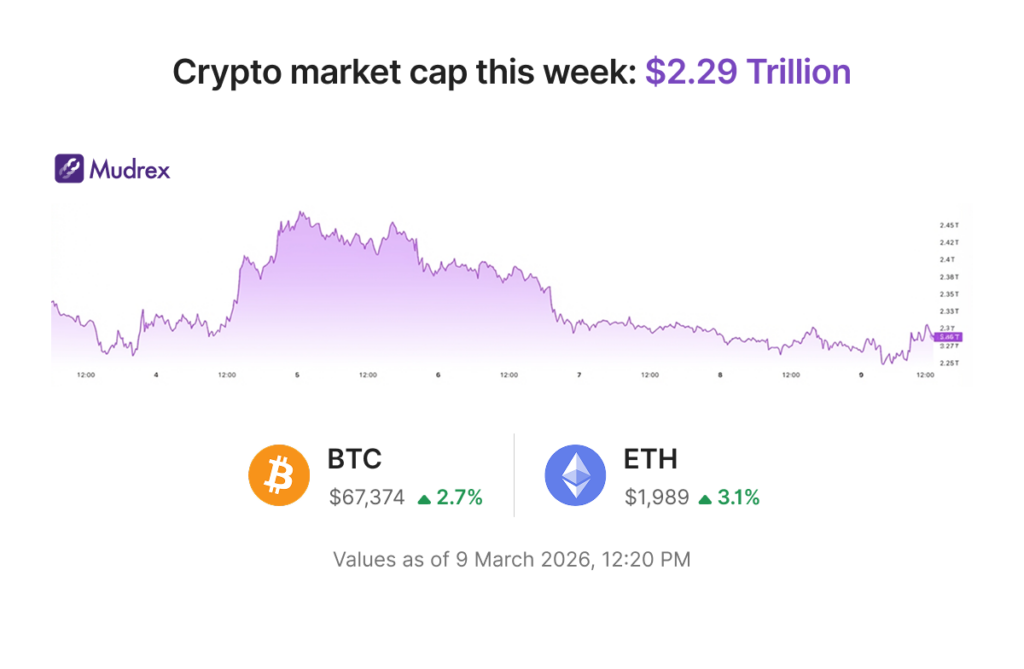
The crypto market is currently navigating a period of fear as Bitcoin (BTC) slides toward $67,000, pressured by macroeconomic instability and escalating conflict in the Middle East. Despite this, institutional adoption and regulatory shifts remain key drivers of long-term sentiment

Bitcoin’ dominance remains high at 56.5%, though it faces resistance near $70,000. At the same time, Solana is gaining traction due to the upcoming Alpenglow protocol upgrade, which aims for block finality in under 150 milliseconds.
Oil prices are rising again on geopolitical tensions, and that usually puts markets on edge. Higher crude can feed into inflation, raise costs for consumers and businesses, and make investors more cautious about risk assets.
Bitcoin, though, has been relatively steady. A key reason is that it often trades like a risk asset today—moving with broader market sentiment, especially in the U.S., rather than reacting as a direct hedge to every global shock.
The U.S. is also better positioned than many regions to absorb an oil spike. With strong domestic energy production and lower reliance on Middle East supply compared to major importers, the immediate economic impact can be more contained. When U.S. markets stay stable, Bitcoin often stays stable too.
That said, the bigger risk is if oil remains high for an extended period. If it starts feeding into inflation expectations and keeps interest rates elevated, pressure can build across equities and other risk assets—and bitcoin could be pulled lower alongside them. The key variables to watch are duration of the oil move, inflation expectations, and bond yields.
Polkadot (DOT) could be in focus this week after the 21Shares Polkadot ETF (TDOT) listed on Nasdaq with a 0.30% fee. Traders will be watching early flows and volume to see whether interest picks up as trading gets underway.
At the same time, Polkadot is rolling out a tokenomics upgrade: a 2.1B DOT supply cap, ~53.6% lower emissions, and a much faster unbonding period (24–48 hours vs 28 days). In simple terms, it reduces new supply, makes staking more flexible, and shifts more decisions to governance. These factors could influence staking and market supply around the rollout.
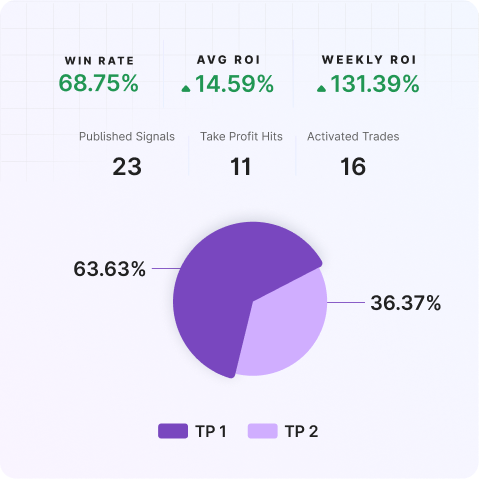
Our experts offer trade recommendations with clear entry points, take-profit targets, and stop-loss levels to help you make informed decisions in a fast-moving market.
From 2nd March to 8th March, over 16 trades were activated, with 11 trades reaching their profit targets, achieving a 68.75% win rate for the week. The weekly and average ROI also stood at +131% and +14.5%, respectively!
Don’t miss out! Open the Mudrex app for real-time signals, expert insights, and a smarter way to trade crypto.
Escalating tensions have triggered a “risk-off” environment, leading to a surge in oil prices and causing Bitcoin to pull back from recent highs. On-chain data showed a 700% spike in crypto outflows from Iranian exchanges following airstrikes.
Upcoming U.S. inflation data is a major focus for investors, as it could influence future Federal Reserve interest-rate decisions and market sentiment