Liquidation in crypto futures trading can happen in seconds. The extreme volatility of crypto markets means that even small price movements can erase your margin if leverage is high.
But with the right strategies, margin discipline, and practical tools, you can trade futures without exposing your entire balance to sudden market swings.
In this guide, we’ll break down what liquidation really is, why it happens, how to avoid liquidation in crypto futures trading, and the exact steps you can take to protect your account.
Note on prices: Every price example in this guide uses approximate market levels as of August 25, 2026 (BTC ~$79,500, ETH ~$2,480, SOL ~$98, AVAX ~$6.90, DOGE ~$0.09). Crypto prices move constantly, so treat these as illustrative, not live quotes. Always check live prices on Mudrex before placing a trade.
What Is Liquidation in Crypto Futures?
Liquidation in futures trading occurs when your collateral (margin) is no longer sufficient to keep a leveraged position open. At that point, the exchange automatically closes your trade to prevent further losses.
There are two types of liquidation:
Partial liquidation: Only part of your position is closed to bring your account back to a safe margin level.
Full liquidation: Your entire position is closed, and you lose the margin you initially placed.
Think of liquidation as the crypto equivalent of a margin call in traditional finance. The difference? In crypto, it happens instantly, no time to negotiate.
Quick tip box: Liquidation is not a glitch. It’s a safety mechanism designed to protect both traders and exchanges.
Liquidation doesn’t come out of nowhere. It’s often the result of a few predictable factors:
High Leverage
The higher the leverage, the smaller the move needed to trigger liquidation. For example:
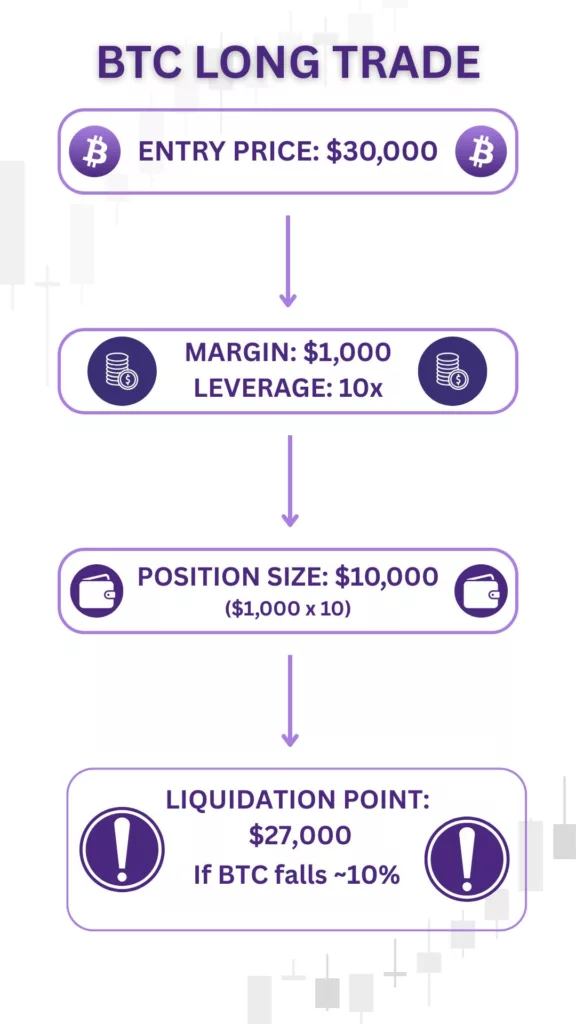
At 10x leverage, a 10% adverse price move wipes your margin.
At 20x leverage, just a 5% move is enough.
Thin Margin Buffers
Traders often put the minimum margin required. This leaves no cushion against volatility. Adding more margin creates a buffer zone.
High Volatility Markets
Crypto regularly swings 10–20% in a single day. Without proper risk management, these moves easily breach liquidation thresholds.
Failure to Use Stop-Losses
A missing or poorly set stop-loss can leave your position completely exposed.
Can You Get Liquidated at 1x Leverage?
Yes, though it takes a much larger move. At 1x leverage, your position size equals your margin, so there’s no borrowed exposure amplifying your losses. Even so, if you don’t top up margin and the price moves against you by close to 100%, a full liquidation is still technically possible, it’s just far less likely than at 10x or 20x. The real risk at 1x leverage is usually smaller: getting stopped out or holding through a large drawdown, not a sudden forced close. Most traders treat 1x as functionally similar to spot exposure with added funding-rate costs.
Margin-based liquidation avoidance comes down to three habits, in order of impact:
Keep your margin ratio well above the maintenance threshold. Most exchanges flag risk once your margin ratio crosses roughly 80% of the maintenance requirement. Treat that as your personal alarm, not the exchange’s.
Use isolated margin for experimental trades, cross margin for core positions. Isolated margin caps your loss to the margin you assigned that trade; cross margin pools your whole futures balance as a buffer, which can absorb a bad move but also puts more capital at risk if things go wrong. Read more about maintenance margin in detail to see how this changes your liquidation math.
Add margin before you’re forced to, not after. Waiting until a position is close to liquidation to top up margin often means adding funds at the worst possible price. Set your own early-warning level, well above the exchange’s, and act on it.
The traders who avoid liquidation when using margin most consistently aren’t the ones who never take losses. They’re the ones who control when and how a losing trade closes, rather than letting the exchange’s risk engine decide for them.
How Do Liquidation Levels Differ by Coin?
Your liquidation price is set by the same formula for every coin, entry price, margin, leverage, and position size, but because coins trade at very different prices and volatility levels, the dollar distance to liquidation looks very different across BTC, ETH, SOL, AVAX, and DOGE. The examples below are illustrative calculations using approximate prices as of August 25, 2026, not live liquidation data; use them to understand the mechanics, then check your exchange’s calculator for your actual trade.
Coin
Approx. Entry Price
Leverage
Margin
Adverse Move to Liquidation
Approx. Liquidation Price
BTC (long)
$79,500
10x
$1,000
~10%
~$71,550
ETH (long)
$2,480
10x
$1,000
~10%
~$2,232
SOL (long)
$98
10x
$1,000
~10%
~$88
AVAX (long)
$6.90
10x
$1,000
~10%
~$6.21
DOGE (long)
$0.09
10x
$1,000
~10%
~$0.081
Two things stand out from this table. First, the leverage, not the coin, decides how far your liquidation price sits from your entry; at the same 10x leverage, every coin above needs roughly the same 10% adverse move. Second, lower-priced and higher-volatility coins like DOGE and SOL tend to cover that 10% distance far faster in raw time than BTC does, since their daily swings are typically wider in percentage terms. That’s why the same leverage setting carries more practical liquidation risk on a volatile altcoin than it does on BTC, even though the underlying math is identical.
What Are Liquidation Heatmaps and Liquidation Clusters?
A liquidation heatmap is a visual overlay on a price chart that shows where large clusters of leveraged positions, and therefore their liquidation prices, are estimated to sit. Bright, dense zones mean many traders’ liquidation levels are stacked close together; if price reaches that zone, those forced closes can trigger a fast, sharp move (sometimes called a liquidation cascade).
This is genuinely useful context, but two caveats matter:
Heatmaps are estimates, not certainties. They’re built from open interest, funding rates, and assumed leverage ranges, not from every trader’s actual liquidation price, since exchanges don’t publish that.
Clusters move constantly. A “SOL liquidation cluster” you saw yesterday isn’t the same as today’s, because it shifts with every new position opened and closed. There’s no static list of levels that stays accurate for more than a few hours.
Before placing any futures trade, you should know exactly where liquidation occurs. Exchanges provide calculators, but it helps to understand the formula.
Liquidation isn’t just a financial hit; it’s an emotional blow. Unlike a stop-loss you set yourself, liquidation feels like losing control of your trade. Many traders spiral into frustration, revenge trading, or abandoning their strategies altogether.
This psychological pain comes from a cycle many intermediates know too well:
Overconfidence after a few wins.
Increasing leverage to chase bigger profits.
One unexpected move wipes out days or weeks of progress.
Understanding this emotional cost is the first step to breaking free from the liquidation trap.
Strategies to Avoid Liquidation in Futures Trading
Surviving in crypto futures trading is less about predicting every market move and more about controlling your downside. Below are practical strategies that traders use to prevent liquidation.
1. Use Lower Leverage (2x–5x)
Leverage magnifies both profits and losses. While exchanges offer up to 100x, even professional traders rarely use more than 5x. With lower leverage:
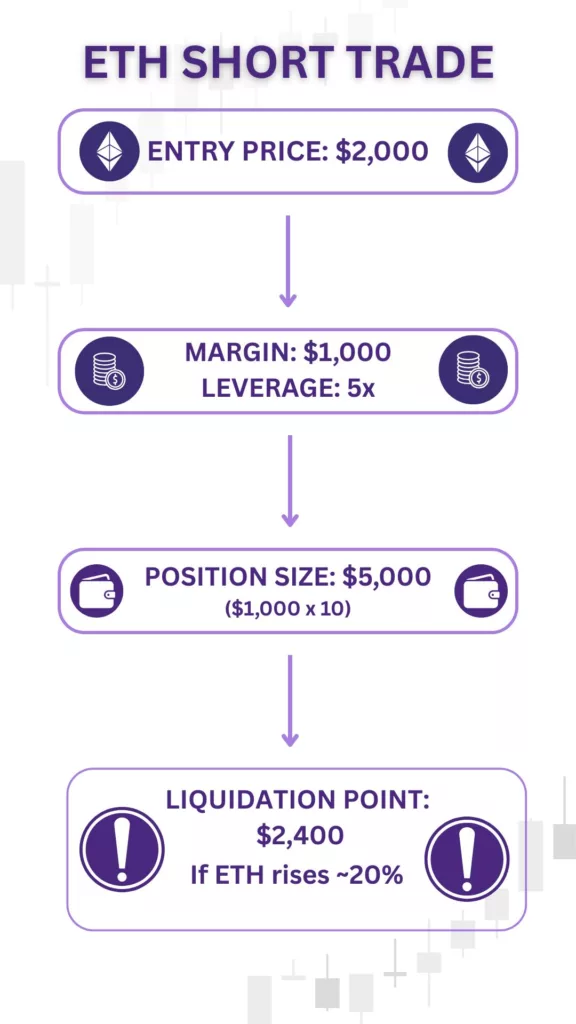
Example: At 5x leverage, a 20% price move against you triggers liquidation. At 20x, just 5% does.
This means you get more breathing room during daily volatility.
Lower leverage isn’t about reducing ambition; it’s about staying alive long enough to benefit from good trades.
2. Always Set Stop-Loss Orders
A stop-loss is like an emergency brake. It automatically closes your trade if the market moves against you beyond a set level.
Example: Long BTC at $79,500 with a stop-loss at $75,500. If the price falls about 5%, you lose roughly $500 instead of the full $1,000 margin at liquidation.
Stop losses turn unpredictable losses into planned outcomes.
Pro tip: Place stop-losses slightly beyond obvious support/resistance to avoid being “wicked out” during brief volatility spikes.
3. Diversify Futures Positions
Many beginners commit all their margin to a single asset. This makes liquidation a one-trade event. Instead:
Spread positions across 2–3 uncorrelated assets.
Example: Pair BTC futures with ETH or altcoin futures. If one asset is volatile, the other may hold steady.
Diversification doesn’t eliminate risk, but it reduces the chance of a total wipeout.
4. Hedge With Opposite Futures
Advanced traders often hedge positions by taking an opposite stance elsewhere.
Example: Long BTC futures at $79,500, but also hold a small short position at $78,000. If the market drops, your short cushions the loss.
Options (like buying a put when long futures) provide downside insurance.
Think of hedging like buying fire insurance. You hope not to need it, but it protects your capital when flames hit.
5. Dynamic Margin Adjustment
Adding collateral mid-trade can prevent liquidation when markets get choppy. Many exchanges allow you to transfer funds into open positions.
Example: If your liquidation price is creeping closer due to volatility, adding $500 to your $1,000 margin lowers liquidation risk significantly.
This flexibility is especially useful during overnight trades when markets move while you sleep.
6. Use Trailing Stops
A trailing stop moves with the market, locking in profits as prices rise but still limiting downside.
Example: If SOL rises from $98 to $108, and you set a trailing stop at $3, your stop automatically moves up as price climbs, staying $3 behind the highest price reached.
If SOL reverses, your position closes with a profit instead of a loss.
Trailing stops blend automation with profit protection, ideal for volatile assets that swing quickly.
7. Practice Position Sizing
Never risk all your capital on one trade. A simple rule: risk only 1–2% of your account balance per trade.
Example: If your trading account is $10,000, risk no more than $100–200 per trade.
This way, even 5–10 losing trades won’t liquidate your account.
Position sizing is the backbone of professional trading; without it, other strategies lose effectiveness.
Futures Trading Risk Management Strategies to Prevent Liquidation
The seven strategies above work best as a system, not a menu you pick one item from. A practical risk-management routine looks like this before every trade:
Set your leverage first, position size second. Decide the leverage band you’re comfortable with (2x–5x for most traders), then size the position to fit your 1–2% risk rule, not the other way round.
Place your stop-loss and know your liquidation price before you enter. Both numbers should be visible to you before you click buy, not calculated after the trade is already open.
Review open positions daily, not just when price moves sharply. Margin ratios drift even on quiet days due to funding rate payments.
Keep a small reserve of unallocated margin. This is what lets you do dynamic margin adjustment when a trade gets close to trouble, instead of watching it get liquidated because your funds were fully deployed elsewhere.
Margin Maintenance Alerts: How Do You Monitor Before You Get Liquidated?
Unlike traditional finance, most crypto futures exchanges don’t issue a formal margin call with time to respond. Instead, they show a margin ratio or “distance to liquidation” indicator in real time and may push a warning notification as that ratio approaches the maintenance threshold.
To use these alerts effectively:
Don’t wait for the exchange’s warning to be your first signal. By the time an official alert fires, you may already be within a small percentage move of liquidation.
Set your own price alerts at a level with meaningful buffer above your actual liquidation price, ideally 15–20% away, not 2–3%.
Check your margin ratio after any high-volatility news event, even if your position hasn’t moved much yet, since funding rates and mark price can shift the ratio independently of the last traded price.
Treat isolated margin positions individually. If you’re running multiple isolated-margin trades, one asset’s alert doesn’t tell you anything about another’s risk level; check each separately.
Does the Exchange Liquidate Long or Short Positions First?
Neither, by default. Exchanges don’t choose a side. Liquidation is triggered automatically whenever a position’s margin ratio breaches the maintenance requirement, regardless of whether it’s long or short. What determines who gets liquidated first in a given move is simply which side is positioned against the direction the market is moving.
In a sharp price drop, over-leveraged long positions are the ones hitting their liquidation levels, since they lose value as price falls.
In a sharp price rally, over-leveraged short positions are the ones getting liquidated, since they lose value as price rises.
This is also why liquidation heatmaps often show clusters on one side of the current price: it reflects where the market has recently been crowded with leveraged bets in one direction, not an exchange preference.
Are There Fees When You Get Liquidated?
In most cases, yes. Beyond losing your margin, exchanges commonly charge a separate liquidation fee (sometimes called a clearance or liquidation clawback fee) when your risk engine force-closes a position, since the forced order still needs to be executed in the market, often at a worse price than a manually placed order. This fee is distinct from your regular trading fee and funding rate payments, and the exact percentage varies by platform and by margin mode. Always check your exchange’s current fee schedule rather than assuming a flat number, since these fee structures do get revised.
Real-World Examples of Liquidation and Prevention
Scenario 1: BTC Futures, No Risk Control
Entry: $79,500
Leverage: 10x
Margin: $1,000
Position Size: $10,000
If BTC drops to $71,550 (10% fall), liquidation wipes out margin.
Scenario 2: Same Trade, With Stop-Loss
Stop-loss set at $75,500 (about 5% fall).
Loss limited to roughly $500, preserving half the margin.
Scenario 3: SOL Futures, Volatile Day
Entry: $98, 5x leverage, $1,000 margin.
SOL swings between $88 and $108 intraday.
Without a buffer, liquidation risk is high given SOL’s typically wider daily range. Adding an extra $500 margin keeps the position safer.
Even experienced traders fall into traps that lead to liquidation.
Myth: Exchanges hunt stop losses. In reality, volatility triggers stops, not secret manipulation.
Mistake: Adding more leverage to recover losses. This compounds the risk instead of fixing it.
Mistake: Ignoring funding rates. Perpetual contracts charge fees that eat into margin.
Tip: Avoid emotional decisions like revenge trading. Discipline is your best protection.
Conclusion
Liquidation in crypto futures trading is not a random event; it’s math. High leverage, low margins, and poor risk management combine to trigger it. But with the right approach, lower leverage, real stop-losses, margin buffers, and honest position sizing, you can prevent liquidation from draining your account.
Ready to level up? Explore more in-depth guides on Mudrex Learn, watch the Mudrex YouTube Channel for weekly crypto insights, or download the Mudrex app on Android or iOS to start trading with a plan.
FAQs
What is liquidation in crypto futures?
Liquidation happens when your margin balance isn’t enough to maintain a leveraged position, and the exchange closes your trade automatically to stop further losses.
What does long liquidation mean in crypto?
Long liquidation occurs when traders betting on price increases are forced to close positions as the asset price falls.
How do you calculate the liquidation price in futures trading?
By factoring in entry price, margin, leverage, and position size. Exchanges provide calculators, but formulas help you plan in advance.
Can you recover from liquidation in crypto?
You cannot recover lost margin once liquidation occurs. The only way to protect capital is to avoid liquidation in the first place.
Is using lower leverage the best way to prevent liquidation?
Yes. Lower leverage widens the buffer between entry and liquidation, giving you more room to manage trades.
What causes liquidation in perpetual futures?
Liquidation happens when leverage, thin margin, high volatility, or a missing stop-loss combine to push your margin ratio below the exchange’s maintenance requirement.
Can you get liquidated at 1x leverage?
Technically yes, but it requires a move close to 100% against your position, since there’s no borrowed exposure amplifying the loss. It’s rare in practice.
How is liquidation price calculated?
It’s based on your entry price, margin, leverage, and position size, adjusted for whether you’re long or short. See the formula and worked examples above.
How can I minimise losses during liquidation?
You minimise losses before liquidation happens: use a stop-loss set well above your liquidation price, keep leverage low, and add margin early if a trade moves against you.
Does the exchange liquidate long or short traders first?
Neither by default. Whichever side (long or short) is positioned against the market’s current direction is the side that hits liquidation levels first.
What happens to my perps position if the platform goes down?
This is a real operational risk of any leveraged position, not specific to any one exchange. Check your platform’s terms for how it handles outages, and use lower leverage and wider stop buffers to reduce how exposed you are to any single point of failure.
What happens if crypto futures gap down over the weekend?
Unlike traditional futures markets, crypto trades 24/7, so there’s no weekend market close and therefore no classic “gap.” That said, liquidity can thin out on weekends, which can still produce sharp, fast moves, so the same margin buffer and stop-loss discipline still applies.
How do I review why my position got liquidated?
Check your position and order history in your exchange’s app, most platforms log your entry price, liquidation price, and the mark price at the time of the forced close, which lets you see exactly how close your stop-loss (if any) was to the liquidation level.
How can I trade futures with limited funds?
Use lower leverage and smaller position sizes rather than raising leverage to compensate for a small account. A small account run with disciplined 1–2% risk per trade survives longer than a small account pushed to high leverage for bigger position sizes.
Risk Disclaimer
Crypto futures trading involves substantial risk, including the potential loss of your entire margin. Leverage magnifies both gains and losses, and liquidation can happen quickly during volatile market conditions. The price levels, examples, and calculations in this article are illustrative only and do not constitute financial advice. Past performance and hypothetical examples are not indicative of future results. Please consult a qualified financial advisor and only trade with capital you can afford to lose.
Siri is a writer venturing into the exciting realms of blockchain technology, cryptocurrency, and decentralized finance (DeFi), eager to explore the transformative potential of these innovations. She brings a unique perspective that bridges traditional industries and cutting-edge technology, often infused with a touch of humor through memes. She has a rich background in real estate and interior design, having previously contributed to NoBroker, where she crafted blogs and assets on these topics.