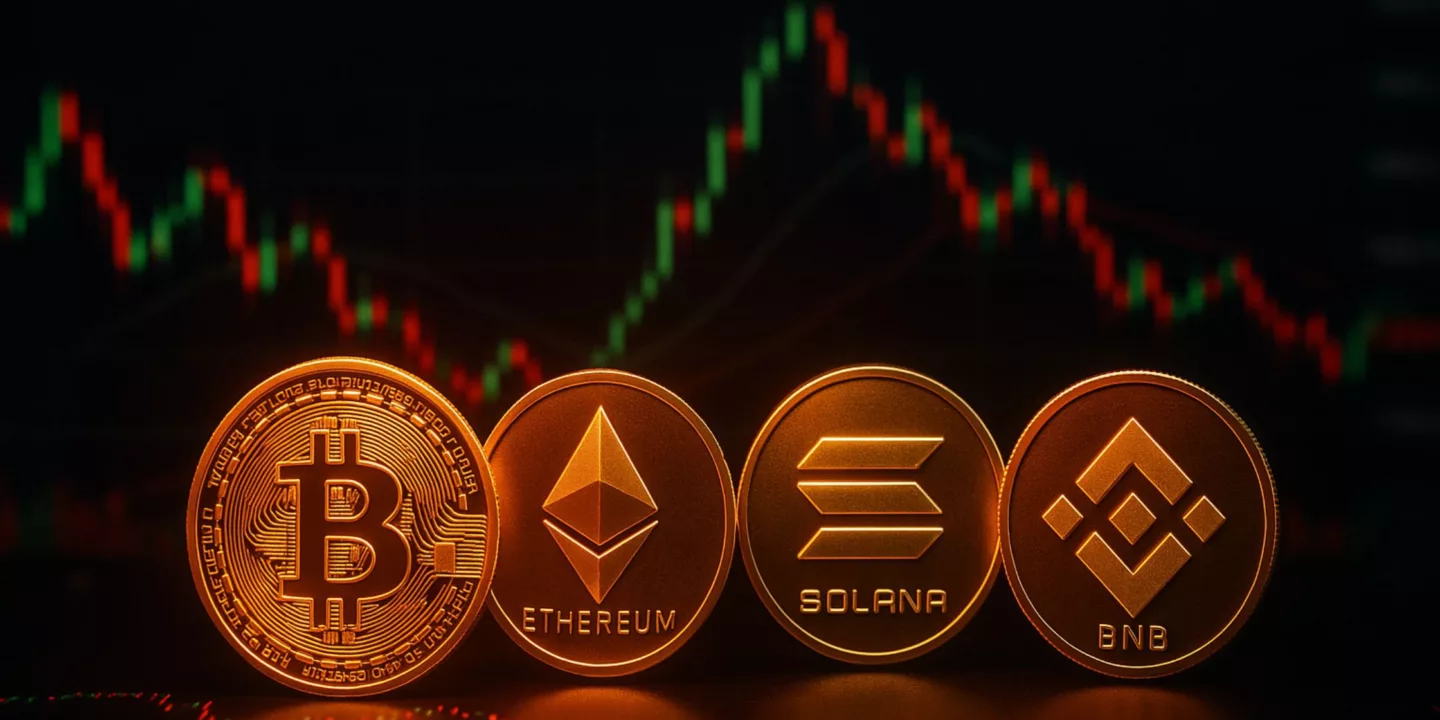

Futures markets in July 2026 are in an interesting spot. Institutional money is still flowing in, AI tokens are grabbing headlines, and real-world asset (RWA) projects are becoming a serious trading category. For futures traders, this means more opportunities; but also more noise to cut through.
This blog breaks down the 10 best tokens for futures trading this month, what makes each one worth watching, and what to watch out for. Whether you’re just getting started with futures or already have a strategy, there’s something here for you.
Not every popular token is a good futures trade. We filtered this list using criteria that actually matter for derivatives markets:
Morpho is one of the more interesting DeFi tokens to watch in futures this month. Unlike broad-market majors, MORPHO trades around a specific narrative: on-chain lending, credit markets, and institutional DeFi infrastructure.
Morpho has PACE after raising $175 million in June 2026 from Paradigm, a16z crypto, Ribbit, and other strategic investors to expand its on-chain credit network. The protocol’s core design also gives it a cleaner DeFi story: Morpho markets are isolated, immutable, and permissionless, which makes the token closely tied to the growth of modular lending infrastructure.
For futures traders, MORPHO is worth tracking because it has both a strong narrative and active perp availability. Binance Futures launched MORPHOUSDT perpetual contracts with up to 75x leverage, giving traders a liquid derivatives route to express views around DeFi lending momentum.
Intermediate DeFi-focused traders.
MORPHO is better suited for traders who understand how protocol news, TVL narratives, funding rounds, and DeFi sector rotations can move price. It may not be the safest starting point for beginners, but for traders who want exposure beyond BTC and ETH, it offers a more specific thesis.
Watch out for: MORPHO can react to protocol news and broader DeFi sentiment. Before entering a perp trade, check open interest, funding rate, and whether the move is backed by volume or only short-term hype.
HYPE is the token behind Hyperliquid, one of the most closely watched perpetual futures ecosystems in crypto.
Hyperliquid has become a major venue for on-chain derivatives. DefiLlama data in early July 2026 showed Hyperliquid with multi-billion-dollar open interest and strong token trading volume, while 21Shares noted that Hyperliquid had crossed over $4 trillion in cumulative all-time trading volume and generated major protocol revenue in 2025.
That makes HYPE especially relevant for futures traders because its price is directly connected to the growth of a perp-first trading platform. In July, HYPE is also trading close to its previous all-time high zone, with traders watching whether protocol revenue, buybacks, and liquidity can support another breakout attempt.
Perp-native momentum traders.
HYPE is for traders who already understand derivatives market structure: open interest, funding, liquidations, exchange revenue, and token unlock pressure. It is especially interesting for traders who want exposure to the growth of decentralized perpetual futures, not just a single L1 or meme narrative.
Watch out for: HYPE can get crowded quickly. If funding turns aggressive or open interest rises too fast near resistance, the risk of a long squeeze increases. Also track regulatory developments around perpetual futures, as regulated U.S. venues are now moving into the same market structure that Hyperliquid helped popularize.
ALSO READ: Is Hyperliquid a good investment in 2026?
Toncoin or TON has moved through a rebrand to Gram (GRAM), with the ticker changing to GRAM across some platforms.
TON/GRAM remains important because of its connection to the Telegram ecosystem. The Open Network positions itself as a blockchain built into Telegram, connecting payments, digital assets, and mini apps for a user base of over 1 billion.
From a futures perspective, TON has been a tradeable perp market for a while. Binance Futures launched TONUSDT perpetual contracts with up to 50x leverage, which keeps it relevant for traders looking at large-cap altcoin momentum beyond ETH.
Altcoin trend traders and ecosystem-news traders.
TON/GRAM is useful for traders who like large-cap alt exposure but still want a clear ecosystem catalyst. Telegram-related updates, mini-app adoption, wallet activity, and exchange ticker transitions can all become short-term trading triggers.
Watch out for: Rebrand confusion can affect search demand, exchange tickers, and trader behaviour. Also watch upcoming unlocks and Telegram-related regulatory headlines, because both can create sudden volatility around TON/GRAM perps.
ETH is one of the most important coins for futures trading. If BTC is the reserve currency of crypto derivatives, ETH is the core smart-contract beta trade.
In July 2026, ETH is back on traders’ screens because ETF flows are turning into a major short-term signal again. There’s been positive U.S. spot Ethereum ETF flow days on July 1, July 2, July 6, and July 7; more institutional attention after a weaker June.
ETH also continues to have deep futures-market relevance. Binance recently launched an ETHUSD1 perpetual contract with up to 100x leverage, while ETHUSDT remains one of the most actively traded crypto perp pairs globally.
Almost everyone; but especially traders who want more movement than BTC without moving too far down the risk curve.
ETH works for trend traders, funding-rate traders, macro traders, and altcoin traders who use ETH as the main risk barometer for the broader smart-contract ecosystem.
Watch out for: ETH can underperform BTC during risk-off phases. ETF inflows, staking narratives, and funding-rate resets can all change the trade quickly, so always check whether futures positioning supports the spot move before entering.
If you’re ready to trade ETH futures on Mudrex, here’s a beginner friendly guide.
SKYAI is the highest-risk token on this list. It is an AI-narrative token with extreme volatility, which makes it attractive for futures traders; but only if risk is managed tightly.
SKYAI is relevant in July because it involves two high-beta narratives: AI tokens and short-term perp speculation. Binance Futures launched SKYAIUSDT perpetual contracts with up to 50x leverage, making it accessible for leveraged traders.
The reason traders are watching it is volatility. CoinMarketCap’s July 2026 price analysis showed SKYAI falling in a single day, while other market trackers show that the token is trading far below its May 2026 all-time high after a major drawdown. That kind of movement can create opportunity for scalpers, but it also makes SKYAI one of the riskiest names here.
Advanced short-term traders only.
SKYAI is not ideal for beginners or large position sizes. It is better suited for traders who understand volatility compression, liquidation zones, quick invalidation, and tight stop-loss execution.
Watch out for: SKYAI can move 20-30% in a day, and not always because of a clear fundamental catalyst. Funding can flip quickly, liquidity can thin out during sharp moves, and wicks can be brutal. Keep leverage low and position size small if trading SKYAI perps.
If you’re newer to futures, here’s something worth understanding before you trade any of these tokens.
In perpetual futures (the most common type of crypto futures), there’s no expiry date. To keep the futures price close to the spot price, exchanges use a mechanism called the funding rate, which is a small periodic payment between traders holding long and short positions.
Why does this matter? Funding costs add up, especially on leveraged positions. A trade that looks profitable can get eaten away by funding if you hold it too long in the wrong direction.
Strong token selection means nothing without execution discipline. A few non-negotiables:
Capital preservation is the job. Profits follow from staying in the game.
July 2026 is a market driven by a few clear themes: institutional participation, AI infrastructure plays, DeFi growth and the RWA story.
Pick your setups carefully. Size responsibly. And always know your exit before your entry.
To deepen your understanding of futures trading strategies and market structure, explore Mudrex Learn and the Mudrex YouTube channel.
BTC and ETH offer the best combination of liquidity and execution quality. For higher volatility, SOL, HYPE, SKYAI and MORPHO are the strongest picks this month based on narrative strength and derivatives activity.
There’s no universal answer, but less is almost always better than you think. BTC and ETH can be traded with moderate leverage due to their liquidity. For smaller-cap tokens, lower leverage and smaller position sizes are strongly recommended.
Funding is a periodic payment between long and short holders in perpetual futures markets. High positive funding means longs are paying, which erodes returns over time and signals a potentially crowded trade. Check it before entering, not after.
Most major exchanges display this per trading pair. You can also use cross-exchange dashboards and funding heatmaps for a broader picture. Mudrex shows live funding data directly on the platform.
Use conservative leverage, set stop-losses before entering, scale into positions rather than going full size at once, and always calculate your liquidation price upfront. Maintaining a margin buffer is the simplest protection against getting wiped by a wick.