

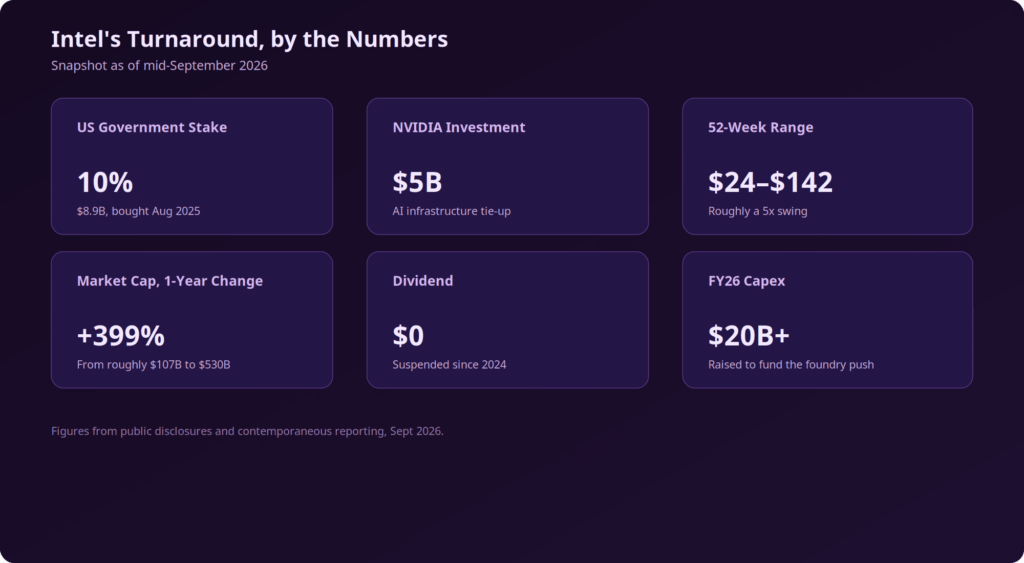
Intel’s most unusual shareholder isn’t a fund or an index; it’s the US government, which bought a 10% stake for $8.9 billion in August 2025. NVIDIA put in another $5 billion months later.
Since then, the stock has run from roughly $20 to an all-time high of $142.35 on June 30, 2026, a move few large-cap names manage in a decade. It’s been volatile since (trading in the $90-$140 range through September) but the broader re-rating has held. This is important to buy Intel stock (INTC) in India, because the two available routes carry genuinely different exposure to a company whose ownership structure looks nothing like it did two years ago.
P.S. If Oracle’s AI-driven swings caught your attention too, the same LRS-versus-tokenized logic applies there; see how to buy Oracle stock in India for that comparison.
How to buy Intel stock in India? Remit money abroad under RBI’s Liberalised Remittance Scheme (LRS) and buy actual INTC shares through an international broker, or buy tokenized Intel stock directly with INR on a platform like Mudrex. Let’s see what separates them.
Real ownership means an international brokerage account and a remittance under LRS. A few specifics:
| What | Detail |
| Remittance cap | $250K per financial year under LRS |
| Tax Collected at Source | 20% above ₹10 lakh remitted in a year, adjustable against your final tax bill |
| Paperwork | W-8BEN form, standard for any US equity purchase |
| Trading window | Nasdaq hours only, roughly 7:00 PM to 1:30 AM IST |
One detail worth flagging for anyone comparing how to buy Intel stock in India across both routes: Intel suspended its dividend in 2024 and hasn’t reinstated it. The usual pitch for owning shares directly (dividends plus voting rights) is missing half its case here.
What real ownership still gets you is a vote, and direct exposure to whatever the government’s stake and the foundry turnaround actually produce over the next few years, for better or worse.
Tokenized Intel stock is a token that tracks INTC’s price 1:1, backed by real shares a custodian holds. On Mudrex, this spot token trades under the ticker INTCB.
A custodian holds real INTC shares, and INTCB is minted against that reserve on a 1:1 basis. The token’s claim is only as good as the custodian’s own solvency and regulatory standing, so custodian quality is the real risk to evaluate here, not the underlying stock’s volatility.
INTCB can typically be moved to a self-custody wallet the way other tokens can, but that doesn’t change what you’re actually holding. Self-custody moves the token, not the underlying claim structure; you still hold a right against the custodian’s reserves, not a brokerage-held share with its own protections.
For Intel specifically, the dividend trade-off that usually applies to tokenized positions barely bites right now, since there’s no dividend to forfeit while the company’s own payout stays suspended. What you do give up is a vote, and any claim tied to Intel’s actual cap table, including whatever the government’s stake or a future dividend reinstatement might eventually be worth to a real shareholder.
For a closer look at how this custody structure holds up under stress, Mudrex’s breakdown of is tokenized NVIDIA stock safe walks through the same questions in more depth.
| Factor | Real INTC Shares | Tokenized Intel (INTCB) |
| Ownership | Yes | No |
| Dividend | None currently (suspended 2024) | None |
| Voting rights | Yes | No |
| Access | LRS remittance + international broker | INR, same day |
| Trading hours | Nasdaq hours only | 24/7* |
| Tax on gains | 12.5% LTCG (24+ months) / slab-rate STCG | Flat 30% + 4% cess (VDA) |
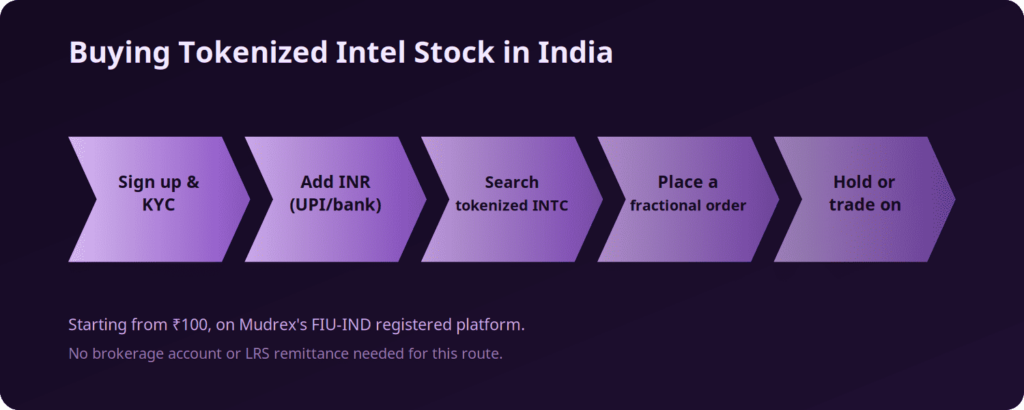
Tokenized Intel stock is available directly on Mudrex:
Intel exposure on Mudrex isn’t limited to one product:
Mudrex’s own earnings-season guide for tokenized US stocks is worth reading before trading either product around an Intel results date; expectations tend to move the price.
For the regulatory and backing side specifically for Indian investors, tokenized US stocks in India: how they’re backed and regulated covers the custodian structure in full.
It shifts the calculus more than most ownership questions do. Wall Street itself hasn’t settled the question either; 12-month price targets currently span roughly $75 to $200, an unusually wide spread for a company this size, reflecting genuine disagreement about whether the government stake and foundry bet pay off.
If you buy real INTC shares, you are a co-owner alongside the US government and NVIDIA, exposed to whatever their involvement does to Intel’s foundry strategy, capex decisions, and eventual dividend policy, for as long as you hold.
If you buy tokenized Intel, none of that structure reaches you directly; you are pricing the outcome, not participating in the governance that produces it. Neither is the “correct” choice; they’re different bets on how much the cap table itself matters to your return.
For a wider view of US equities beyond a single, unusually volatile chipmaker, Mudrex’s Coin Sets offer a similar fractional entry point across a broader mix of assets. To be well-informed before you make a decision, take a look at the numbers on Intel’s own investor relations site.
Can Indians buy Intel shares? Yes, either through an LRS-based international brokerage account for real ownership, or as tokenized Intel on a platform like Mudrex.
How can I buy Intel (INTC) stock from India? Remit funds under RBI’s LRS to a SEBI-registered international broker, complete KYC and a W-8BEN form, then place your order during Nasdaq hours.
What is the minimum amount needed to invest in Intel? Through LRS, it’s the cost of one fractional share via your broker. Through tokenized Intel on Mudrex, it’s as low as ₹100.
Can I buy fractional Intel shares? Yes, both routes support fractional exposure; international brokers offering fractional shares, and tokenized Intel by design.
What charges apply when buying Intel stock from India? LRS involves 20% TCS above ₹10 lakh remitted, plus forex markup. Tokenized Intel involves only the platform’s standard trading fee.
How are gains and dividends from Intel shares taxed in India? Real shares: 12.5% LTCG (over 24 months) or slab-rate STCG. Intel currently pays no dividend. Tokenized Intel: flat 30% plus 4% cess, with 1% TDS, under VDA rules.
What is tokenized Intel stock? A blockchain token backed 1:1 by real Intel shares held in custody, tracking the stock’s price without conferring shareholder rights.
Is tokenized Intel stock the same as owning the underlying share? No. It tracks the price, but you hold a token, not a share; there’s no vote, and no claim on Intel’s cap table beyond the price itself.
How can I buy tokenized Intel stock in India? Complete KYC on Mudrex, add INR, search for INTCB, and place a fractional order; available 24/7, starting from ₹100.
Is Intel available on futures as well as spot in India? Yes, on Mudrex. INTCB is the spot token, tracking INTC’s price 1:1 for straightforward holding. INTCUSDT is a perpetual futures contract, for traders who want leverage or the ability to short.
Cryptocurrency and tokenised investments are subject to high market volatility and risk of loss. Regulatory outcomes do not guarantee future price performance for any coin. This article is for educational purposes only and is not financial advice. Please consult a qualified financial advisor before making investment decisions.