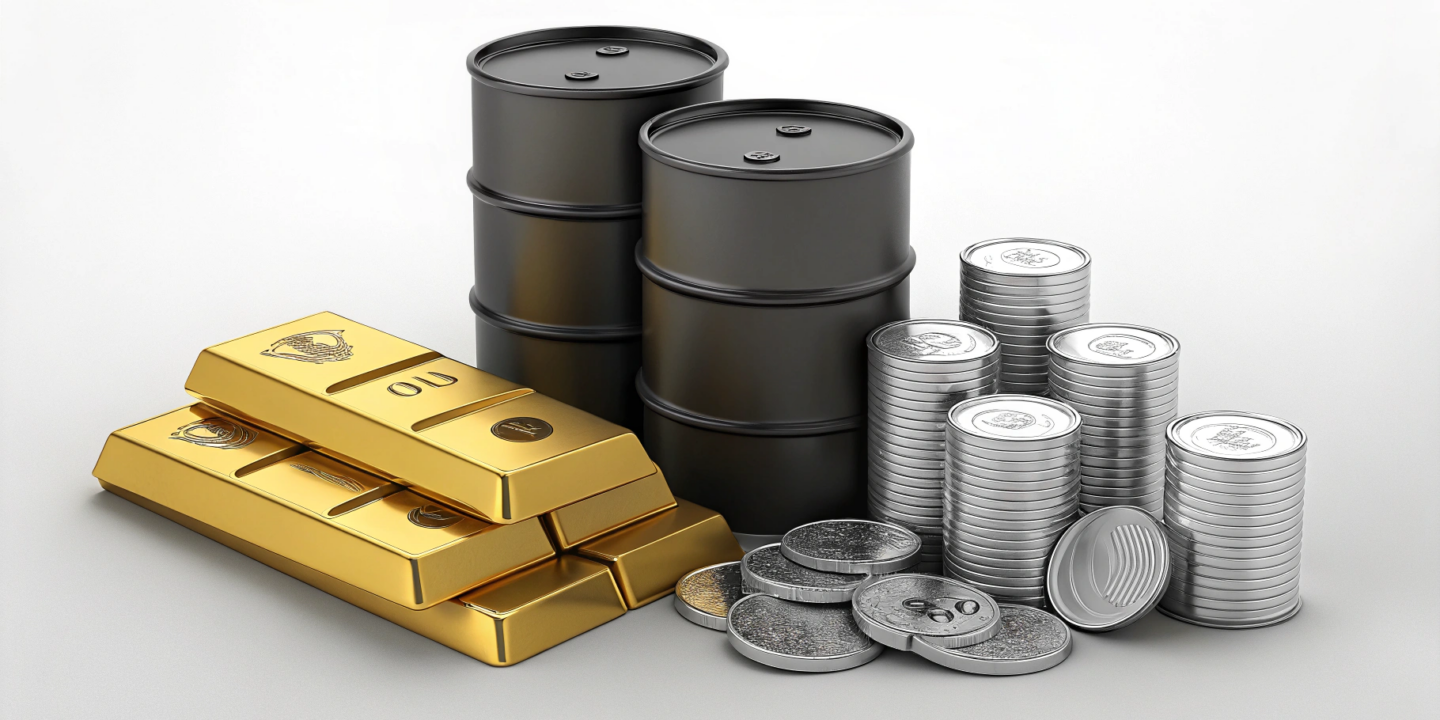

Commodity trading in India allows traders to buy and sell contracts linked to real-world assets like gold, silver, crude oil, natural gas, copper, cotton, wheat, and other agricultural products. Instead of physically buying these commodities, most traders participate through commodity derivatives such as futures and options.
In India, commodity derivatives are regulated by SEBI.
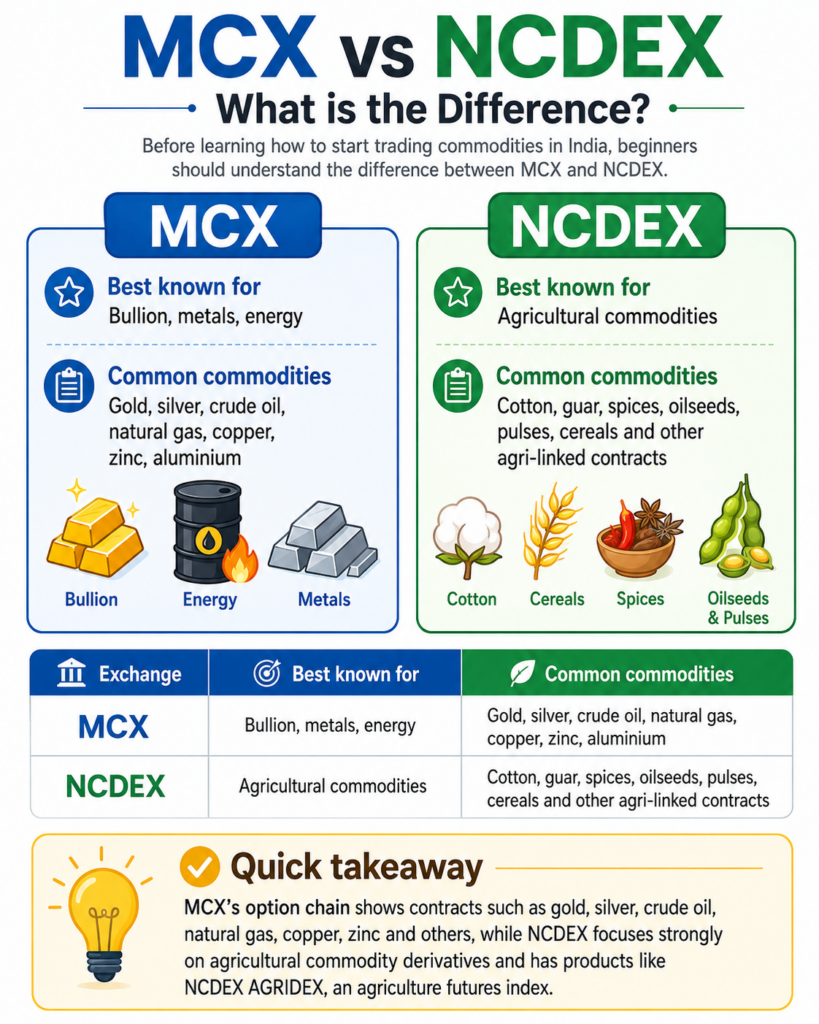
The two most commonly discussed commodity exchanges in India are MCX and NCDEX. MCX is widely used for bullion, metals, and energy commodities, while NCDEX is mainly known for agricultural commodity derivatives. MCX describes itself as a regulated commodity exchange, and NCDEX describes itself as an online commodity exchange with diverse product offerings.
Commodity trading means buying or selling market-linked contracts based on the price movement of commodities. These commodities can include gold, silver, crude oil, natural gas, copper, aluminium, cotton, wheat, spices, and more.
For example, if you think gold prices will rise, you may buy a gold futures contract. If gold prices rise, your trade may make a profit. If prices fall, your trade may make a loss.
Commodity trading is commonly used by two types of participants:
Hedgers: Businesses, producers, importers, exporters, or farmers who want to protect themselves from price changes.
Traders: Individuals or institutions who want to profit from commodity price movements.
Here is a simple step-by-step guide for beginners.
To trade commodities in India, you need an account with a broker that offers access to the commodity derivatives segment. The broker should be registered with SEBI and enabled for exchanges like MCX or NCDEX. SEBI also maintains information on registered stock brokers in the commodity derivatives segment.
Most brokers allow users to activate commodity trading through the same app or platform used for stocks and derivatives. You may need to complete KYC, submit income proof, and enable the commodity segment separately.
Choose the exchange based on the commodity you want to trade.
Choose MCX if you want to trade commodities like gold, silver, crude oil, natural gas, copper, aluminium, zinc, nickel, or similar contracts.
Choose NCDEX if you are interested in agricultural commodities such as cotton, guar, oilseeds, spices, or other agri-linked products.
This matters because each exchange has different products, liquidity, contract specifications, trading hours, and risk factors.
Most commodity trading happens through futures and options.
A futures contract is an agreement to buy or sell a commodity at a future date at a predetermined price. If the price moves in your favour, you may profit. If it moves against you, you may lose money.
An options contract gives the buyer the right, but not the obligation, to buy or sell the underlying commodity-linked futures contract. MCX notes that commodity options in India are European-style options, meaning they can be exercised only on the expiry date.
For beginners, futures may look simple but can be risky because they involve margin and mark-to-market losses. Options may limit buyer-side loss to the premium paid, but they still require understanding of expiry, strike price, premium decay, and liquidity.
Before placing a trade, always check the contract specification. This includes:
This is very important because commodity contracts are not all the same. A gold contract, crude oil contract, and cotton contract can have very different lot sizes, margins, expiry rules, and price movement patterns.
Commodity futures and options require margin. Margin is the amount you must keep in your trading account to open and maintain a position.
If the trade moves against you and your margin falls below the required level, you may receive a margin call or your position may be squared off by the broker.
Beginners should avoid using full capital in one trade. It is better to start small, understand margin movement, and keep extra funds for volatility.
Once your account is active and funded, you can place a commodity trade through your broker’s trading platform.
A basic trading flow looks like this:
Select the exchange: MCX or NCDEX
Choose the commodity contract
Check price, expiry, and volume
Select buy or sell
Choose order type: market, limit, or stop-loss
Enter quantity
Review margin and charges
Place the order
If you expect the commodity price to rise, you may take a buy position. If you expect the price to fall, you may take a sell position.
Commodity prices can move sharply because of global news, inflation data, currency movement, weather, inventory reports, supply cuts, wars, and policy changes.
For example, crude oil may react to OPEC decisions, geopolitical tensions, or inventory data. Gold may react to interest rates, inflation, and safe-haven demand. Agricultural commodities may react to weather, crop output, government restrictions, or seasonal demand.
That is why risk management is more important than prediction.
Before entering any trade, decide:
Never trade commodities only because prices are moving fast. Fast movement can create opportunity, but it can also increase losses.
Commodity trading may include brokerage, exchange transaction charges, GST, SEBI charges, stamp duty, and Commodity Transaction Tax where applicable. MCX’s compliance FAQ also refers to statutory dues such as Commodity Transaction Tax, stamp duty, GST and other applicable dues.
Always check the full charge breakdown on your broker’s platform before placing trades.
Commodity trading can be useful for beginners who want to understand global markets, inflation, gold, oil, and agricultural price cycles. But beginners should start with education before taking leveraged trades.
Gold, silver, and crude oil are usually easier to follow because they are widely tracked. Agricultural commodities may require deeper understanding of domestic supply, seasonality, government policies, and mandi-level price trends.
Commodity trading can offer exposure to real-world assets like gold, silver, crude oil, natural gas, metals, and agri commodities. But because these products involve margin, leverage, volatility, and expiry, beginners should trade only after understanding the product, fees, risks, and their own risk appetite.
Before investing or trading, always understand the product, fees, risks, and your own risk appetite. To learn more about US stocks, crypto, trading strategies, and market trends, explore more guides on Mudrex Learn and watch beginner-friendly explainers on the Mudrex YouTube channel.