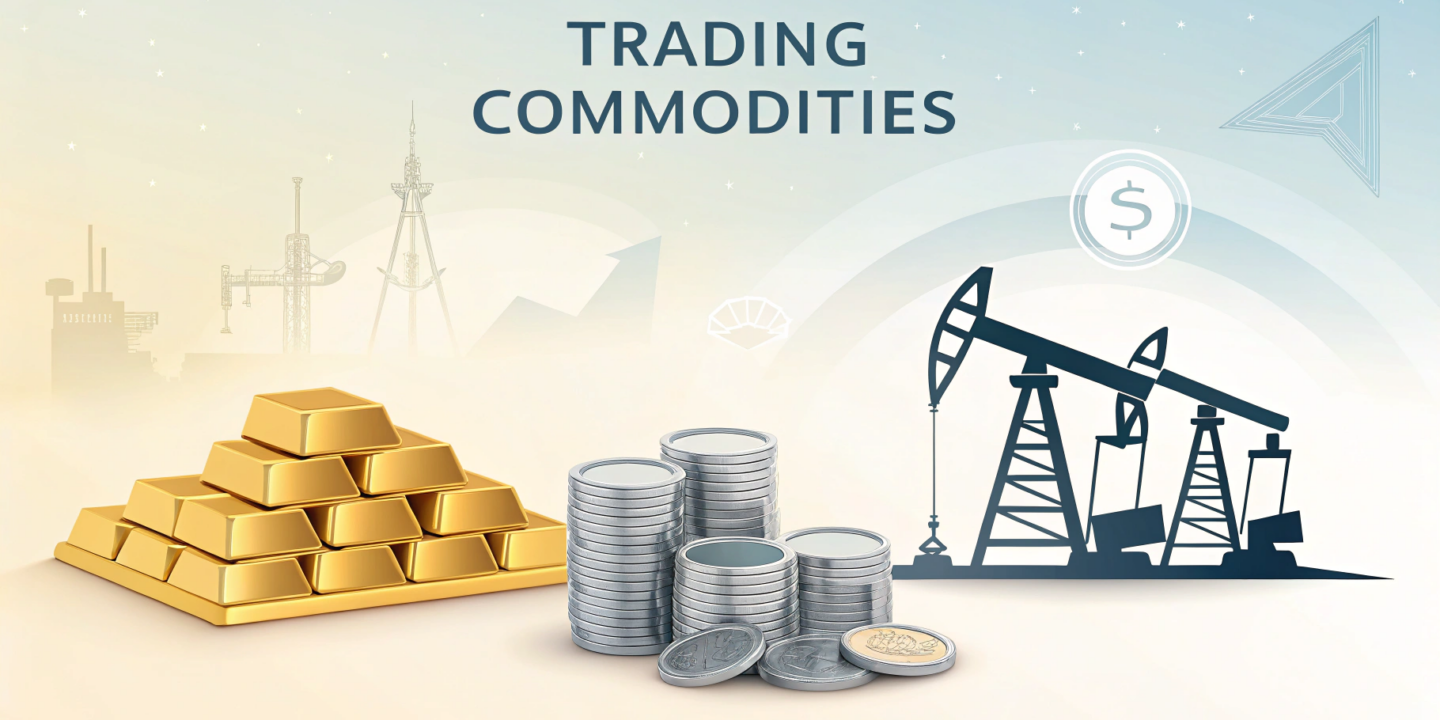

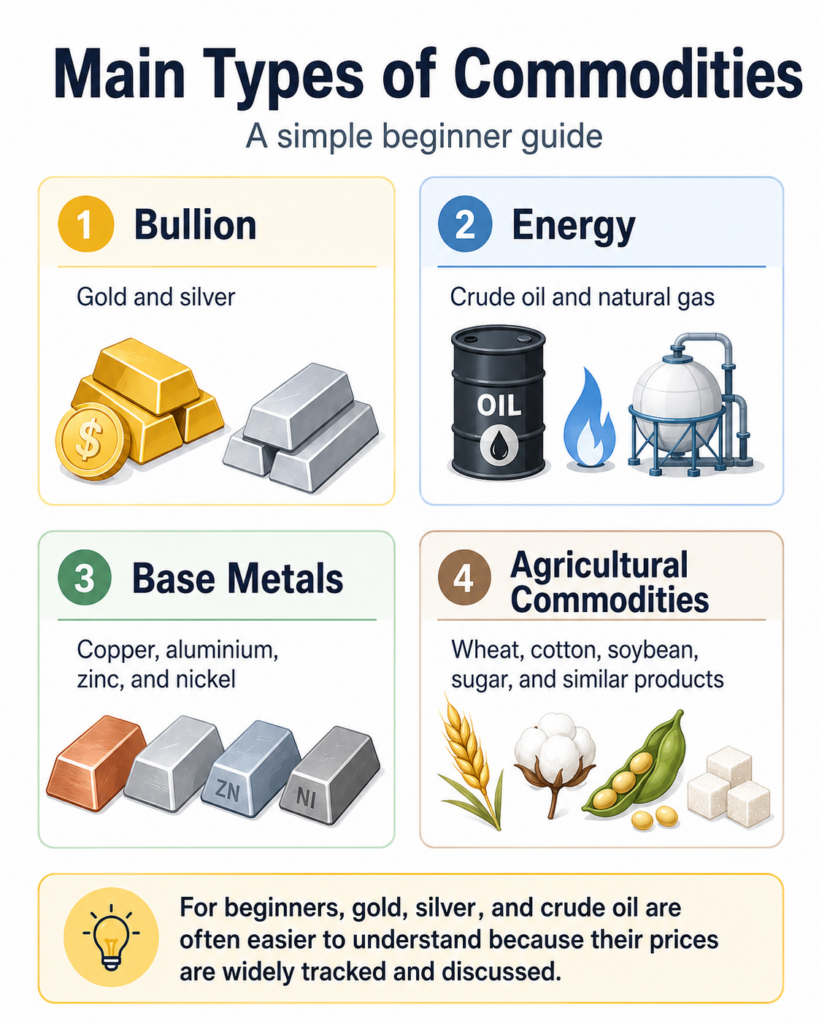
Commodity trading means buying, selling, or trading raw materials such as gold, silver, crude oil, natural gas, agricultural products, and metals. In simple words, it allows traders to participate in the price movement of real-world goods.
In traditional markets, this usually happens through contracts rather than physical delivery. For example, a trader who trades crude oil does not usually receive barrels of oil at home. Instead, they trade a contract linked to crude oil prices.
The simplest answer is this: It is a way to trade the price movement of commodities in the commodity market.
The commodity market is a marketplace where commodities are bought, sold, or traded through physical delivery, futures, options, or digital commodity-linked products.
Commodity prices move because of demand, supply, inflation, currency changes, weather, global events, and geopolitical tensions. For example, crude oil prices may move due to supply cuts or war. Gold prices may rise when investors look for safer assets. Silver may move based on both investment demand and industrial usage.
Commodity trading works by taking a view on whether the price of a commodity will go up or down.
For example, if you believe gold prices may rise, you can take a buy position. If gold moves up, your trade may make a profit. If gold falls, your trade may make a loss.
In India, traditional commodity trading is commonly done through exchanges such as MCX and NCDEX. MCX is popular for metals, bullion, and energy commodities, while NCDEX is known for agricultural commodities.
Before placing any trade, understand what is commodity trading, how prices move, and what risks are involved. Do not treat commodity trading like simple buying and selling.
Start with a commodity you understand. Beginners often track gold, silver, or crude oil because these are widely followed and have strong market information available.
Check whether you are trading futures, options, spot-linked products, or digital commodity-linked contracts. Each product has different rules, fees, risks, leverage, and settlement methods.
Many commodity products allow leverage. This means you can take a larger position with smaller capital. But leverage increases both profit potential and loss risk.
Track global demand and supply, inventory data, currency movement, inflation, central bank decisions, and geopolitical news. These factors can strongly impact the commodity market.
Choose your commodity, position size, order type, and entry level. Beginners should avoid oversized trades and use clear risk limits.
Use stop-losses, avoid over-leverage, and do not hold trades without understanding overnight or weekend risk. Commodity prices can move sharply.
Commodity trading can be useful, but it is not risk-free. Prices can move quickly because commodities are linked to global events.
Key risks include:
Apart from traditional commodity markets, Mudrex offers tokenised commodity-linked trading options for users who want digital exposure to commodities.
On Mudrex, users can explore:
These options allow users to track and trade commodity-linked price movements digitally, without handling physical gold, silver, or crude oil.
However, these are still trading products. Prices can move up or down, and users should understand risks, fees, leverage, and product mechanics before trading.
You also have tokenized gold options, like Tether Gold. Learn more about that here:
So, what is commodity trading? It is the buying, selling, or trading of commodities such as gold, silver, crude oil, natural gas, metals, and agricultural products. The commodity market helps traders participate in the price movement of these real-world assets.
For beginners, the right approach is simple: learn the basics, choose a commodity you understand, study price drivers, manage risk, and avoid over-leverage.
Before investing or trading, always understand the product, fees, risks, and your own risk appetite. To learn more about US stocks, crypto, trading strategies, and market trends, explore more guides on Mudrex Learn and watch beginner-friendly explainers on the Mudrex YouTube channel.
A commodity trade is the buying or selling of a raw material or natural resource, such as gold, silver, crude oil, natural gas, or agricultural products, either physically or through a market-linked contract.
The top 3 widely followed commodities are crude oil, gold, and natural gas because they are heavily traded and closely linked to global economic activity.
Yes, MCX trading is legal in India when done through registered brokers and regulated exchanges. SEBI regulates India’s commodity derivatives market.