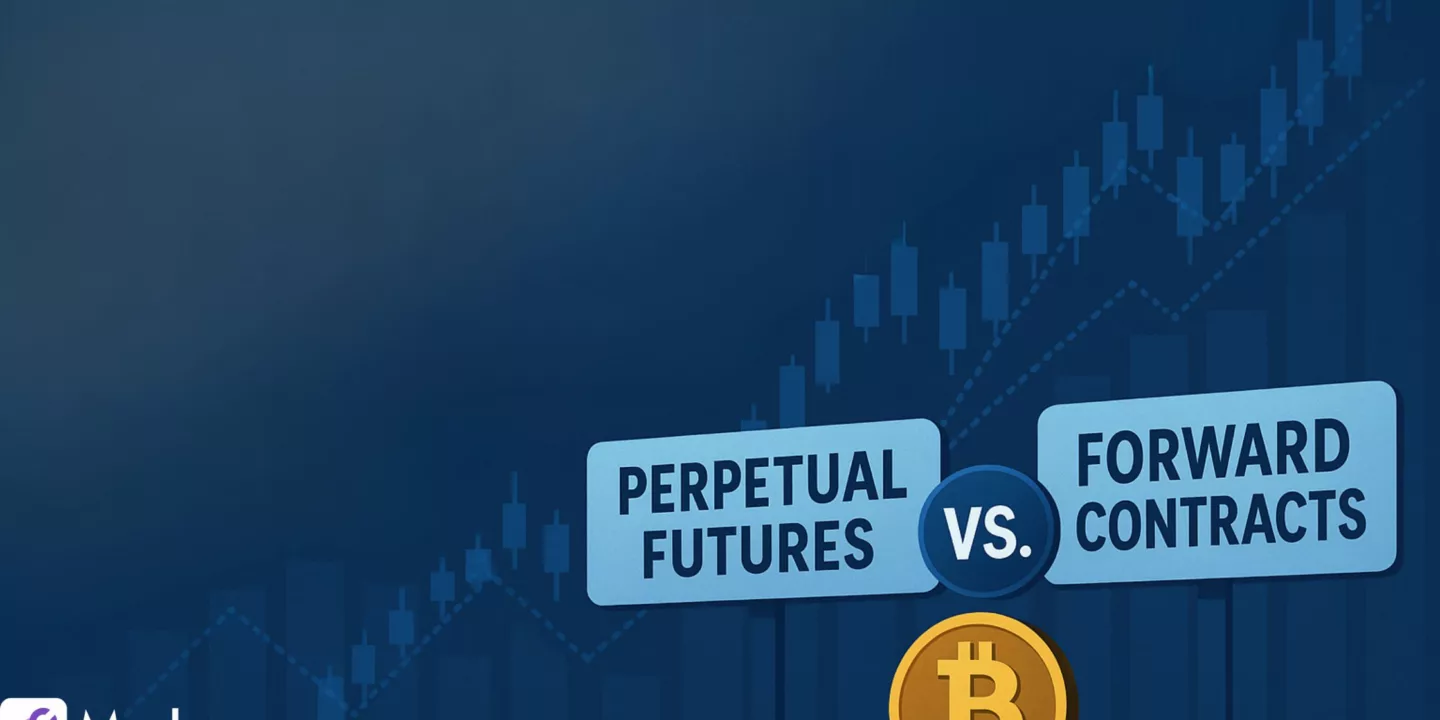
Perpetual Futures vs Forward Contracts: What’s Right for Hedging?
Hedging is a cornerstone of risk management in financial markets. Whether you’re a commodity producer, a portfolio manager, or a crypto trader, mitigating price volatility is critical.
Two popular instruments for hedging are perpetual futures and forward contracts. While both serve similar purposes, their mechanics, flexibility, and use cases differ significantly. This comprehensive guide explores the nuances of perpetual futures and forward contracts, helping you decide which is better suited for your hedging needs.
What Are Perpetual Futures?
Perpetual futures are derivative contracts that allow traders to speculate on or hedge against the price movements of an underlying asset without an expiration date. Unlike traditional futures, which settle at a predetermined date, perpetual futures can be held indefinitely, provided the trader meets margin requirements.
ALSO READ: What Are Futures In Crypto? Beginner’s Guide For Indian Traders
Key Features of Perpetual Futures
- No Expiry: Perpetual futures don’t have a fixed settlement date, offering flexibility for long-term hedging.
- Funding Rates: To balance long and short positions, perpetual futures use funding rates, where one side pays the other based on market conditions.
- Leverage: These contracts often allow high leverage, amplifying both potential gains and risks.
- Exchange-Traded: Perpetual futures are typically traded on centralized or decentralized crypto exchanges, ensuring liquidity and transparency.
Example Use Case
A crypto investor holding Bitcoin might use perpetual futures to hedge against a potential price drop. By shorting Bitcoin perpetuals, they can offset losses in their spot holdings if the market turns bearish.
ALSO READ: Crypto Futures Vs. Traditional Futures: The Ultimate Guide To Key Differences
What Are Forward Contracts?
Forward contracts are agreements between two parties to buy or sell an asset at a specified price on a future date. These contracts are customized and traded over-the-counter (OTC), making them highly flexible but less liquid than exchange-traded instruments.
Key Features of Forward Contracts
- Customization: Forwards can be tailored to specific quantities, delivery dates, and asset types.
- OTC Trading: Traded directly between parties, often through brokers or banks, which may involve counterparty risk.
- Fixed Expiry: Forwards settle on a predetermined date, requiring precise planning.
- No Margin Requirements: Unlike futures, forwards typically don’t require ongoing margin calls, but collateral may be negotiated.
Example Use Case
A farmer expecting to harvest wheat in six months might enter a forward contract to sell their crop at a fixed price, locking in revenue regardless of future price fluctuations.
ALSO READ: Crypto Futures vs Forward Contracts
Comparing Mechanics: How They Work
Understanding the operational differences between perpetual futures and forward contracts is essential for effective hedging.
Perpetual Futures Mechanics
In perpetual futures, traders post an initial margin to open a position, and the exchange ensures liquidity and price discovery. The funding rate mechanism prevents market imbalances by periodically adjusting costs between long and short positions.
For example, if the market is overly bullish, longs pay shorts a funding fee, incentivizing balanced trading. This dynamic makes perpetuals ideal for short-term and speculative hedging strategies.
Forward Contract Mechanics
Forward contracts are bespoke agreements negotiated directly between parties. They’re common in commodities, forex, and real estate markets. Since forwards are OTC, terms like price, quantity, and delivery date are customized. However, this customization comes with counterparty risk—the possibility that one party defaults.
Forwards are settled at maturity, either through physical delivery (e.g., delivering oil) or cash settlement. Their illiquidity can be a drawback, as unwinding a forward requires mutual agreement or a costly offsetting contract.
Advantages of Perpetual Futures for Hedging
Perpetual futures have gained popularity, particularly in crypto and forex markets, due to their unique advantages.
1. Flexibility Without Expiry
The lack of an expiration date allows hedgers to maintain positions without rolling over contracts. This is particularly useful in volatile markets where price trends are unpredictable.
2. High Liquidity
Exchange-traded perpetuals benefit from high trading volumes, ensuring tight bid-ask spreads and ease of entry/exit. This is critical for hedgers needing to adjust positions quickly.
3. Leverage Opportunities
Perpetual futures allow traders to hedge with less capital upfront, thanks to leverage. For instance, a $10,000 Bitcoin position can be hedged with a fraction of that amount, freeing up capital for other investments.
4. Transparency and Price Discovery
Exchanges provide real-time pricing and order book data, enabling hedgers to make informed decisions. This contrasts with the opaque pricing of OTC forwards.
ALSO READ: Crypto Perpetual Swaps: 5 Essential Features For Successful Crypto Trading
Disadvantages of Perpetual Futures
Despite their appeal, perpetual futures have limitations that hedgers must consider.
1. Funding Rate Costs
Funding rates can erode profits or increase hedging costs, especially in unbalanced markets. For long-term hedges, these costs may accumulate significantly.
2. Margin Calls and Liquidation Risk
Leveraged positions require maintaining a sufficient margin. A sharp market move could trigger liquidation, disrupting the hedge.
3. Limited Asset Classes
Perpetual futures are prevalent in crypto and some forex markets but are less common for physical commodities like agriculture or energy, where forwards dominate.
Advantages of Forward Contracts for Hedging
Forward contracts remain a staple in traditional markets due to their tailored nature.
1. Customization
Forwards can be designed to match exact hedging needs, such as specific delivery locations or non-standardized assets. This is invaluable for industries like agriculture or shipping.
2. No Ongoing Costs
Unlike perpetuals, forwards don’t involve funding rates or margin calls, making them cost-effective for long-term hedges.
3. Physical Delivery
Forwards often facilitate physical delivery, ideal for producers or consumers who need the actual asset (e.g., a refinery securing crude oil).
4. Simplicity
For straightforward hedges, forwards eliminate the complexity of managing leverage or funding rates, offering a “set it and forget it” approach.
Disadvantages of Forward Contracts
Forward contracts aren’t without drawbacks, particularly in fast-moving markets.
1. Counterparty Risk
Since forwards are OTC, there’s no exchange to guarantee settlement. If one party defaults, the hedge fails, potentially causing significant losses.
2. Illiquidity
Exiting a forward contract is challenging. Parties must either wait until maturity or negotiate an offsetting contract, which can be costly or impractical.
3. Lack of Transparency
OTC markets lack the real-time pricing and order book data of exchanges, making it harder to assess fair value or market conditions.
4. Complexity in Negotiation
Customizing forwards requires time and expertise, often involving legal and financial advisors, which can increase costs.
Use Cases: When to Choose Each Instrument
The choice between perpetual futures and forward contracts depends on your hedging goals, market conditions, and risk tolerance.
When to Choose Perpetual Futures
- Volatile Markets: Ideal for crypto, forex, or equities where prices fluctuate rapidly, and flexibility is key.
- Short-Term Hedges: Suited for traders or investors needing to hedge for weeks or months without committing to a fixed expiry.
- Leveraged Strategies: Perfect for capital-efficient hedging, especially for portfolios with limited cash reserves.
- Speculative Hedging: Combines hedging with potential profits, appealing to active traders.
Example: A crypto fund manager uses Bitcoin perpetual futures to hedge a $1 million portfolio during a bearish market, leveraging 10x to minimize capital outlay.
When to Choose Forward Contracts
- Long-Term Hedges: Best for locking in prices over months or years, such as for commodity producers or manufacturers.
- Physical Delivery Needs: Essential for businesses requiring the underlying asset, like farmers or energy companies.
- Custom Requirements: Ideal for non-standardized assets or specific delivery terms not available in futures markets.
- Stable Markets: Works well when price volatility is low, and counterparty risk is manageable.
Example: A coffee roaster signs a forward contract to buy 100 tons of beans at $2,000 per ton in 12 months, ensuring stable input costs.
Risk Management Considerations
Effective hedging requires careful risk management, regardless of the instrument.
Managing Perpetual Futures Risks
- Monitor Funding Rates: Regularly check funding rate trends to anticipate costs and adjust positions.
- Use Stop-Loss Orders: Protect against liquidation by setting stop-losses to limit losses in adverse market moves.
- Diversify Hedges: Combine perpetuals with other instruments (e.g., options) to mitigate leverage risks.
Managing Forward Contract Risks
- Assess Counterparty Credit: Vet the financial stability of the counterparty or use clearinghouses to reduce default risk.
- Negotiate Exit Clauses: Include terms for early termination or offsetting contracts to enhance flexibility.
- Monitor Market Conditions: Stay informed about price trends to avoid being locked into unfavorable terms.
Regulatory and Tax Implications
Both instruments face regulatory and tax considerations that vary by jurisdiction.
Perpetual Futures
- Regulation: In many countries, perpetual futures are regulated as derivatives, requiring compliance with exchange rules and reporting obligations.
- Taxation: Gains or losses are often treated as capital gains, but frequent trading may be classified as business income in some regions.
Forward Contracts
- Regulation: OTC forwards may face lighter regulation but are subject to anti-fraud and transparency rules in major markets like the U.S. or the EU.
- Taxation: Tax treatment depends on whether the contract is settled physically or in cash. Physical delivery may be treated as a business transaction, while cash-settled forwards are often taxed as derivatives.
Always consult a tax or legal advisor to navigate these complexities.
Industry Trends and Innovations
The hedging landscape is evolving, driven by technology and market demands.
Perpetual Futures Trends
- Decentralized Exchanges (DEXs): Platforms like dYdX and GMX offer perpetual futures with lower fees and no intermediaries, appealing to crypto hedgers.
- Cross-Asset Perpetuals: Exchanges are introducing perpetuals for non-crypto assets like stocks or commodities, expanding their use.
- AI-Driven Trading: Algorithms now optimize funding rate arbitrage and hedging strategies, enhancing efficiency.
Forward Contract Trends
- Electronic Platforms: OTC markets are adopting digital platforms for faster negotiation and settlement, improving liquidity.
- Blockchain-Based Forwards: Smart contracts enable trustless forwards, reducing counterparty risk in niche markets.
- Sustainability Clauses: Forwards in commodities increasingly include environmental or ethical terms, reflecting ESG priorities.
Making the Right Choice for Your Hedging Strategy
Choosing between perpetual futures and forward contracts hinges on your specific needs:
- Liquidity and Flexibility: Perpetual futures excel in liquid, volatile markets where quick adjustments are necessary.
- Customization and Stability: Forward contracts are better for tailored, long-term hedges, especially for physical assets.
- Risk Tolerance: Perpetuals suit risk-tolerant hedgers comfortable with leverage, while forwards appeal to those prioritizing certainty.
- Market Access: Ensure the chosen instrument is available for your asset class and trading platform.
Practical Steps to Decide
- Define Your Goals: Are you hedging short-term volatility or securing long-term prices?
- Assess Market Conditions: Is the market liquid and volatile (favoring perpetuals) or stable and illiquid (favoring forwards)?
- Evaluate Costs: Compare funding rates, margin requirements, and negotiation costs.
- Consult Experts: Work with brokers, advisors, or exchange platforms to finalize your strategy.
Conclusion
Perpetual futures and forward contracts are powerful tools for hedging, each with distinct strengths. Perpetual futures offer flexibility, liquidity, and leverage, making them ideal for dynamic markets like crypto or forex. Forward contracts provide customization and stability, perfect for traditional industries like agriculture or energy.
By understanding their mechanics, advantages, and risks, you can craft a hedging strategy that aligns with your financial goals. Whether you prioritize speed or specificity, the right choice depends on your market, timeline, and risk appetite.
Download Mudrex today and start your foray into the world of crypto perpetual futures!