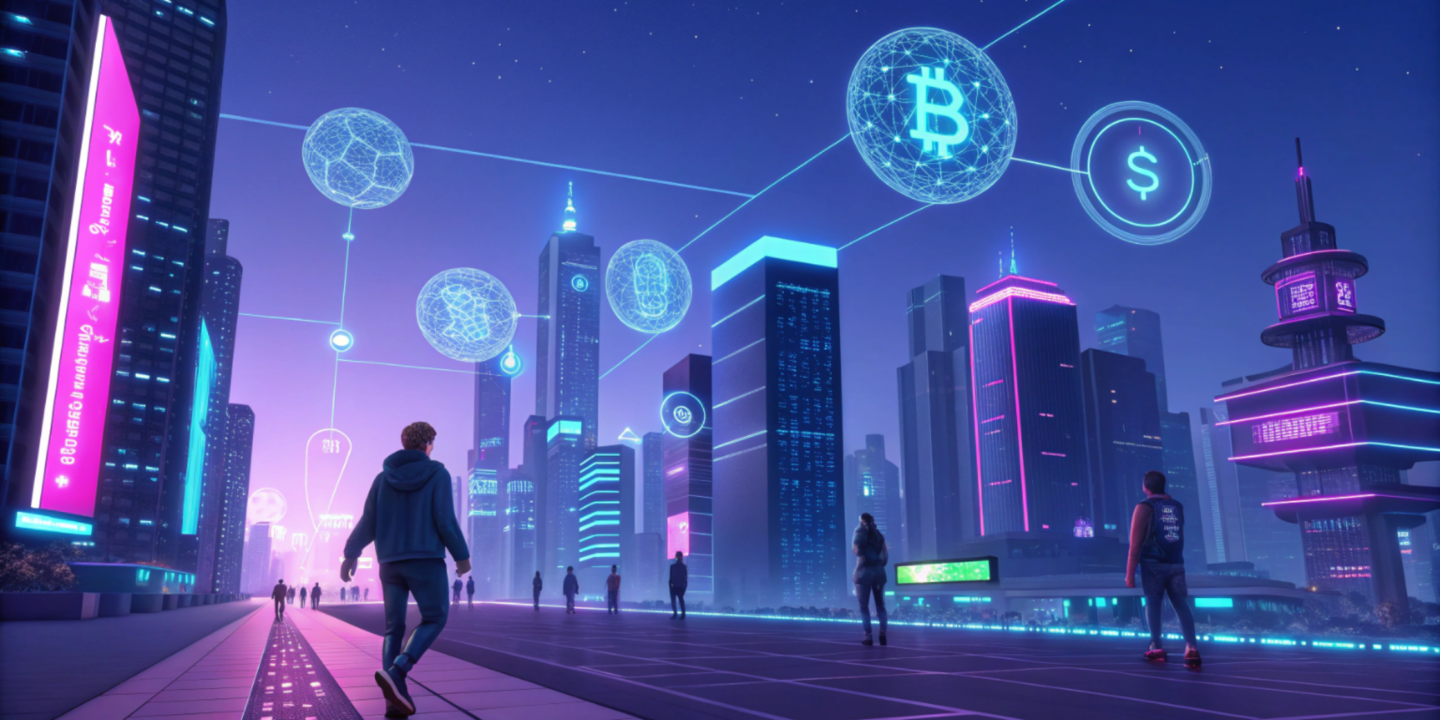

The metaverse refers to a network of virtual worlds powered by blockchain, where users can interact, create, and own digital experiences. These environments are supported by digital economies built on NFTs and tokens, enabling ownership of virtual land, in-game assets, and immersive interactions.
As adoption grows, several crypto projects are actively building the infrastructure behind these ecosystems. Recent industry estimates suggest the metaverse market could exceed $800 billion by 2030, highlighting its growing potential.
This article explores the top metaverse crypto coins and what makes them important in shaping future digital economies.
They are digital tokens that power economies within virtual worlds. These tokens act as the primary medium of exchange, allowing users to participate in various activities across blockchain-based environments.
They are used for buying virtual land, trading digital assets, and accessing exclusive features or experiences. In many cases, these tokens also enable governance, allowing holders to vote on platform upgrades and decisions.
Metaverse tokens are often integrated with NFTs, which represent unique digital assets such as avatars, land parcels, and collectibles. Together, they create a self-sustaining economy where users can own, trade, and monetize their digital presence.
Blockchain technology is the backbone of the metaverse because it enables true digital ownership. Unlike traditional games where assets are controlled by centralized entities, blockchain ensures that users have full control over their digital items.
It also allows assets to be transferred or sold across platforms, creating open and interoperable economies. Transparency and security further enhance trust, making it easier for users to engage in digital transactions.
This combination of blockchain and NFTs supports decentralized virtual worlds, where users drive economic activity and growth. During peak cycles, NFT trading volumes reached billions of dollars, much of which was driven by metaverse and gaming ecosystems.
Decentraland (MANA) is one of the earliest blockchain-based metaverse platforms, enabling users to buy, develop, and monetize virtual land. Each land parcel is represented as an NFT, giving users full ownership and control.
The platform has hosted virtual events such as concerts, exhibitions, and business experiences, showcasing how digital environments can replicate real-world interactions. MANA is used for transactions, governance, and purchasing assets within the ecosystem.
At its peak, Decentraland recorded thousands of monthly active users, and virtual land parcels were sold for significant amounts, reflecting strong early interest in digital real estate.
The Sandbox (SAND) focuses on gaming and user-generated content, allowing players to create their own experiences and monetize them within the platform.
It offers tools for building digital assets and integrating them into interactive environments. The Sandbox has formed partnerships with over 200+ brands and creators, helping expand its ecosystem and attract mainstream attention.
The SAND token is used for transactions, staking, and governance, making it central to the platform’s economy and growth.
ApeCoin (APE) is closely tied to the Bored Ape ecosystem and plays a major role in the development of the Otherside metaverse.
It functions as both a governance and utility token, enabling holders to participate in decision-making and access ecosystem features. Its connection to a strong NFT community gives it a cultural and social advantage.
The broader ecosystem has generated hundreds of millions of dollars in NFT trading volume, making ApeCoin a key player in community-driven metaverse development.
Axie Infinity (AXS) is one of the earliest play-to-earn blockchain games, allowing users to collect, breed, and battle NFT-based characters.
At its peak, Axie Infinity reached over 2 million daily active users, making it one of the most successful blockchain gaming ecosystems.
Although it has faced challenges over time, the platform continues evolving with improved gameplay and ecosystem updates, maintaining its relevance in the play-to-earn sector.
Render Network (RNDR) represents the infrastructure layer of the metaverse by providing decentralized GPU rendering power.
This allows creators to build high-quality 3D visuals required for immersive environments. As demand for virtual experiences increases, rendering power becomes a critical component of metaverse scalability.
The global GPU and rendering market is expected to grow rapidly, positioning Render Network as a key infrastructure provider supporting the future of digital worlds.
A strong community is essential for any metaverse project. Virtual worlds depend on active users to create, interact, and sustain economic activity.
Projects with higher engagement and daily active users tend to demonstrate stronger long-term potential. This is because user participation directly drives growth and value within the ecosystem.
Utility plays a critical role in determining the success of metaverse tokens. Projects with clear use cases such as governance, trading, and in-game economies tend to attract more users and developers.
Strong utility ensures that tokens remain relevant even during market downturns, supporting long-term ecosystem stability.
Strategic partnerships can significantly enhance a project’s visibility and adoption. Collaborations with brands, creators, and developers introduce new experiences and expand the platform’s reach.
Continuous ecosystem development also ensures innovation, making the project more competitive in the evolving metaverse space.
The metaverse sector has experienced strong hype cycles, attracting widespread attention. However, not all projects have maintained consistent user growth after initial interest.
In many cases, user activity declined after peak periods, highlighting the gap between speculation and real adoption.
The blockchain gaming and metaverse space is highly competitive, with numerous projects targeting similar audiences.
This competition can make it difficult for platforms to retain users, especially if they fail to innovate or provide engaging experiences.
Metaverse tokens are highly volatile due to their early-stage nature. Prices can fluctuate significantly based on market sentiment and technological developments.
Investors should approach this sector cautiously and focus on long-term fundamentals rather than short-term trends.
Metaverse crypto coins play a crucial role in powering virtual worlds and digital economies. From gaming platforms like Decentraland and The Sandbox to infrastructure providers like Render Network, the sector offers diverse opportunities.
While still evolving, growing investment and technological advancements suggest long-term potential. Evaluating projects based on utility, adoption, and ecosystem development is essential for informed decision-making.
Explore detailed crypto guides on Mudrex Learn, and subscribe to the Mudrex YouTube channel to stay updated on blockchain trends, investing strategies, and emerging crypto sectors.
Tokens used in virtual worlds for buying assets, governance, and powering digital economies.
Some well-known examples include Decentraland, The Sandbox, ApeCoin, Axie Infinity, and Render Network.
They can offer exposure to emerging virtual world ecosystems but remain highly volatile.
Adoption, ecosystem growth, and demand for digital assets can increase token utility and value.
Many companies and developers continue building metaverse platforms, although adoption is still evolving.