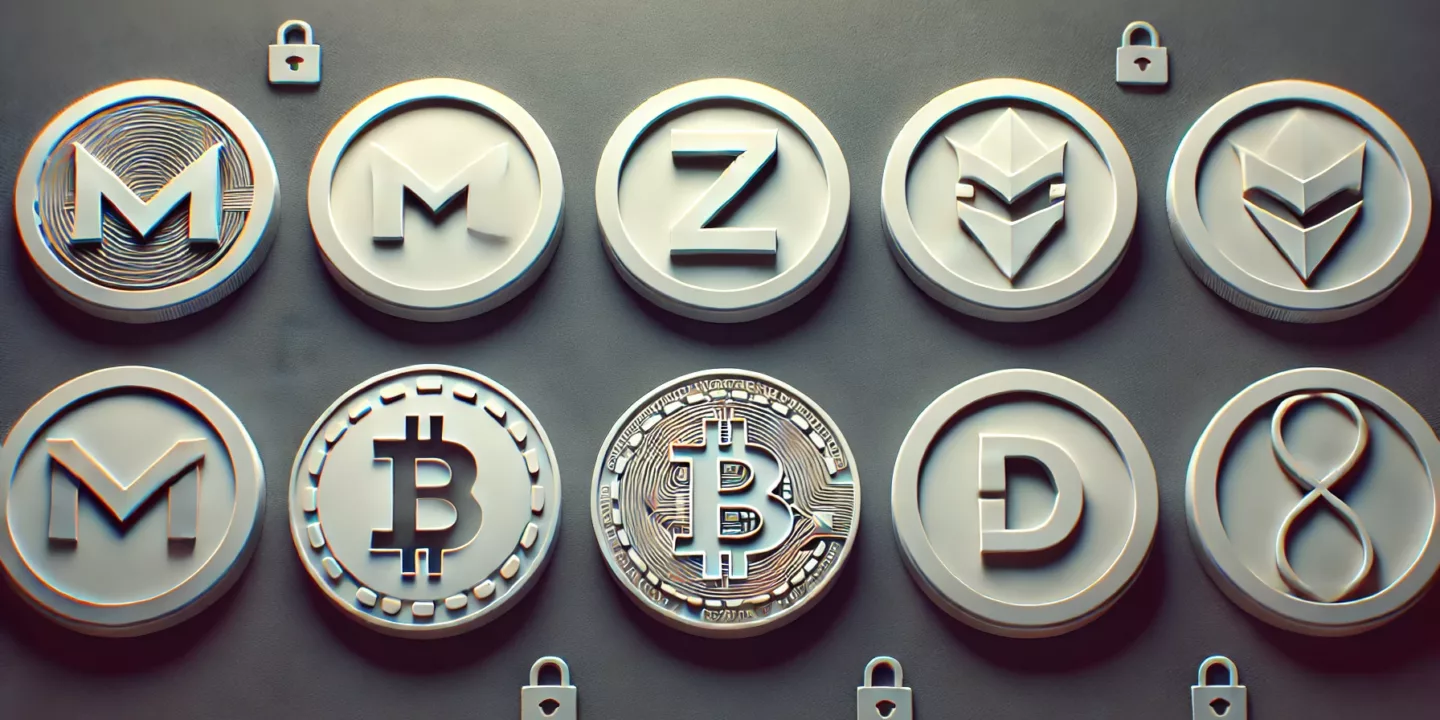
Privacy coins or private cryptocurrency represent a niche increasingly vital to the cryptocurrency space. They are meticulously crafted to safeguard transaction confidentiality and ensure anonymity. Unlike traditional cryptocurrencies, where every transaction and wallet address is bare on the blockchain, privacy coins deploy cutting-edge cryptographic techniques to mask this sensitive information. This means transactions remain shrouded in secrecy and unlinkable to individual users, offering an elevated level of financial discretion.
As concerns over digital surveillance and data breaches worsen, the demand for privacy and anonymity in cryptocurrency intensifies. That demand has shown up directly in prices: privacy coins were 2026’s best-performing crypto sector, with the category’s combined market cap growing from roughly $7 billion a year ago to over $33 billion, according to Glassnode, even as regulators in several jurisdictions pushed to delist these coins from major exchanges.

These privacy coins utilize several sophisticated methods to achieve their goals. Ring signatures mix the spender’s transaction with others, making it nearly impossible to trace the origin. Stealth addresses create unique, one-time addresses for each transaction, preventing the connection of multiple transactions to a single address. Zero-knowledge proofs allow for the verification of transactions without disclosing any specific details, guaranteeing complete confidentiality.
Such cryptographic innovations render privacy coins highly attractive for anyone seeking to shield their financial activities from prying eyes. Whether driven by personal security, financial privacy, or a desire to evade unwanted scrutiny, the appetite for privacy coins is surging. In this blog, we’ll cover the top privacy coins in the world, which ones you can actually buy in India, and a side-by-side comparison of their privacy technology, market cap, liquidity, and key risks.
Privacy coins had a breakout year in 2026, with the sector’s combined market cap tripling and Zcash alone climbing from the 82nd-largest cryptocurrency to a top-10 position. Here’s a rundown of the top 10 privacy coins globally, several of which aren’t currently available to buy on Indian platforms, see the India-specific list right after this one.
Monero is the premier privacy coin, known for its reliable privacy mechanisms. Ring signatures blend the spender’s transaction with many others, rendering tracing nearly impossible. Stealth addresses enhance privacy by ensuring each transaction is directed to a unique, one-time address. Ring Confidential Transactions (RingCT) obscure transaction amounts, providing a comprehensive privacy shield.
With an active development community that continuously keeps working on updating its privacy features, Monero remains a strong candidate in the privacy coin space. Its 2026 FCMP++ upgrade closed longstanding tracing weaknesses in the protocol, arriving just as EU and FATF rules were tightening on ordinary crypto transfers, a combination that has kept Monero central to the privacy-coin conversation even as exchanges in some regions delist it.
Zcash offers flexibility in both transparent and shielded transactions. Its pioneering privacy technology, zk-SNARKs (Zero-Knowledge Succinct Non-Interactive Arguments of Knowledge), enables the verification of transactions without disclosing any details. Users can toggle between public and private transactions, balancing transparency and confidentiality. 2026 has been Zcash’s breakout year: a spot Grayscale ETF launch and a major network upgrade (Ironwood/NU6.3) helped push ZEC’s market cap past $17 billion and made it the largest privacy coin by market capitalization, ahead of Monero for the first time in years.
Formerly known as Darkcoin, DASH features PrivateSend, a functionality that augments transaction privacy by routing transactions through a network of master nodes. This makes it challenging to trace the origin of funds, providing an added layer of anonymity. DASH’s emphasis on swift transactions and low fees makes it a viable choice for daily transactions while maintaining user privacy. In July 2026, Dash activated a new Orchard-based privacy system on its mainnet, borrowing the same underlying cryptography Zcash uses, though privacy on Dash remains optional rather than the default, so it offers weaker anonymity guarantees than Monero or Zcash’s shielded pools.
Utilizing the MimbleWimble protocol, MimbleWimble Coin excels in both privacy and scalability. Its blockchain design reduces data visibility and discards unnecessary information, facilitating smaller, more private transactions. This blend of efficiency and privacy positions MimbleWimble Coin as a compelling choice for 2024.
Verge employs anonymity-enhancing networks like Tor and I2P to obscure users’ IP addresses, bolstering transaction privacy. Its Wraith Protocol allows users to switch between public and private ledgers, allowing for adjustable privacy levels. Verge’s focus on user privacy and flexibility makes it a noteworthy player in the privacy coin landscape.
Verge Price Today – XVG Price ,Live Chart & Marketcap – Mudrex
Horizen harnesses zk-SNARKs technology to deliver secure, private transactions. Beyond its privacy capabilities, Horizen supports a thriving ecosystem for decentralized applications (dApps), offering a blend of privacy and functionality. Its commitment to innovation and privacy ensures its continued relevance in the evolving crypto environment.
Horizen Price Today – ZEN Price ,Live Chart & Marketcap – Mudrex
Leveraging the MimbleWimble protocol, Beam guarantees total anonymity for transactions. Its user-friendly wallet and emphasis on compliance and usability make it accessible to a broad audience. Beam’s focus on privacy and its approach to regulation position it for sustained growth and adoption in 2024.
Formerly Zcoin, Firo utilizes the Sigma protocol for privacy. The Lelantus privacy protocol allows users to burn coins and redeem them later without transaction history, ensuring full confidentiality. Firo’s inventive privacy solutions place it among the top contenders in the privacy coin domain.
Secret Network specializes in privacy-preserving smart contracts, enabling dApps to operate while maintaining data privacy. By encrypting inputs, outputs, and states, Secret ensures that transaction and contract details stay confidential. Its distinctive approach to privacy and smart contracts distinguishes Secret in the privacy coin arena.
Secret Price Today – SCRT Price ,Live Chart & Marketcap – Mudrex
Pirate Chain employs a combination of zk-SNARKs and delayed Proof-of-Work (dPoW) to guarantee complete anonymity. Known for its uncompromising security, Pirate Chain is dedicated to providing absolute privacy. Its steadfast commitment to user anonymity makes it a top choice for those prioritizing privacy.
Not every global privacy coin is listed on Indian platforms. Of the 10 above, these are currently available to buy on Mudrex: Monero (XMR), Zcash (ZEC), DASH, Verge (XVG), Horizen (ZEN), Firo (FIRO), and Secret (SCRT). MimbleWimble Coin, Beam, and Pirate Chain are not currently listed on Mudrex; if you’re specifically shopping for a privacy coin to buy in India, focus your comparison on the seven above.
| Coin | Privacy Technology | Approx. Market Cap (Aug 2026) | Liquidity | Best For | Key Risk | Available in India (Mudrex) |
|---|---|---|---|---|---|---|
| Zcash (ZEC) | zk-SNARKs, optional shielded transactions | ~$17-20B | High | Institutional/compliant privacy exposure | Extremely volatile; up over 2,000% in 2026 alone | Yes |
| Monero (XMR) | Ring signatures, stealth addresses, mandatory privacy | ~$10-11B | High | Maximum default privacy | Most frequently delisted coin due to AML concerns | Yes |
| Dash (DASH) | Optional CoinJoin-style mixing, new Orchard-based privacy (July 2026) | ~$865M-870M | Moderate | Fast, low-fee payments with optional privacy | Privacy is opt-in, not default; weaker anonymity guarantee than XMR/ZEC | Yes |
| Horizen (ZEN) | zk-SNARKs | Smaller-cap | Lower | dApp ecosystem plus privacy | Lower liquidity than top 3 | Yes |
| Verge (XVG) | Tor/I2P network obfuscation, Wraith Protocol | Smaller-cap | Lower | Switchable public/private ledger | Lower liquidity, smaller developer base | Yes |
| Firo (FIRO) | Lelantus protocol (burn-and-redeem) | Smaller-cap | Lower | Full transaction history erasure | Lower liquidity | Yes |
| Secret (SCRT) | Encrypted smart contracts | Smaller-cap | Lower | Privacy-preserving dApps, not just payments | Niche use case, thinner market | Yes |
| MimbleWimble Coin (MWC) | Mimblewimble protocol | Smaller-cap | Low | Compact, private transactions | Low liquidity; not listed on Mudrex | No |
| Beam (BEAM) | Mimblewimble protocol | Smaller-cap | Low | User-friendly private wallet | Low liquidity; not listed on Mudrex | No |
| Pirate Chain (ARRR) | zk-SNARKs + delayed Proof-of-Work | Smaller-cap | Low | Maximum anonymity, niche community | Very low liquidity; not listed on Mudrex | No |
Market caps for the smaller-cap coins move fast enough that exact figures would be stale quickly; treat the “smaller-cap” label as directional rather than precise, and check live data before trading.
Selecting the ideal privacy coin involves evaluating several key factors to match your specific needs. Here are the main considerations:
Employ hardware wallets and practice good security hygiene to ensure secure use and storage.
Update your software regularly and be cautious of phishing scams and other security threats.
By comparing these factors, you can choose a privacy coin that best fits your needs, whether for enhanced anonymity, quick transactions, or robust community support.
Privacy coins hit real regulatory turbulence in India in 2026. In January, India’s Financial Intelligence Unit (FIU-IND) directed registered exchanges to halt trading, deposits, and withdrawals of privacy coins, naming Monero, Zcash, and Dash specifically, and citing anti-money laundering concerns under the Prevention of Money Laundering Act (PMLA). The FIU classified these assets as “anonymity-enhancing cryptocurrencies,” and exchanges were told to reflect the restriction in their risk management frameworks.
In March 2026, the FIU issued a clarification stating that no formal, mandatory order had actually been issued forcing exchanges to delist these coins. According to the clarification, the restrictions exchanges had put in place were precautionary steps taken based on their own interpretation of broader regulatory guidance, not a direct government mandate. This eased some of the uncertainty across the Indian crypto sector, but it didn’t fully resolve the underlying question of how privacy coins would be treated going forward.
The practical outcome since then has split by coin rather than settling cleanly one way or the other. Monero has continued to face exchange delistings in India through 2026, including a Kraken delisting in April, and remains removed from several major platforms as a result. Zcash has generally fared better, remaining listed on more established exchanges, likely helped by its optional-transparency design, which gives regulators and institutions an audit path that Monero’s mandatory, always-on privacy doesn’t offer. Dash, with privacy as an optional feature rather than its core design, has drawn comparatively less regulatory attention than Monero specifically.
This pattern isn’t unique to India. Globally, Monero has been delisted from a growing number of centralized exchanges, up to 73 by some counts as of mid-2026, including major platforms across the US, Europe, and South Korea, while Zcash has continued to attract institutional interest, including a spot ETF, that has kept it listed in places Monero has been removed from. The European Union’s incoming Anti-Money Laundering Regulation (AMLR) is set to formally prohibit crypto businesses from offering anonymity-enhancing coins starting in 2027, which will likely accelerate this same pattern across EU-regulated exchanges.
In conclusion, privacy coins remain vital to the cryptocurrency landscape, offering essential anonymity and privacy features.
The top privacy coins for 2024, including Monero, Zcash, and DASH, continue to push the boundaries of what is possible in secure and private transactions. As regulatory challenges mount, the future of privacy coins will depend on their ability to adapt and innovate.”
Replacement:
“In conclusion, privacy coins remain vital to the cryptocurrency landscape, offering essential anonymity and privacy features, and 2026 has shown that demand for that privacy is real: the sector was crypto’s best-performing category of the year.
The top privacy coins, led by Zcash, Monero, and DASH, continue to push the boundaries of what’s possible in secure and private transactions. As regulatory challenges mount, particularly in the EU, the future of privacy coins will depend on their ability to adapt, whether through Zcash’s compliance-friendly optional transparency, Monero’s default-privacy resilience, or new approaches from smaller projects.
Privacy coins offer the protection of anonymity by employing intricate cryptographic techniques. Unlike standard cryptocurrencies where transaction details are publicly visible, privacy coins like Monero and Zcash use ring signatures and zk-SNARKs to obscure transaction data. This means that while your transactions are securely recorded on the blockchain, your identity and financial activities remain hidden from prying eyes.
If a privacy coin faces a ban in your country, you may encounter obstacles in accessing or trading it through mainstream exchanges. This can lead to reduced liquidity and limited options for buying or selling the coin.
Using privacy coins for online purchases carries its own set of risks. While they offer enhanced anonymity, not all merchants accept them, limiting your purchasing options. Additionally, the increased scrutiny from regulators may lead to sudden changes in these coins’ availability or legal status.
Monero, Zcash, and DASH are the three largest and most established, with Verge, Horizen, Firo, and Secret also commonly included. Each uses different cryptographic methods, ring signatures, zk-SNARKs, or optional mixing, to obscure transaction details.
Monero and Zcash are the two most common alternatives, since Bitcoin’s blockchain is fully transparent and every transaction is publicly traceable. DASH is a common third choice for users who want fast, low-fee transactions with optional privacy.
The same global privacy coins available elsewhere, currently including Monero, Zcash, DASH, Verge, Horizen, Firo, and Secret, are available to buy on platforms like Mudrex. There’s no India-specific privacy coin; availability depends on which coins a given exchange chooses to list.
A private cryptocurrency, or privacy coin, uses cryptographic techniques like ring signatures, zero-knowledge proofs, or stealth addresses to hide transaction details, sender, recipient, or amount, that are publicly visible on a normal blockchain like Bitcoin’s.
Monero is the most widely recognized, since it applies privacy to every transaction by default rather than as an optional feature. Zcash is a close second, particularly for users who want the option to choose between shielded and transparent transactions.
Monero offers the strongest default privacy, Zcash offers flexibility and has attracted more institutional and regulatory goodwill, and DASH prioritizes speed and low fees over maximum anonymity.