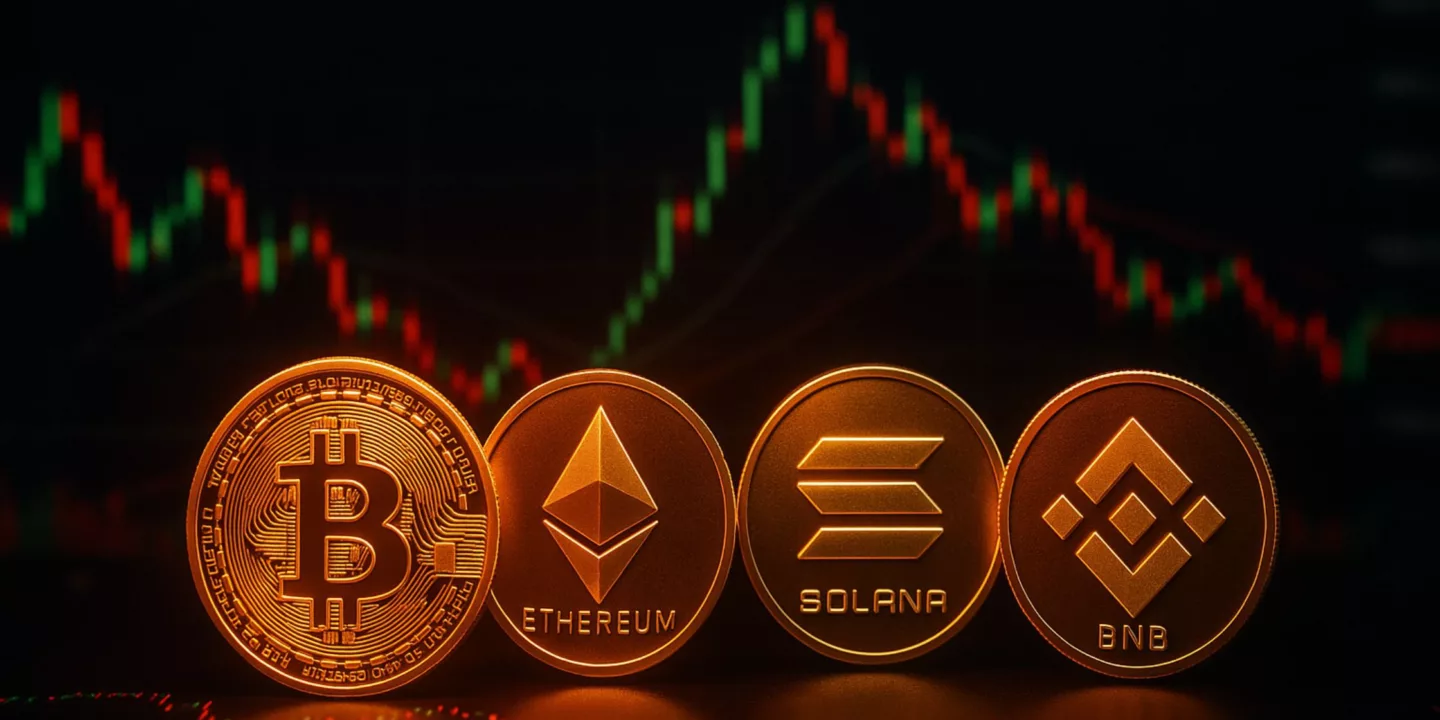

Crypto futures trading allows traders to take long or short positions without directly owning the underlying cryptocurrency. The most suitable markets typically combine high trading volume, substantial open interest, tight bid-ask spreads, and enough volatility to create trading opportunities.
For November 2026, five cryptocurrencies worth watching are Hyperliquid (HYPE), Pepe (PEPE), Bitcoin (BTC), Ethereum (ETH), and Solana (SOL). They offer different futures trading setups, from the deeper derivatives markets of BTC and ETH to the more volatile, momentum-driven markets of HYPE and PEPE.

| Token | Core theme | Why it’s on the list |
|---|---|---|
| Hyperliquid (HYPE) | DeFi derivatives and momentum | Strong futures participation, substantial open interest, and sharp price movements |
| Pepe (PEPE) | Memecoin volatility | Active perpetual futures market and sudden sentiment-driven price swings |
| Bitcoin (BTC) | Deep derivatives liquidity | Largest futures market, extensive exchange coverage, and relatively deep order books |
| Ethereum (ETH) | DeFi and institutional derivatives | Strong liquidity, large open interest, and sensitivity to network and macroeconomic developments |
| Solana (SOL) | High-beta Layer 1 trading | Active futures market, strong trading turnover, and recent Alpenglow network upgrade |
Hyperliquid is a high-performance Layer 1 blockchain built around decentralized trading, with a flagship perpetual futures exchange and a growing ecosystem of financial applications.
HYPE enters November with unusually strong derivatives activity for an altcoin. As of November 8, it trades around $77.28, with approximately $4.67 billion in futures open interest and $9.45 billion in 24-hour derivatives volume.
The token has also experienced sharp price movements. Historical futures data shows HYPE trading near $87.89 at the beginning of November before falling to approximately $76.76 on November 5, a decline of nearly 13%. Trading volume exceeded $1 billion on several sessions during the correction.
HYPE combines substantial derivatives liquidity with sensitivity to developments in its own trading ecosystem.
Hyperliquid has established itself as a major decentralized perpetual futures platform, while its HIP-3 framework has expanded the range of markets available on the network. Its Assistance Fund uses trading-fee revenue to purchase HYPE, connecting token demand with platform activity.
This creates opportunities for event-driven traders monitoring protocol revenue, token buybacks, and changes in derivatives market share.
HYPE’s futures open interest is also significant relative to its market capitalization, indicating substantial leveraged participation and the potential for liquidation-driven price movements.
HYPE traders should monitor open interest, funding rates, and whether price stabilizes after its early-November decline.
Its recent futures activity demonstrates how quickly momentum can reverse. Increased leverage can amplify short-term moves, particularly when large positions are liquidated.
Future token unlocks, declining trading revenue, and competition among decentralized derivatives exchanges could introduce additional volatility.
Pepe is an Ethereum-based memecoin inspired by the Pepe the Frog internet meme. Its price is driven mainly by community interest, speculative trading, whale activity, and broader cryptocurrency market sentiment.
PEPE remains a popular memecoin futures market because of its broad exchange availability and tendency to experience sudden price movements.
As of November 8, PEPE trades near $0.00000500, with approximately $771 million in futures open interest and $1.10 billion in 24-hour derivatives volume.
PEPE is particularly relevant for short-term momentum traders because its price often reacts sharply to changes in speculative sentiment.
The token experienced renewed trading activity in early November, including a rebound around November 4–5 as broader cryptocurrency markets recovered and short positions were closed.
Its approximately $1.10 billion in daily futures turnover shows that leveraged trading remains active. Derivatives volume is also several times its reported spot trading volume, indicating that futures play a substantial role in PEPE’s market activity.
Unlike tokens driven by scheduled network upgrades or predictable protocol revenue, PEPE is primarily an attention-driven trading market.
That makes it relevant for traders who monitor changes in trading volume, funding, open interest, and liquidation activity rather than relying exclusively on fundamental developments.
The biggest risk is the speed at which memecoin sentiment can reverse.
PEPE can experience sharp rallies followed by equally aggressive corrections, while concentrated whale holdings and leveraged positions can amplify short-term volatility.
Traders should monitor sudden funding-rate changes, large open-interest increases, and the relationship between spot buying and derivatives trading.
Thin order-book liquidity during volatile periods can also produce slippage, even when overall trading volume appears substantial.
Bitcoin is the largest cryptocurrency by market capitalization and the most established underlying asset for crypto futures trading.
Its derivatives market includes perpetual futures, dated futures, and institutional products traded across centralized exchanges and regulated venues.
As of November 8, Bitcoin trades around $75,728, with approximately $69.13 billion in futures open interest and $209.96 billion in 24-hour derivatives volume.
These figures make BTC the largest and most actively traded futures market among the five tokens on this list.
Bitcoin’s main advantage is market depth.
Its large derivatives market and broad exchange coverage generally allow traders to enter and exit positions with less price impact than in smaller-cap cryptocurrencies, although spreads and execution quality vary by venue.
BTC futures are also influenced by identifiable market drivers, including institutional ETF flows, macroeconomic developments, regulatory announcements, and changes in overall crypto risk sentiment.
November has brought renewed volatility as Bitcoin trades near $75,000 following market weakness in late October and early November.
For futures traders, Bitcoin provides opportunities to take directional positions during market moves without relying on the extreme price fluctuations commonly seen in memecoins.
Its substantial options and futures markets also make funding, open interest, and institutional positioning useful indicators of broader cryptocurrency sentiment.
Bitcoin traders should monitor spot ETF flows, funding rates, liquidation levels, and changes in futures open interest.
Large movements in BTC frequently influence the entire cryptocurrency market, making it an important reference asset even for traders focusing on altcoin futures.
Although Bitcoin is generally more liquid than smaller cryptocurrencies, leverage can still produce rapid losses during sudden market movements.
Periods of low liquidity, major economic announcements, and crowded derivatives positioning can cause significant price gaps and liquidation cascades.
Ethereum is the largest smart-contract blockchain ecosystem, supporting decentralized finance, stablecoins, tokenized assets, and thousands of blockchain applications.
ETH is its native cryptocurrency and one of the most actively traded assets in the crypto derivatives market.
As of November 8, Ethereum trades near $2,232, with approximately $42.42 billion in futures open interest and $113.75 billion in 24-hour derivatives trading volume.
ETH is second only to Bitcoin among these five tokens in futures market activity.
Ethereum provides a combination of deep derivatives liquidity and exposure to blockchain-specific developments.
Its futures market allows traders to respond to changes in DeFi activity, institutional adoption, network upgrades, staking dynamics, and broader cryptocurrency sentiment.
ETH also frequently experiences stronger percentage movements than Bitcoin during major altcoin market rotations, making it attractive to traders seeking a liquid market with potentially greater directional volatility.
The availability of ETH derivatives across major centralized and decentralized exchanges supports substantial trading activity, while its large open interest provides useful information about market positioning.
Ethereum is particularly relevant for traders monitoring the relationship between BTC and ETH, as changes in relative performance can reveal whether speculative capital is moving toward or away from altcoins.
ETH futures traders should monitor the ETH/BTC ratio, funding rates, open interest, and Ethereum network activity.
Sharp movements in Bitcoin can quickly affect Ethereum, while changes in DeFi liquidity or institutional demand may create additional ETH-specific volatility.
Large open interest can also increase liquidation risk when prices move sharply against crowded positions.
Although Ethereum offers deep liquidity, leveraged futures remain vulnerable to funding costs, sudden corrections, and adverse market movements.
Solana is a high-performance Layer 1 blockchain supporting decentralized finance, stablecoin payments, tokenized assets, memecoins, and consumer applications.
SOL is its native token and a widely traded altcoin in cryptocurrency futures markets.
As of November 8, SOL trades around $89.13, with approximately $7.82 billion in futures open interest and $24.27 billion in 24-hour derivatives volume.
These figures place Solana among the most active altcoin futures markets, with considerably greater liquidity than many smaller Layer 1 tokens.
SOL combines substantial trading activity with sensitivity to developments across its blockchain ecosystem.
One of its clearest recent catalysts was the Alpenglow consensus upgrade, which activated on Solana mainnet on October 21, 2026. The upgrade targets transaction finality of approximately 150 milliseconds, compared with roughly 12.8 seconds under the previous consensus mechanism.
Solana has also experienced increased attention around stablecoin payments, tokenized assets, and institutional financial applications.
These developments provide identifiable events for traders to monitor alongside broader market momentum.
SOL also tends to attract substantial speculative participation during altcoin rallies, particularly when decentralized exchange activity and Solana-based memecoin trading increase.
Its combination of active derivatives markets and sensitivity to ecosystem developments makes it relevant for both momentum and event-driven futures strategies.
SOL traders should monitor changes in network activity, exchange trading volumes, futures funding, and open interest.
Solana’s sensitivity to broader altcoin sentiment can result in larger percentage moves than Bitcoin during periods of market stress.
The Alpenglow upgrade is already live, so traders should avoid treating its activation as an upcoming November event. Instead, the focus should be on post-upgrade network performance, adoption, and further ecosystem developments.
Funding costs and liquidation risks remain significant, particularly when leveraged positions become concentrated during strong directional moves.
To start trading futures on any of these tokens, or to explore more strategy guides, check out Mudrex Futures or watch trading breakdowns on the Mudrex YouTube channel.
Some of the best cryptocurrencies for futures trading in October 2026 include Bitcoin (BTC), Ethereum (ETH), Hyperliquid (HYPE), NEAR Protocol (NEAR), and Quant (QNT). BTC and ETH offer deep derivatives liquidity, while HYPE, NEAR, and QNT provide higher volatility and stronger event-driven trading opportunities.
Bitcoin (BTC) has the highest futures trading volume among the cryptocurrencies covered in this list in October 2026. Its deep liquidity and large open interest make BTC one of the most widely traded assets for both short-term and swing futures strategies.
ETH, HYPE, NEAR, and QNT are among the altcoins worth watching for futures trading in November 2026. ETH offers stronger liquidity, while HYPE, NEAR, and QNT can provide larger percentage moves due to higher volatility and token-specific catalysts.
Futures involve leverage and liquidation risk, so traders should closely monitor funding rates, open interest, volatility, and position sizing.
Crypto futures trading involves significant risk of loss and is not suitable for everyone. Leverage magnifies both gains and losses, and positions can be liquidated if margin requirements aren’t met. The examples, price levels, and scenarios in this article are illustrative only and are not financial advice. Please do your own research and consult a qualified financial advisor before trading.