Is Ethereum Safer? Comparing Its Volatility to Altcoin Risks
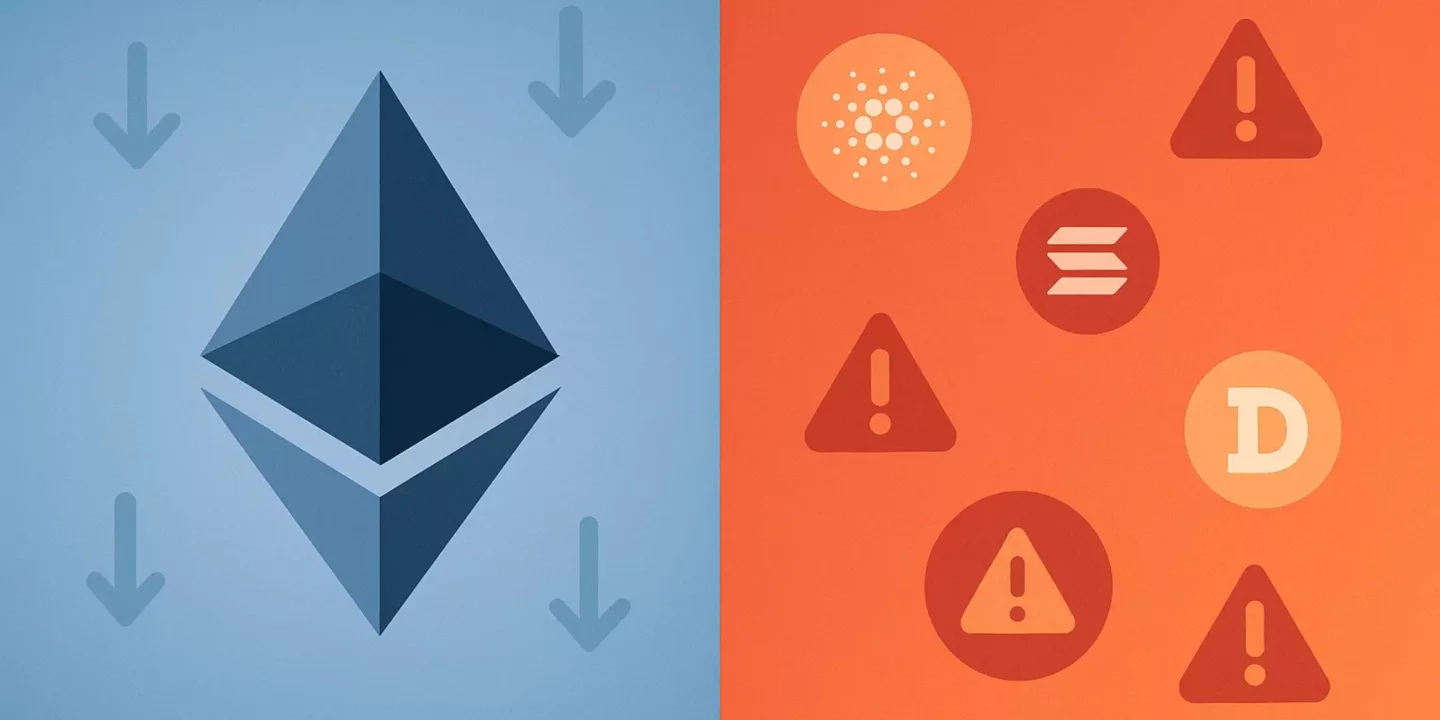
Ethereum stands out as a major player in the cryptocurrency sector, enabling applications such as online apps, automated agreements (smart contracts), and digital collectibles (NFTs). Altcoins, on the other hand, refer to any cryptocurrencies other than Bitcoin, such as Solana, Chainlink, or meme-based coins like Dogecoin.
Investing in crypto can feel like a rollercoaster; prices can soar or plummet. Ethereum’s price fluctuates significantly, a phenomenon referred to as volatility, while altcoins carry unique risks that can wipe out investments.
Understanding Ethereum Volatility
Volatility describes how much a cryptocurrency’s price jumps or drops over time. With Ethereum, you might see its price at $2,500 one week and $1,800 the next. Several factors drive these changes:
- Buying and Selling Trends: When many people rush to buy Ethereum, its price tends to rise. If they sell off, it falls.
- Market News: Big announcements shake up the market. The 2022 Ethereum Merge, which made the network more eco-friendly, boosted its price as investors cheered.
- Crypto Market Waves: Ethereum typically moves in tandem with the broader market. If Bitcoin surges, Ethereum might follow as excitement spreads. A market slump can also pull Ethereum down.
- Network Upgrades: Ethereum’s constant improvements, such as faster transactions, can potentially drive up prices if successful. Glitches or delays might cause dips.
Take 2021: Ethereum’s price rocketed from $1,200 to nearly $4,900, fueled by buzz around NFTs and decentralized finance (DeFi). However, in 2022, a market downturn caused it to fall below $900. These swings offer profit opportunities but also carry risks of loss. Compared to many altcoins, Ethereum’s volatility is steadier because its large user base and real-world uses provide a stronger foundation.
ALSO READ: Ethereum Price History Explained: 6 Key Facts You Need to Know in 2024
Altcoin Risks and Higher Volatility
Altcoins’ prices often swing wildly, and they carry bigger risks than Ethereum. Here’s why:
- Extreme Price Swings: Altcoins often have fewer traders, so a single large trade can cause prices to skyrocket or plummet.
- Fraudulent Projects: Some altcoins are scams. Creators pump up excitement, collect money, then vanish—a “rug pull.”
- Lack of Purpose: Ethereum powers real-world applications, such as DeFi and NFTs. Many altcoins lack clear use cases, so their value can disappear if the market does not adopt them.
- Technical Flaws: Altcoins rely on blockchain networks. Coding errors or hacks can tank their value.
- Regulatory Threats: Governments may restrict or ban cryptocurrencies. A banned altcoin becomes nearly unusable, crushing its price. Even rumors of regulation can spark sell-offs.
- Trading Challenges: Many altcoins are traded on obscure exchanges, making it difficult to sell when needed. Ethereum trades on major platforms like Binance, so it’s easier to cash out.
Altcoins’ low trading activity amplifies their volatility. In 2023, over half of the new altcoins lost 80% or more of their value within a few months, highlighting their unstable nature.
Comparing Ethereum’s Volatility to Altcoin Risks
Ethereum’s price moves are tamer than most altcoins’, and it faces fewer dangers. Here’s how they stack up:
- Established vs. Experimental: Launched in 2015, Ethereum boasts a robust network that supports DeFi, NFTs, and more, with millions of users. Most altcoins are relatively young, with untested teams or ideas, making them more likely to fail.
- Market Activity: Ethereum experiences billions of dollars in daily trades, helping to smooth out price fluctuations. Altcoins often have low trading volume, such that a single move can cause significant volatility.
- Types of Risk: Ethereum’s volatility stems from market shifts, news, or upgrades. Altcoins face additional issues, including fraud, system failures, or a lack of practical use.
- Ease of Trading: Ethereum’s presence on major exchanges ensures you can buy or sell anytime. Many altcoins, stuck on smaller platforms, can trap investors during downturns.
Is Ethereum Really Safer?
Ethereum’s milder volatility and strong foundation suggest it’s safer than most altcoins, but it’s not without risks. Let’s break it down:
Why Ethereum Feels Safer
- Vibrant Ecosystem: Ethereum supports a wide range of projects, including DeFi applications and NFT marketplaces, with a vast developer community. This keeps it relevant and stable.
- Real-World Value: Its use in smart contracts and apps lends it lasting value, unlike altcoins with unclear purposes.
- High Trading Volume: Billions in daily trades mean you can sell Ethereum even in tough markets, unlike many altcoins.
- Track Record: Since 2015, Ethereum has endured crashes and continued to grow, proving its enduring staying power.
Ethereum’s Risks
Its price can still plummet; in 2022, it saw a 65% drop during a market slump. Regulatory crackdowns or network issues could hurt it. It’s safer, not foolproof.
Altcoin Potential
Some altcoins offer massive gains if they succeed. Solana, for example, surged in 2021 due to its speed. However, their risks, scams, and failures are significantly higher, appealing to those who are comfortable with bigger gambles.
Investor Fit
Ethereum suits those seeking relative stability and long-term potential. Altcoins are for risk-takers who can handle the possibility of total losses.
Conclusion
Ethereum’s price swings are real but gentler than most altcoins, thanks to its massive user base, real-world uses, and high trading volume. Altcoins face greater volatility and risks, including scams, technical failures, or low adoption, which can often result in total losses.
Ethereum bounced back from a 65% drop in 2022, while altcoins like Luna collapsed. For most investors, Ethereum is safer, but no crypto is risk-free. Research thoroughly and invest wisely.
Want to make your first Ethereum investment? Choose a platform that is trusted by over 3 million users. Download Mudrex now!
FAQs
- What is Ethereum volatility?
Ethereum volatility means its price can change quickly, like from $2,500 to $1,800 in a week, due to buying trends, news, or market shifts.
- Why do altcoins have higher volatility than Ethereum?
Altcoins have fewer traders, so small trades cause significant price swings. They also face risks like scams or no real use, unlike Ethereum’s active network.
- Is Ethereum completely safe to invest in?
No, Ethereum’s price can drop, like 65% in 2022. But its strong community and uses make it less likely to crash completely, compared to altcoins.
- What makes altcoins riskier than Ethereum?
Altcoins face scams, technical failures, low adoption, regulatory bans, and selling issues, while Ethereum offers more stability and liquidity.
- How can I invest in Ethereum or altcoins safely?
Research thoroughly, invest only what you can afford to lose, buy on trusted exchanges, hold for the long term, and diversify to manage price swings and risks.