How Does the MACD Indicator Work in Crypto Trading?
The Moving Average Convergence Divergence is a beginner friendly way to read trend and momentum in one place. It shows when a move is accelerating, stalling, or reversing. In this guide, you will learn what MACD is, how the components work, and practical ways to apply it in crypto markets. We will also cover limitations and a simple workflow you can reuse every day.
How to Use the Moving Average Convergence Divergence (MACD) In Crypto
What Is the MACD Indicator in Crypto and What Does It Measure?
MACD compares a fast exponential moving average (EMA) with a slow EMA to visualize momentum shifts.
MACD line: fast EMA minus slow EMA
Signal line: 9 period EMA of the MACD line
Histogram: MACD line minus Signal line
When the fast EMA pulls away from the slow EMA, momentum is building. When the gap narrows, momentum is fading. In 24×7 crypto, MACD’s ability to show acceleration and deceleration makes it a staple of crypto technical analysis.
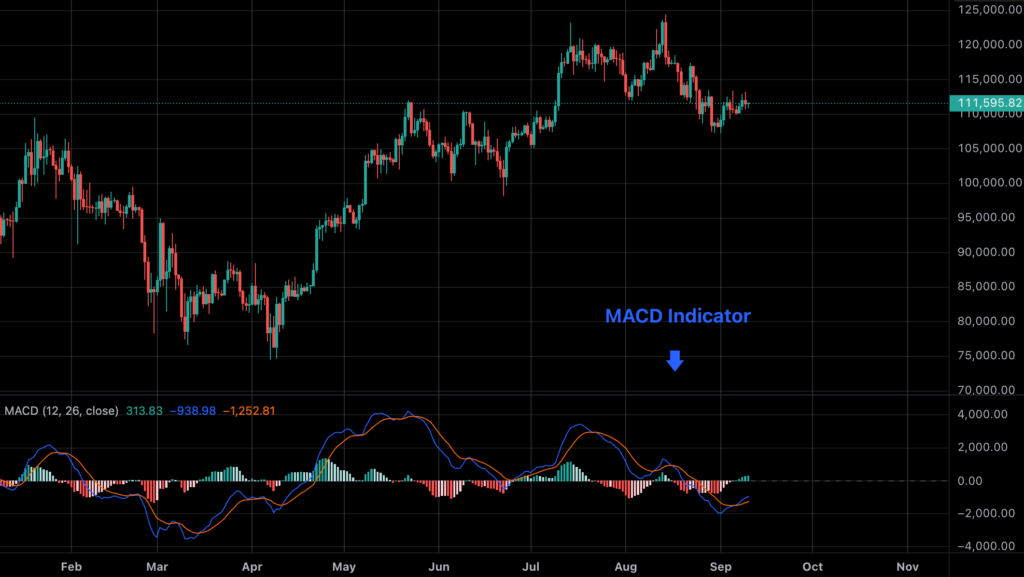
Most platforms use 12 and 26 period EMAs for the MACD line and a 9 period EMA for the signal line:
Calculate 12 EMA and 26 EMA of closing prices
MACD line = 12 EMA − 26 EMA
Signal line = 9 EMA of MACD line
Histogram = MACD line − Signal line
Settings matter. Shorter sets, like 8, 17, 5, react faster but create more noise. Longer sets react slower but filter chop. Start with defaults, then adjust only if your timeframe or asset demands it.
Quick intuition:
MACD above zero with rising histogram often signals upside momentum.
MACD below zero with falling histogram often signals downside momentum.
A tight, flat histogram after consolidation can precede momentum expansion.
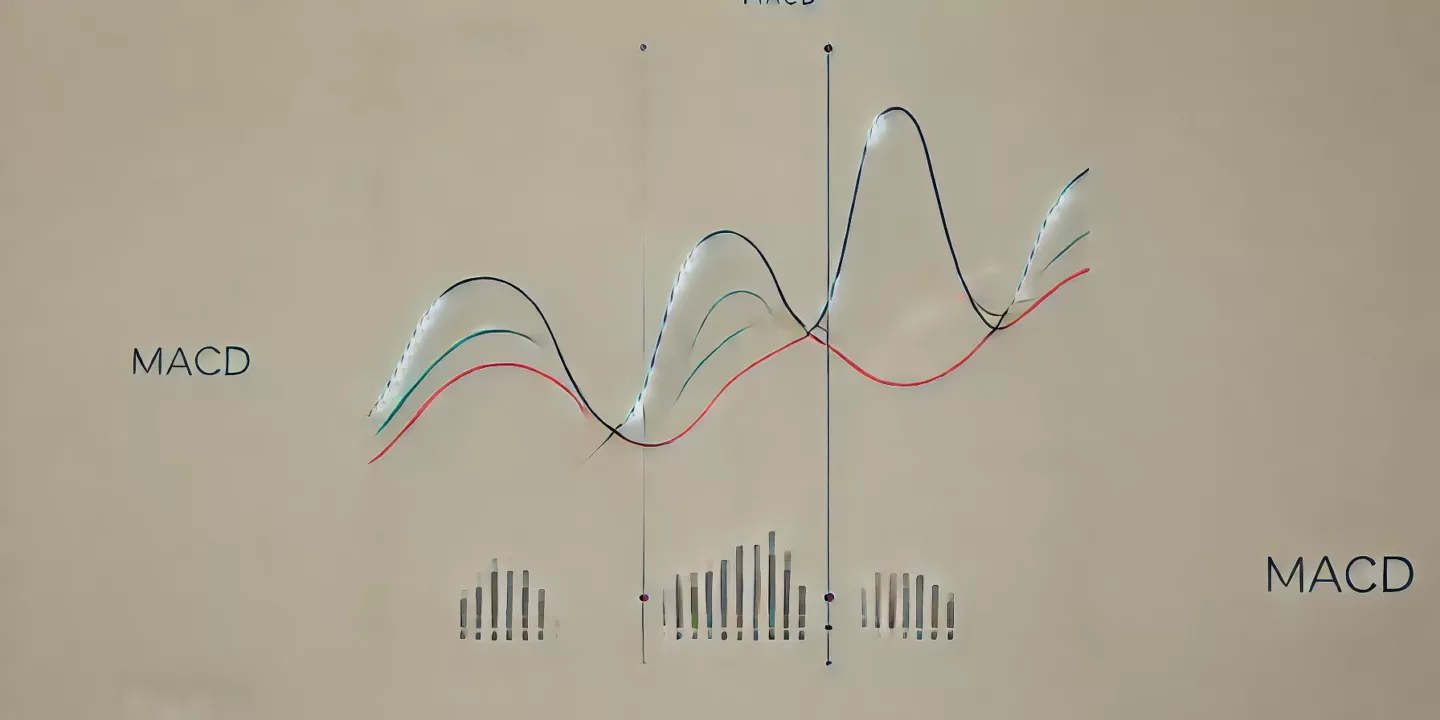
Image suggestion: Stepwise graphic showing 12 and 26 EMAs, MACD, signal, histogram. Caption: Defaults 12, 26, 9 balance responsiveness with stability for crypto.
Interpreting MACD For Beginners
Here are the reads traders rely on most when learning how MACD works in crypto:
Signal line crossovers:
Bullish tone when the MACD line crosses above the signal line
Bearish tone when it crosses below the signal line
Zero line context:
MACD above zero suggests a bullish momentum regime
MACD below zero suggests a bearish momentum regime
Crossovers are stronger when they occur on the right side of zero
Histogram behavior:
Expanding bars indicate momentum acceleration
Contracting bars indicate a stall or potential turn
Divergences:
Bullish divergence: price makes a lower low while MACD or histogram makes a higher low
Bearish divergence: price makes a higher high while MACD or histogram makes a lower high Treat divergences as alerts, not guarantees.
How To Use MACD In Crypto Without Memorizing Signals
Think in workflows that stack simple, objective checks:
Start with higher timeframe bias. Check daily MACD. If it is above zero and rising, favor long setups on lower timeframes. If it is below zero and falling, favor shorts or stand aside.
Use the zero line as a filter. A bullish crossover above zero carries more weight. A bearish crossover below zero carries more weight.
Add structure. Combine MACD with support and resistance so you are buying strength near support or selling weakness near resistance. This improves entries and stop placement.
Watch histogram squeezes. A period of small histogram bars often precedes expansion. Look for price consolidation, then use a breakout with MACD turning up or down for confirmation.
Treat divergences as early warnings. They are a heads up to tighten risk and wait for price to confirm, not a standalone trigger.
Manage risk with ATR. Place stops beyond structure with an ATR buffer to avoid normal noise. Define targets before entry.
Save a template. Keep MACD, one trend moving average, and your levels on the chart. Reuse the same layout so your eyes learn repeatable patterns.
Practical Chart Walkthroughs You Can Replicate
BTC daily trend continuation
Context: Price forms a higher low near a rising 50 day average.
Read: MACD crosses above the signal and pushes above zero, histogram expands.
Plan: Enter on break of a recent swing high. Stop below the higher low.
Exit: Scale out into prior highs, trail remainder under higher lows.
ETH 4 hour rejection at resistance
Context: Price retests a shelf that capped prior rallies.
Read: MACD rolls below the signal below zero, histogram flips negative.
Plan: Short on breakdown of intraday structure. Stop above the rejection wick.
Exit: First target at mid range, remainder at support.
Altcoin chop caution
Context: Tight range after a big move.
Read: Multiple MACD crosses near the zero line with flat histogram.
Plan: Stand aside or reduce size until the histogram expands and price leaves the range.
Conclusion
The MACD indicator crypto setup is a practical way to read momentum and trend together. Focus on zero line context, combine with clear levels, and let the histogram guide you on acceleration versus stall. Keep your rules simple, protect downside with disciplined risk, and let a repeatable workflow do the heavy lifting. That is how MACD becomes a reliable part of your crypto technical analysis.
CTA: Want more deep dives like this? Explore more guides on Mudrex Learn and subscribe to the Mudrex YouTubechannel for indicator walkthroughs and platform tutorials.
FAQs
What is a good MACD setting for crypto? The default 12, 26, 9 works well for most assets and timeframes. Shorten the EMAs for faster intraday signals, lengthen them for smoother swing reads.
Which timeframe is best for MACD in crypto? Use daily for bias and 1 hour or 4 hour for execution. Weekly helps you understand cycle context for longer holds.
Is MACD better than RSI for crypto trading? They answer different questions. MACD focuses on trend and momentum shifts using EMAs. RSI measures the balance of recent gains and losses. Many traders combine both.
How do I avoid false MACD signals? Filter crossovers with the zero line, trade with the higher timeframe trend, and require price confirmation at support or resistance. Manage risk with ATR based stops.
Anush is a crypto researcher dedicated to making blockchain insights clear and accessible. A proud Solana maxi who still appreciates a good Layer 2 debate, he dives deep into market trends so others don’t have to (but really should). Passionate about simplifying crypto, he strives to make the space less intimidating and a lot more relatable, one report at a time.