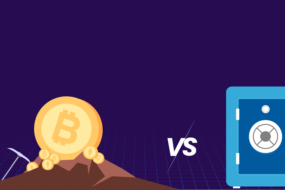

In crypto, not every token plays the same role. Some tokens are mainly created to be used inside an ecosystem, while others are structured more like regulated investment products.
That’s why understanding the difference between utility tokens and security tokens matters, especially when evaluating what a token actually represents.
Utility tokens are designed mainly for access and usage inside a blockchain ecosystem.
Security tokens represent ownership or financial rights, often regulated like traditional securities.
Utility tokens = access/usage
Security tokens = ownership/financial rights + regulation.
| Feature | Utility Token | Security Token |
| Purpose | Access and usage | Ownership and investment rights |
| Rights | Participation, features | Dividends, revenue share, equity-like claims |
| Value Driver | Adoption and demand | Cash flows, asset backing |
| Regulation | Often unclear/lighter | Usually regulated |
| Examples | ETH, UNI, BNB | Tokenized real estate, tokenized equity |
A utility token is a crypto token designed mainly to provide access to a product, service, or function within a blockchain ecosystem. Its primary value comes from how it is used inside a protocol rather than from ownership rights.
In short, utility tokens are meant to help users do something in a network.
A security token is a token that represents ownership, profit rights, or a financial claim on an underlying asset, business, or cash flow. Because of this investment-like nature, it is typically issued under securities-style compliance frameworks.
Security tokens are closer to traditional investments, but on-chain.
| Category | Utility Token | Security Token |
| Primary purpose | Enable usage in an ecosystem | Represent ownership/investment |
| What you get (rights) | Access, participation | Profit share, equity-like claims |
| What drives value | Ecosystem adoption and demand | Asset value and financial rights |
| Typical issuance route | ICO/TGE launches | STO-style regulated issuance |
| Trading venues | Open crypto exchanges | Often, permissioned/regulated platforms |
| Risks | Adoption risk | Regulatory + liquidity constraints |
Note:
If it’s mainly used to do something → utility.
If it’s mainly held to own something or earn from something → security.
Many tokens have overlapping features, so it helps to look at the token’s main purpose.
Disclaimer: Classification varies by jurisdiction. This is educational, not legal advice.
READ MORE: What Are Real-world Assets(RWAs) in Crypto?
Utility tokens come in different forms depending on what role they play:
This variety helps utility tokens rank as one of the most common crypto categories.
Q: What is an example of a utility token?
A: A token used to pay network fees or access an app’s services, e.g., tokens that power transactions, governance, or access inside a protocol.
| Token | Primary utility | Where the utility shows up |
| ETH | Gas fees | Ethereum transactions + smart contracts |
| SOL | Fees + staking | Solana network operations |
| BNB | Fee discounts | Binance ecosystem |
| UNI | Governance | Uniswap voting |
| LINK | Oracle payments | Chainlink data services |
| MATIC | Network fees | Polygon scaling ecosystem |
| FIL | Storage access | Filecoin decentralized storage |
| BAT | Rewards | Brave browser ecosystem |
ETH and SOL are often described as utility-like tokens because they are mainly used to run their respective networks.
Why?
Token classifications can vary by jurisdiction and regulatory interpretation, so it’s best to treat these as functional descriptions rather than legal labels.
XRP is widely used for payments and liquidity in its ecosystem, which gives it a utility-like role, but its classification can be legally disputed and may depend on jurisdiction.
How to think about it
So XRP is best viewed as utility-oriented in function, but not always clear-cut legally.
TRX is generally considered utility-like within the Tron ecosystem because it is mainly used for network operations.
TRX is used for:
As with other tokens, legal classification depends on regulatory context and jurisdiction, so this is an educational description rather than a formal legal claim.
This is a common confusion, so here’s the clean distinction:
Coins vs tokens (simple view)
So, a utility token is part of the larger cryptocurrency universe — but it’s defined by what it is meant to do, not just by being tradable.
Security tokens often represent regulated financial claims, such as:
Security tokens are most commonly tied to real ownership or regulated financial rights, such as equity, revenue share, or tokenized funds.
Unlike utility tokens, they are usually issued under securities compliance frameworks.
These tokens show how blockchain can be used to modernize investing, making ownership programmable, transparent, and easier to distribute.
Note: Security tokens are usually not listed on retail exchanges like Mudrex, because they require regulated investor access and compliance.
Both utility tokens and security tokens are shaping the future of Web3 in different ways, utility tokens power platforms and ecosystems, while security tokens represent regulated ownership in real-world assets like equity or real estate.
Understand what type of token you’re dealing with, research deeply, and stay ahead, because the future of investing won’t just be digital, it will be programmable.
To trade crypto with clarity and built-in risk controls, download the Mudrex app. For practical tutorials, market insights, and beginner-friendly explainers, subscribe to the Mudrex YouTube channel and stay updated with the latest in crypto trading.
What is an example of a utility token?
ETH is a common example because it powers network fees.
What is the difference between utility tokens and security tokens?
Utility tokens provide access/usage; security tokens provide ownership/financial rights.
Is ETH a utility token?
Often described as utility-like because it is used for gas fees.
Is Solana a utility token?
SOL is similarly used for transaction fees and network incentives.
Is XRP a utility token or security token?
Utility-like use exists, but classification can be disputed.
Is TRX a utility token?
TRX is mainly used for fees, staking, and governance.
What are security tokens?
Tokens representing ownership, dividends, or asset-backed claims.
Utility token vs cryptocurrency?
Cryptocurrency is broad; utility tokens are one type designed for usage.