To invest in Web3 crypto coins in India, first research the token, choose a platform that supports INR purchases, complete identity verification, add funds, review the order details and buy only an amount that matches your risk tolerance. You can hold supported tokens in an exchange account or, when available and appropriate, use a compatible self-custody wallet.
Web3 investing does not mean buying a single asset called “Web3”. It usually means purchasing selected cryptocurrencies associated with blockchain infrastructure, decentralised applications or related protocols.
Web3 is a broad category of blockchain-based technologies. Investors can obtain exposure by buying crypto coins and tokens linked to relevant networks, while other approaches may involve publicly listed companies working on blockchain infrastructure. These are different kinds of assets and should not be treated as interchangeable.
For crypto investors, examples include ETH for Ethereum, LINK for Chainlink’s oracle ecosystem and FIL for the Filecoin storage network. A project’s technological success does not necessarily translate into higher token prices.
Before selecting an asset, understand the technology behind it. Our Web3 fundamentals and crypto coins guide explains blockchain applications, coins and tokens, and why utility does not guarantee investment returns.
Start with a use case rather than a viral price prediction. Is the project a smart-contract platform, storage network, oracle service or blockchain-data provider? Read its documentation, identify the purpose of the token and review how many tokens are circulating or scheduled to unlock.
Different tokens serve different purposes. Our comparison of Web3 coins to watch in 2026 introduces examples across smart-contract platforms, oracle networks and decentralised storage. Treat it as a starting point for research, not a ready-made investment portfolio.
Look for a platform that serves users in India, like Mudrex, supports the token you have selected and clearly discloses fees, order execution, custody and withdrawal terms. Check its applicable compliance status, security information and customer-support process.
Virtual digital asset service providers operating within the relevant Indian compliance framework are subject to anti-money-laundering requirements, including FIU-IND reporting-entity obligations. FIU registration is not a government guarantee against losses or a certification that a coin is safe.
Signup on Mudrex and follow the identity-verification steps shown to you. Depending on the provider and your circumstances, verification can require documents and personal information for KYC checks.
Do not share passwords, one-time codes or wallet recovery phrases with anyone claiming to be support staff.
Use an INR funding method currently offered in your account, such as an eligible bank or payment option. Review any deposit requirements and applicable limits before proceeding. Payment options and transaction limits can change.
Open the available spot market or coin-discovery section and search for the correct token name and ticker. Check the project’s identity carefully: lookalike tokens and similarly named assets can lead to mistakes.
To verify whether a token is supported and compare available live market information, use the Mudrex Web3 coins discovery page before entering an order.
Enter the INR amount you intend to spend and review the estimated quantity, displayed price, fee details and final order value. Check whether the quoted price differs materially from the broader market and whether the asset has sufficient liquidity.
A market order prioritises execution over an exact price; a limit order, where supported, lets you set a price but may not fill. The available order types depend on the platform and market.
Confirm only when you understand the order. Save the transaction date, token quantity, amount paid, fees and relevant transaction identifiers. Those records help with portfolio tracking and Indian tax reporting.
Buying crypto does not guarantee returns, and the value of your holdings may fall quickly after purchase.
Suppose a new investor wants a small spot holding of a Web3 token. They first choose the specific asset and confirm that its ticker, blockchain network and official project description match. Next, they select a platform available to their account in India, review identity-verification requirements and check the deposit methods. After adding INR, they search for the token, confirm the quote and understand any trading fee or spread before submitting the order.
After execution, the investor checks the filled quantity and average price in order history rather than assuming the displayed quote was the final execution price. They record the transaction, keep account security enabled and decide whether to retain the asset in platform custody or use a compatible wallet where withdrawals are supported. This is an example of process, not a recommendation to buy any particular token.
Buying a Web3 token on the spot market generally provides exposure to the asset itself, subject to the custodian’s arrangements. Crypto futures are contracts linked to an asset’s price and can involve leverage, liquidation risk and additional fees. They are not equivalent to holding the underlying coin. A beginner searching for “how to invest in Web3” should understand this distinction before choosing a product.
Staking involves committing or delegating assets to participate in a network or related service; rewards are variable and can carry validator, lock-up, smart-contract or price risks. DeFi lending and liquidity pools introduce different contract, liquidity and liquidation exposures. None of these features should be described as a bank deposit or a guaranteed-interest product.
No. You can buy and hold supported coins in an exchange account without using a separate Web3 wallet. A self-custody wallet is useful when you need to interact directly with compatible decentralised applications or hold assets under your own keys.
Self-custody shifts responsibility to you. Losing a recovery phrase, sending tokens to the wrong network or approving a malicious smart contract can lead to irreversible loss. Check network support and withdrawal availability before transferring any asset.
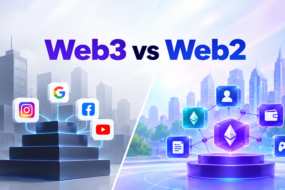
An exchange account can make it easier to use INR, place orders, view transaction history and contact a support team. However, the investor relies on the provider’s custody, solvency, withdrawal policies and security practices. A self-custody wallet offers direct control of keys for supported chains but requires the user to safeguard backups, approve transactions carefully and manage network fees. The broader differences between platform-managed services and wallet-based control are explained in our Web2 vs Web3 guide.
Moving coins between accounts and wallets introduces operational risk. The asset, destination address and blockchain network must all match. Some networks require a memo or tag, while others use different address formats. Sending a token over an unsupported network may lead to permanent loss. Beginners should not transfer assets merely because self-custody is popular; first understand whether the platform supports the withdrawal and the responsibilities involved.
The visible trading fee is only one part of the total cost. An INR deposit may have payment-related conditions; a buy order may incur platform charges and a bid–ask spread. Market orders can experience slippage when liquidity is thin. If assets are withdrawn to a self-custody wallet, the exchange may charge a withdrawal fee and the blockchain transaction itself may require a network fee.
Fees vary by platform, asset, network and market conditions. Compare the final quantity received for the same INR amount, not just headline fee claims. Keep screenshots or records of confirmations if needed for reconciliation. Tax deducted at source, when applicable, is a separate withholding mechanism and should not automatically be treated as the same thing as a trading fee.
A market order seeks immediate execution at available prices; the final trade price may differ from the price visible when the order was submitted, especially for volatile or thinly traded tokens. A limit order specifies the highest buy price or lowest sell price the user is willing to accept, but it may remain unfilled. Different platforms may offer different order types and minimum sizes.
Before buying, look at the order summary, quoted quantity, spread, applicable charges and any estimated execution amount. In a fast-moving market, do not repeatedly submit an order merely because a screen appears slow; check order history first. For tokens with shallow markets, liquidity and slippage deserve at least as much attention as the advertised fee.
The minimum varies by platform and asset. Some providers allow fractional purchases, which means you do not need to buy one whole ETH or SOL. However, the sensible amount is not determined by the minimum order value: it should reflect money you can afford to lose without affecting essential expenses.
A small test order can help you understand the mechanics before committing a larger amount. Crypto remains highly speculative even when the purchase amount is modest.
Start with the problem the project claims to solve. Identify who its users or customers are, whether there is evidence of sustained activity and why a cryptocurrency is necessary. Check the official contract or network identifier, the circulating supply, scheduled token unlocks, governance arrangements and whether the token has direct economic utility. A widely used application does not automatically produce token demand.
Next, check liquidity on reputable markets, historical volatility, documented security incidents and dependence on bridges or other protocols. Write a one-sentence reason for your interest and a separate sentence describing what would prove that reason wrong. Compare assets by role—smart-contract platforms, data services, storage or interoperability—rather than assuming all “Web3 coins” have the same risks.
A one-time investment exposes the full amount to the market price at the chosen moment. Periodic buying, often called dollar-cost or rupee-cost averaging, spreads entry across dates and can reduce dependence on one price point. It does not guarantee a profit, protect against a prolonged decline or remove the need to research the asset. Repeated fees and tax events from later sales also matter.
Choose a method that fits liquidity needs and loss tolerance rather than a social-media prediction. Avoid borrowing to buy volatile tokens and remember that assets in the same crypto theme can fall together. Buying several Web3 coins does not automatically create meaningful diversification.
Scams frequently imitate legitimate project names, token tickers and exchange support staff. Criminals may advertise guaranteed returns, request wallet recovery phrases, publish fake token contract addresses or urge investors to connect a wallet to claim an airdrop. Some attacks involve a legitimate-looking website asking for an approval that lets a malicious contract move assets later.
Type official addresses carefully, verify links through trusted sources, use strong authentication on exchange accounts and never disclose a seed phrase. Check the permissions a wallet is requesting. Do not send tokens to strangers who promise to double them, and do not assume a celebrity endorsement or a verified-looking social profile means a project is genuine. Report suspicious activity to relevant platforms and authorities.
Evaluate the following rather than buying solely from social-media recommendations:
Diversifying across several speculative coins does not eliminate crypto-market risk. Avoid borrowing or using leveraged products simply to increase exposure while learning.
Some investors research listed companies involved in blockchain infrastructure, crypto-related investment products or themed baskets of digital assets. These are not the same as direct token ownership, and their risks, fees and availability differ.
NFTs and virtual land are also sometimes marketed as Web3 investments, but they can be illiquid, difficult to value and subject to intellectual-property and platform risks. They should not be presented as safer alternatives to crypto coins.
Check that the service supports users in India, provides the asset you intend to research and discloses fees, custody arrangements, support channels and withdrawal conditions. Where required, evaluate its Financial Intelligence Unit–India reporting-entity registration and identity-verification procedures. FIU-IND registration relates to anti-money-laundering obligations; it is not investment insurance, a guarantee of solvency or an endorsement of any crypto coin.
Look for transparent risk disclosures and verify current product availability inside the application. Some platforms offer a spot token, a price-linked derivative or both; the products are not interchangeable. If a platform advertises tokenised securities or other non-spot instruments, read the specific product documents before trading.
Buying and selling cryptocurrencies has not been generally prohibited in India, but crypto assets do not have the protections of legal tender, and the regulatory environment continues to evolve. Providers have applicable KYC and anti-money-laundering obligations. Always check current rules, the platform’s terms and your own eligibility before transacting.
A platform’s compliance registration does not mean the government endorses a token or protects its market price.
For every transaction, retain the execution date, asset, network when relevant, units, INR value or conversion basis, trading fee, TDS details, transaction hash where available, and the nature of the transaction. Save exchange exports periodically. A wallet transfer between your own accounts should be clearly distinguishable in your records from a sale, gift, exchange or payment; the tax treatment of each may differ.
If you use multiple platforms or wallets, reconcile transfers so that the same acquisition is not mistakenly treated as two purchases. Tokens obtained through rewards, airdrops, staking or employment arrangements may have special tax implications. Tax laws and reporting fields can change; consult the latest Income Tax Department guidance or a qualified adviser instead of copying an old spreadsheet template.
Exiting is part of investing. Before purchasing, check that the platform supports selling the asset into INR or another market from which INR withdrawal is available. Understand minimum trade sizes, spreads, withdrawal timelines, bank-account requirements and any restrictions. A token may be listed for buying but have limited market depth when many holders want to sell at once.
When placing a sell order, verify the final execution amount, fees and applicable tax withholding. Review the settled balance and withdrawal status before assuming funds have reached your bank. Selling in stages may alter exposure but does not eliminate risk. Plan for the possibility that liquidity deteriorates, a withdrawal is temporarily restricted or local rules change.
Under India’s virtual digital asset (VDA) framework, income from transfer of crypto assets is generally taxed at 30%, plus applicable surcharge and cess. The framework generally permits deduction of acquisition cost but restricts other deductions and loss set-off. In relevant transactions, 1% tax deducted at source (TDS) can apply to the consideration for VDA transfers, subject to statutory conditions and thresholds.
Buying a token and continuing to hold it ordinarily does not, by itself, create a realised transfer gain. Selling, swapping or otherwise transferring assets can have tax consequences. The rules on receiving crypto through rewards or other arrangements may differ.
India’s Income-tax Act, 2025 became operative from 1 April 2026, so readers should not rely on section numbers copied uncritically from older articles. Check the latest Income Tax Department VDA guidance and consult a qualified tax professional for personal circumstances.
First, buying a coin only because the unit price is low; circulating supply matters. Second, choosing an asset from a viral “top coins” list without understanding the actual token utility. Third, ignoring the spread, network fees and exit liquidity. Fourth, sending a token to an incompatible wallet or approving a contract without checking permissions. Fifth, confusing a company’s promising technology with guaranteed returns from its token.
A useful process is to research the project, verify the exact asset, compare market conditions, choose an amount consistent with a possible total loss, secure the account and document the transaction. Review your decision periodically, but avoid treating every short-term price movement as a reason to trade.
Market risk: Prices can crash even for established coins.
Project risk: Adoption can disappoint, token supply can change and competitors can overtake a product.
Security risk: Phishing, fake tokens, malicious approvals and exchange or smart-contract failures can cause permanent losses.
Liquidity risk: A thinly traded token can be difficult to sell at the displayed price.
Legal and tax risk: Reporting and compliance obligations may change.
No wallet, platform or project can eliminate these risks. Avoid offers of fixed returns, guaranteed airdrops or requests to send funds to an unknown individual.
Before placing an INR order, explore supported Web3 coins on Mudrex, compare live market information, and review fees, risks and the order details carefully.
Choose a supported spot crypto platform like Mudrex, complete the required identity checks, add INR through an available payment method and search for the specific coin.
An exchange may simplify INR funding and order execution for e.g Mudrex. A self-custody wallet provides more direct key control for supported blockchain applications while increasing the risk of losing funds through incorrect transfers, key loss or malicious approvals. Consider your technical comfort and the intended use.
No. FIU-IND registration concerns applicable anti-money-laundering reporting obligations. It does not guarantee investment returns, token quality, market stability, withdrawal availability or recovery of losses.
No. “Web3” describes a technology theme rather than a safety category. Prices can be highly volatile, and the risks depend on the individual protocol, token economics, custody choices and market liquidity.
Transfers between wallets you beneficially own may differ from sales or swaps for tax purposes, but record keeping is essential and the treatment depends on the precise transaction. Seek qualified India-specific tax advice if ownership, consideration or classification is uncertain.
Yes, eligible Indian users can generally buy supported crypto assets through platforms that serve India and comply with applicable rules. The assets remain speculative and subject to tax and compliance requirements.
Research a token, Signup on Mudrex complete KYC, add INR, review the order and buy.
There is no best method for everyone. Direct token purchases, companies and themed products have different exposure and risks. Beginners should prioritise understanding what they own and the possibility of loss.
Yes, some Indian crypto platforms like Mudrex support INR deposits and spot purchases of eligible Web3-related coins. Token availability, funding methods and minimum orders vary.
No. An exchange account may be sufficient for a spot purchase. A compatible self-custody wallet is needed for many direct on-chain activities, but it adds key-management responsibilities.
Web3 is a technology theme, not one security or token. A project’s technology may be useful while its cryptocurrency performs poorly. Any decision requires project-level research and an assessment of personal risk.
Fractional crypto purchases may make smaller amounts possible, depending on the platform’s order limits. Check the minimum, charges and token availability before making a purchase.
A product marketed internationally as a Web3 or blockchain ETF may hold company shares rather than Web3 tokens. Access for Indian investors depends on the product and applicable investment rules. Check the exact holdings and availability rather than assuming it gives direct crypto exposure.
Income from transfers of virtual digital assets is generally subject to a 30% special rate plus applicable surcharge and cess, and certain transfers attract 1% TDS. Tax treatment depends on the transaction and relevant legal provisions. Consult an adviser for filing and calculations.
Disclaimer: For educational purposes only; not financial, investment, legal or tax advice. Cryptocurrency investments can lose substantial value. Product availability, payment options and regulation may change.