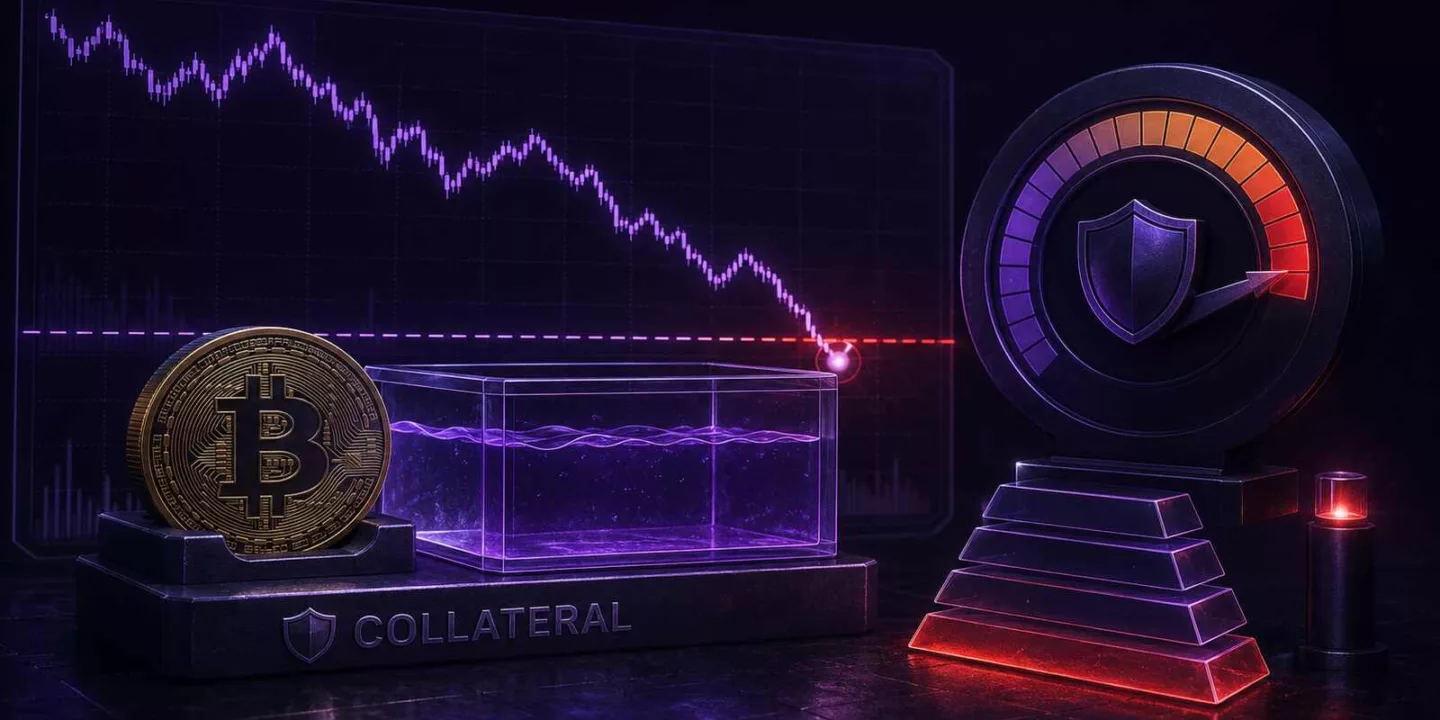

You open a leveraged Bitcoin futures position, and at first, everything goes according to plan. Then the market starts moving against you. Your unrealised losses increase, but you can still see funds in your futures wallet. Moments later, your position is liquidated.
If you’ve ever experienced this, you’re not alone.

Many new traders assume liquidation happens only after they’ve lost their entire margin. In reality, exchanges usually close a position much earlier. The deciding factor isn’t how much you originally deposited, but whether your account still meets the maintenance margin requirement.
Understanding maintenance margin in crypto futures isn’t just about learning another trading term. It’s about understanding how exchanges manage risk, why liquidations happen, and how you can protect your capital when trading with leverage.
When you open a crypto futures position, you don’t pay the full value of the trade. Instead, you deposit an initial margin, which acts as collateral and allows you to control a larger position through leverage.
Opening the trade, however, is only the first step.
As the market moves, your position generates unrealised profit or loss (PnL), causing your account equity to fluctuate. To keep the position open, your remaining equity must stay above a minimum threshold set by the exchange. This threshold is known as the maintenance margin.
As long as your account equity remains above this level, your position stays active. If it falls below the required maintenance margin, the exchange may liquidate your position to prevent further losses.
Unlike the initial margin, which is only required when entering a trade, the maintenance margin applies throughout the life of the position. It’s a continuous requirement that determines whether your trade can remain open.
Crypto markets can move rapidly, especially during periods of heightened volatility. A leveraged position that appears healthy one moment can accumulate significant losses within minutes.
If exchanges allowed positions to remain open until all collateral was exhausted, traders could end up with negative balances, particularly during sharp market swings. That would expose both traders and the exchange to unnecessary risk.
Maintenance margin helps prevent this.
By requiring every open position to maintain minimum equity, exchanges can begin reducing or closing positions before losses create a larger deficit. This mechanism is designed to limit risk, although extreme volatility and poor liquidity can still affect execution.
Rather than being a penalty, maintenance margin is a built-in risk management mechanism that protects both individual traders and the trading platform.

Although they’re closely related, initial margin and maintenance margin serve different purposes.
The initial margin is the collateral required to open a leveraged position. The maintenance margin is the minimum account equity required to keep that position open after it has been opened.
A simple way to remember the difference is that the initial margin gets you into the trade, while the maintenance margin keeps you in it.
Suppose you open a Bitcoin futures position worth ₹5,00,000 using 10x leverage. As Bitcoin’s price declines, your unrealised losses reduce your account equity. Even if you still have funds remaining from your original deposit, your position may be liquidated once your equity falls below the maintenance margin requirement.
That’s why successful futures traders don’t just monitor profits and losses. They also keep a close eye on the amount of equity available to support their open positions.
Understanding maintenance margin becomes much easier once you see how it fits into the bigger picture.
Your position isn’t monitored based on your entry price alone. Throughout the trade, the exchange continuously evaluates your account equity, margin ratio, Mark Price, and the required maintenance margin to determine whether your position can remain open.
These concepts are closely connected, and together they determine how close you are to liquidation.
| Feature | Initial Margin | Maintenance Margin |
|---|---|---|
| Purpose | Required to open a futures position | Required to keep the position open |
| When it applies | At the time of entry | Throughout the life of the trade |
| Based on | Position size and leverage | Exchange risk requirements |
| If requirement isn’t met | Trade cannot be opened | Position may be liquidated |
Many beginners believe the amount they deposited determines whether a trade stays open. In reality, exchanges pay far more attention to your account equity.
Account equity is the current value of your futures account after unrealised profits and losses are taken into account. Every price movement changes that value. As your trade moves in your favour, your equity grows. As unrealised losses increase, it shrinks.
As long as your account equity remains above the required maintenance margin, your position stays active. If it falls below that threshold, the exchange may initiate liquidation.
This is also why traders sometimes add more collateral to an open position. Increasing account equity creates a larger safety buffer, giving the trade more room to withstand adverse price movements.
Most crypto futures exchanges display a margin ratio or a similar risk indicator showing how close a position is to liquidation.
The direction and formula vary by venue: on some platforms risk rises as the ratio increases, while others use a different convention. Follow the platform’s displayed warning and liquidation threshold instead of assuming that a universally higher or lower number is safer.
Monitor the indicator regularly and reduce risk before it reaches the venue’s critical level.
For a given contract and risk tier, changing selected leverage may not directly change the maintenance-margin rate. However, higher leverage uses less initial collateral for the same exposure and can shrink the buffer before liquidation. Maintenance requirements can also vary by position size and venue.
Imagine two traders opening identical Bitcoin futures positions. One uses 5x leverage, while the other chooses 20x leverage.
Although both control the same position size, the trader using higher leverage commits significantly less collateral. As a result, even a relatively small adverse price movement can reduce their account equity below the maintenance margin requirement.
The trader using lower leverage has a much larger buffer, allowing the position to absorb greater market volatility before approaching liquidation.
Understanding this relationship is one of the biggest shifts new futures traders make. Higher leverage doesn’t just increase potential returns. It also reduces the room your trade has to recover when the market moves against you.

Suppose you’ve opened a leveraged Bitcoin futures position and Bitcoin starts falling.
As the price declines, your unrealised PnL turns negative, reducing your account equity. At the same time, your margin ratio rises while the exchange monitors your position using the Mark Price, not the latest traded price.
If your remaining equity stays above the required maintenance margin, your position remains open. If continued losses push it below the required threshold, the exchange may liquidate the position to prevent losses from exceeding the available collateral.
Maintenance margin doesn’t work in isolation. It’s part of a broader risk management system where account equity, leverage, margin ratio, and Mark Price all work together to determine whether your trade stays open or moves closer to liquidation.
Falling below the maintenance margin doesn’t mean you’ve lost all the money in your futures wallet. It simply means your position no longer has enough account equity to meet the exchange’s minimum requirement for staying open.
Once that happens, the exchange’s risk management system takes over.
Most crypto futures exchanges monitor positions using the Mark Price, not the Last Price displayed on the chart. If the Mark Price causes your account equity to fall below the maintenance margin requirement, your position becomes eligible for liquidation.
Depending on the exchange, liquidation may reduce part of your position or close it entirely. The goal is to prevent losses from exceeding the collateral available in your account and to protect the stability of the futures market.
This is why traders are sometimes surprised when they’re liquidated even though the chart never touched their liquidation price. The exchange is responding to the Mark Price, which provides a fairer reflection of market conditions than a single executed trade.
Maintenance margin isn’t a number you check only when a trade starts going wrong. It should be part of every risk management decision you make.
Using lower leverage gives your position more room to absorb normal market fluctuations before approaching liquidation. Keeping your position size aligned with your trading capital has a similar effect, reducing the impact of adverse price movements.
It’s also worth paying attention to your margin ratio. As unrealised losses grow and account equity falls, the margin ratio rises, signalling that your position is moving closer to liquidation.
Some traders add collateral to increase the margin buffer if conditions change. This may delay liquidation, but it also increases the capital exposed to the position and should follow a predefined loss limit. Combined with sensible leverage and well-placed stop-loss orders, this can significantly reduce liquidation risk.
Risk management won’t eliminate losing trades, but it can stop a single position from causing unnecessary damage to your trading capital.
Maintenance margin is more than just another requirement in crypto futures trading. It’s one of the key factors that determines whether a leveraged position can survive periods of market volatility.
Understanding how maintenance margin, account equity, margin ratio, Mark Price, and leverage work together gives you a clearer picture of the risks behind every trade. The more you understand these concepts, the better equipped you’ll be to manage positions confidently and make informed decisions in fast-moving markets.
Continue learning: explore Mudrex Learn, watch the official Mudrex YouTube channel, or download the app and start trading.
Maintenance margin is the minimum account equity required to keep an open futures position active. If your equity falls below this level, the exchange may liquidate your position.
Initial margin is the collateral required to open a leveraged trade. Maintenance margin is the minimum equity required to keep that trade open.
Yes. Higher leverage commits less collateral to the same position, reducing your maintenance margin buffer and making your trade more sensitive to market movements.
While liquidation can’t always be avoided, using appropriate leverage, managing position size, monitoring your margin ratio, maintaining sufficient collateral, and placing stop-loss orders can significantly reduce the risk.
Disclaimer: This content is for educational purposes only and is not financial advice. Crypto futures trading involves significant risk, including the loss of your entire margin. Do your own research and never trade more than you can afford to lose.