
In the evolving world of cryptocurrency, understanding real-world assets (RWAs) is crucial. This knowledge can unlock new investment opportunities, enhance portfolio diversification, and offer insight into how traditional assets are being integrated into the digital realm.
Key Takeaways
Real-world assets (RWAs) in crypto refer to physical or tangible assets that are represented digitally on a blockchain. This process, known as tokenization, converts the ownership rights of these assets into digital tokens. This is significant because it brings the efficiency and transparency of blockchain technology to traditional assets.
Definition: RWA (Real-World Asset) An RWA is any physical or traditional financial asset, real estate, a bond, a commodity, private credit, or similar, whose ownership rights have been represented as a token on a blockchain.
In crypto, RWA is shorthand for “real-world asset,” used to describe both the underlying asset (the building, the bond, the gold bar) and the token that represents ownership of it on-chain. When you see “RWA crypto” or “RWA tokens” mentioned, it’s referring to this broader category of blockchain-based instruments backed by something that exists off-chain, as opposed to purely native crypto assets like Bitcoin or Ethereum that have no off-chain counterpart.
RWAs can include a wide range of assets. In traditional finance, these assets are traded through complex and often opaque systems. Tokenization simplifies this process by providing a clear and immutable record of ownership and transactions.
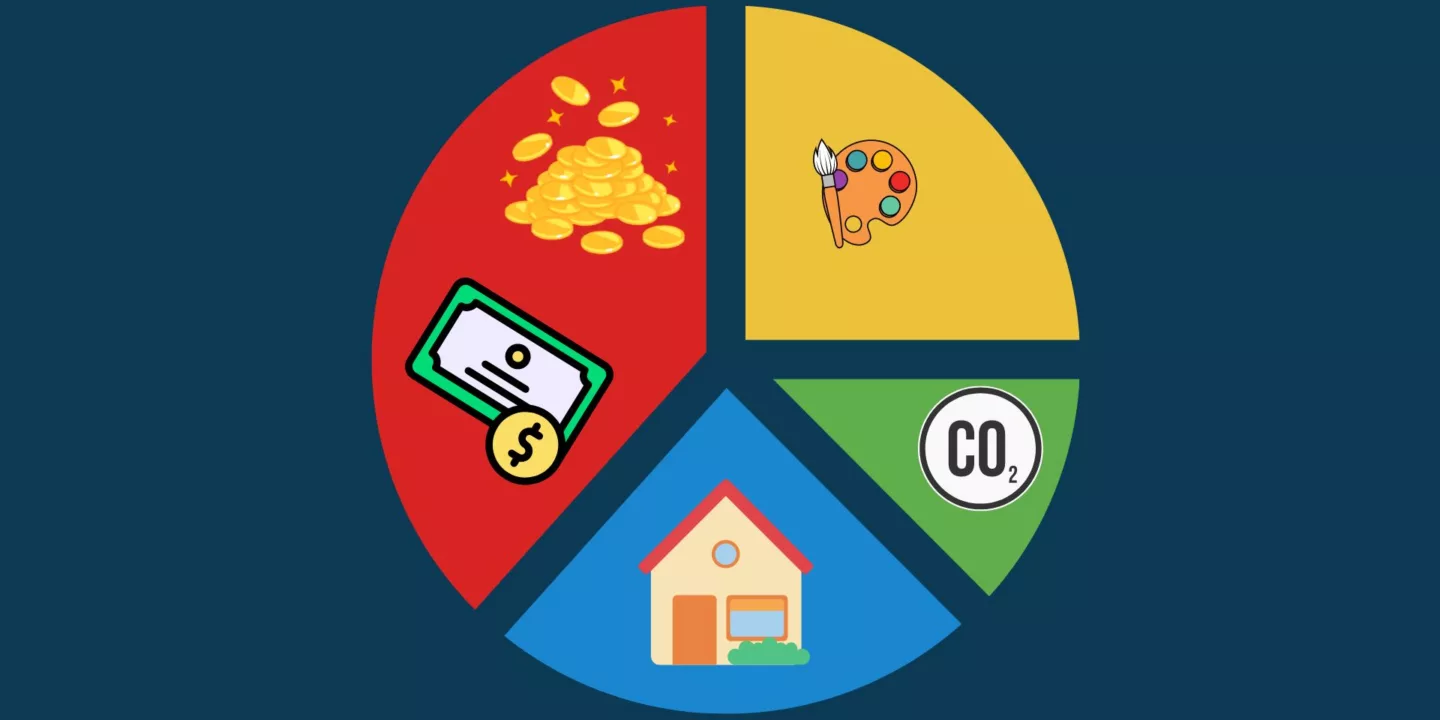
| Asset Type | What Gets Tokenized | Example on Mudrex |
|---|---|---|
| Real estate | Ownership shares in a property or property fund | Not directly listed; accessed via RWA-focused tokens |
| Government bonds / treasuries | Short-term government debt instruments | Ondo (ONDO) |
| Commodities | Gold, carbon credits, other physical goods | Varies by issuer |
| Private credit | Business loans, invoice financing | TrueFi (TRU), Goldfinch (GFI) |
| Equities / stocks | Shares of a listed company | Circle (CRCL) tokenized stock |
| Off-chain data feeds that support RWAs | Price feeds, proof-of-reserve data | Chainlink (LINK) |
In traditional finance, RWAs are essential for various investment strategies and portfolios. By tokenizing these assets, the financial industry can leverage blockchain technology to streamline processes, reduce costs, and improve access to a broader range of investors. Industry trackers estimate the on-chain RWA market (excluding stablecoins) has grown to somewhere in the $20–35 billion range in 2026, up sharply from a few billion dollars just two years earlier, as institutions like BlackRock and JPMorgan have moved from pilot programs into live products.
An RWA doesn’t exist purely on-chain the way Bitcoin does. It’s a digital representation of something that still legally exists off-chain, so the blockchain side and the real-world side need to stay linked. This is usually done through a few common building blocks:
Put together, this is how RWAs are commonly represented on a blockchain: a token that carries the economic rights, a smart contract that governs how it moves, a legal structure that ties it to the physical or financial asset, and an oracle layer that keeps the on-chain record honest. If you want a deeper look at how compliance-focused tokens work specifically, see our guide on understanding security tokens in cryptocurrency.
Tokenization of real world assets is the process of converting ownership rights to a particular asset into a digital token that resides on a blockchain network. Subsequently, these tokens can be exchanged, saved, or employed within the digital economy. This is the mechanism behind every RWA, whether it’s real estate, a government bond, or a company’s equity.
An RWA token is the digital unit created by this process, the tradable object that represents a claim on the underlying asset. Holding the token is generally meant to be economically equivalent to holding a fractional claim on whatever backs it, subject to the legal structure behind the specific project. Not all “RWA tokens” work identically: some represent direct fractional ownership, others represent a claim on a fund or vehicle that holds the asset, so it’s worth checking a project’s documentation for exactly what the token entitles you to before investing.
The process begins with the valuation of the asset, followed by the creation of a smart contract on a blockchain. This contract outlines the ownership and transfer details. The asset is then tokenized, creating a digital representation that can be easily transferred and traded.
Blockchain technology is the backbone of tokenization. It ensures the transparency, security, and immutability of the digital tokens. By using blockchain, the transfer of ownership becomes more efficient and less prone to fraud.
Tokenizing real-world assets offers a range of benefits that can transform the way we interact with these assets.
Tokenization enhances liquidity by allowing fractional ownership and easier transfer of assets. This means that investors can buy and sell small portions of an asset, rather than needing to purchase the entire asset.
Fractional ownership enables investors to own a part of a high-value asset, which lowers the barrier to entry and allows for more diversified investment portfolios.
Tokenized assets can be traded on global exchanges, providing access to a broader market of investors. This global reach can increase demand and potentially raise the asset’s value.
Blockchain technology reduces the need for intermediaries, which in turn lowers transaction costs. This makes the buying, selling, and transferring of assets more cost-effective for all parties involved.
Tokenization has advantages, but it also has risks and issues of its own.
Tokenization faces significant regulatory challenges. Different jurisdictions have varying regulations, and navigating these can be complex.
Legal issues related to ownership rights, compliance, and dispute resolution are critical. Ensuring that the digital representation accurately reflects the legal status of the asset is essential.
The technology presents various challenges that must be overcome for it to function smoothly. Some of these challenges include issues related to scalability, security, and effectively integrating the technology with current financial systems.
The crypto market is renowned for its unpredictable nature. Tokenized RWAs are also subject to this volatility, leading to substantial fluctuations in their value that can present risks for investors, even when the underlying asset (like a bond) is comparatively stable, since the token’s market price can diverge from the asset’s fundamental value.
For asset managers, tokenization changes a few practical things about how a portfolio is administered rather than what’s in it:
This is still an evolving discipline. Traditional asset managers are experimenting with tokenized share classes and on-chain fund administration, but most real-world asset management today remains a hybrid of on-chain tokens and off-chain legal, custody, and compliance work.
You can get exposure to RWAs in a few different ways, depending on which route matches your goals:
As with any crypto asset, do your own research into what specifically backs a given RWA token before buying, since the legal structure and issuer quality vary significantly from project to project.
Once you hold an RWA-linked token, trading it works like trading any other listed crypto asset: you can buy and sell it against INR on the spot market based on live prices, or, where a futures market exists for that token, take a leveraged position on price movement instead of holding the underlying token. A few things are worth keeping in mind that are specific to RWA tokens:
The tokenization of real-world assets is gaining traction globally. In India, crypto assets, including RWA-linked tokens, are currently taxed and regulated under the country’s existing virtual digital asset (VDA) framework; there isn’t yet a dedicated regulatory regime specifically for RWA tokenization the way some other jurisdictions are building. Internationally, regulators in the UAE, Singapore, and the US have moved further in publishing tokenization-specific guidance, and institutions like BlackRock and JPMorgan have taken tokenized treasury and fund products from pilot to live deployment.
Governments and financial institutions worldwide are exploring the potential of tokenization to revolutionize asset management and trading. As regulatory frameworks develop further, the adoption of tokenized assets is expected to keep growing, offering new opportunities for investors globally, alongside the same regulatory uncertainty that comes with any early-stage financial category.
Understanding and leveraging the power of real-world assets in crypto can open up new investment opportunities. The tokenization of these assets provides increased liquidity, fractional ownership, and accessibility to global markets while reducing transaction costs. However, it also comes with challenges such as regulatory and legal hurdles, technological issues, and market volatility.
You can research and trade RWA-linked tokens securely with Mudrex’s platform. Download the Mudrex app on Android or iOS, or subscribe to the Mudrex YouTube channel for more crypto insights.
Real-world assets (RWAs) in crypto are physical or traditional financial assets, real estate, bonds, commodities, or credit, represented as tokens on a blockchain.
RWA stands for “real-world asset.” It describes both an off-chain asset and the on-chain token that represents ownership of it, distinguishing it from native crypto assets like Bitcoin that have no off-chain counterpart.
RWAs are represented through a token (fungible or a compliance-focused security token), a smart contract that governs transfers, a legal structure linking the token to the real asset, and an oracle layer that verifies off-chain data like reserves or prices.
Tokenization is the process of converting ownership rights to a physical or financial asset into a digital token on a blockchain, which can then be transferred, traded, or held like any other crypto asset.
Common examples include real estate, government bonds and treasuries, commodities like gold, private credit, and tokenized equities. See the table above for specific tokens tied to these categories.
You can buy individual RWA-linked tokens (like ONDO, LINK, MKR, or POLYX) directly on a crypto exchange such as Mudrex using INR, or get exposure through tokenized equities such as tokenized stock products.
The process starts with valuing the asset, drafting a smart contract that defines ownership and transfer rules, and then issuing the digital token that represents the asset on-chain.
Benefits include increased liquidity, fractional ownership, global market access, and reduced transaction costs compared to traditional asset transfer processes.
Challenges include regulatory hurdles, legal considerations around ownership rights, technological limitations, and the market volatility that affects tokenized assets alongside the rest of the crypto market.
Investing in real-world asset (RWA) tokens carries risk, including price volatility, regulatory uncertainty, and risks specific to the issuer or legal structure behind a given token. The information in this article is for educational purposes and does not constitute financial advice. Please do your own research and consult a qualified financial advisor before investing, and only invest capital you can afford to lose.